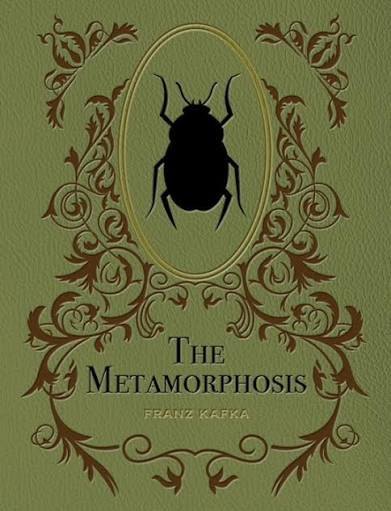
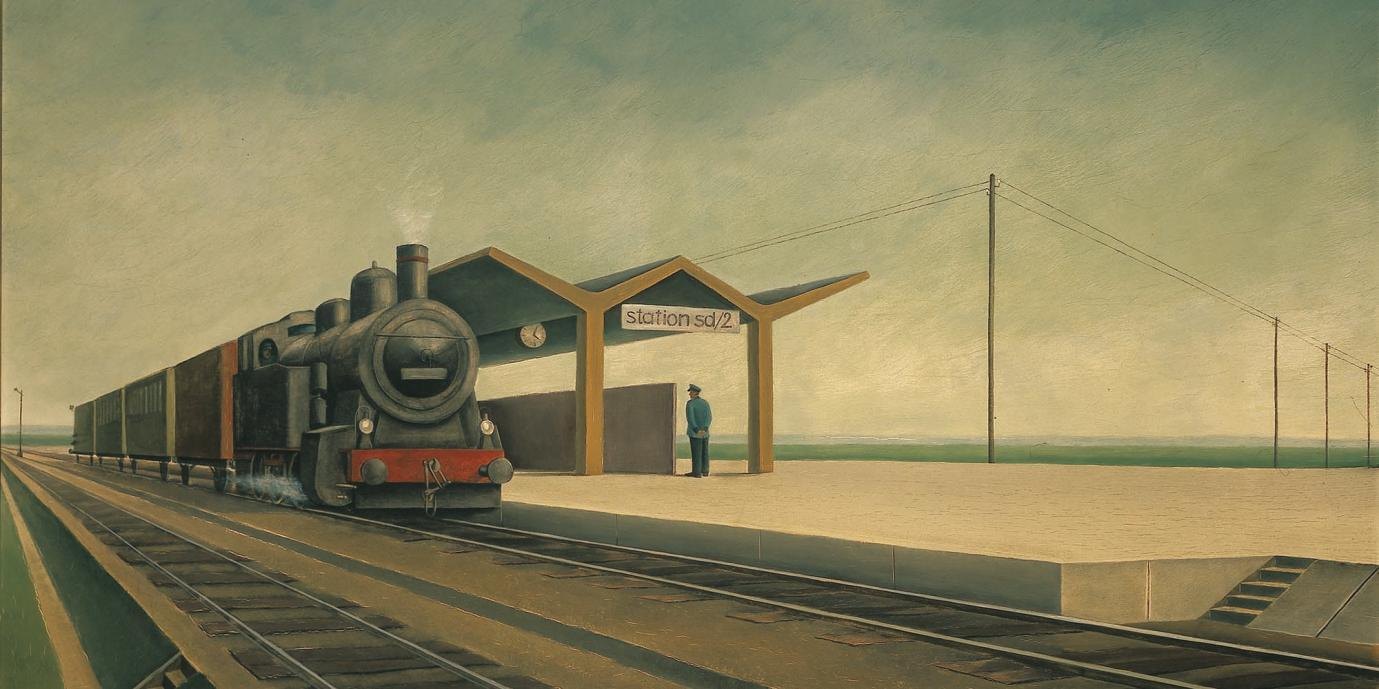
Welcome to issue 7 of The Supplement. There is probably a greater range of material in this publication than in any previous edition. By this, I mean not only the diversity of texts but the age ranges of those responding to them.
One of the characteristics of the programme is that students are required to read whole books. Moreover, and even when the texts are demanding or ‘antique’, there is a focus on the original text. The belief is that being exposed to difficult or unfamiliar language is part of learning. How we ‘understand’ things is not a simple, binary operation. There is always a way to communicate complexity and there are various, individual ways in which that complexity might be comprehended. This is clear not only from the range of texts in this edition, but also from the various and distinctive responses to them.
The Supplement is an important part of the studio’s teaching. Students are asked to write something every week though once every 3 or 4 weeks they will be required to develop their thinking into a longer piece. These essay-style works typically end up in this magazine. It is the place where rough edges can be smoothed over, technical infelicities corrected, content made effective, and style improved. In other words, public scrutiny and accountability compel thoughtful revision. We are aiming for four or five editions of The Supplement this year. That is the equivalent of one edition every six weeks. The aim is to embed responsibility in the way students write.
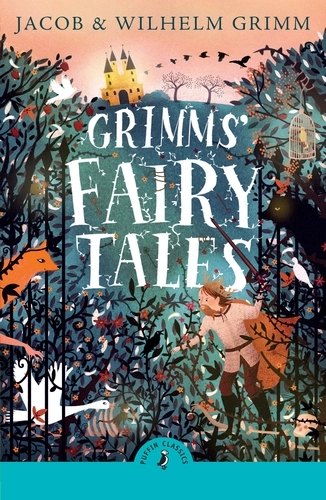
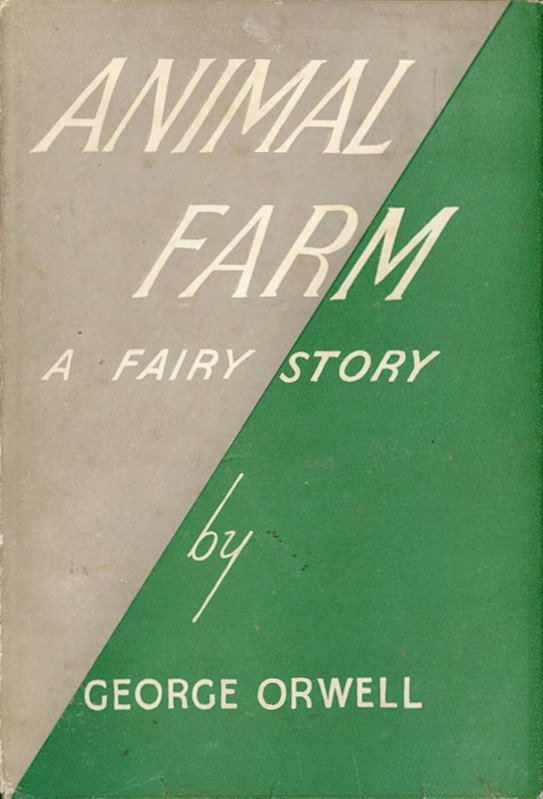
Fairy Tales: Invented stories using fairy tale elements
These two students read a selection of Grimm’s Fairy tales, identified a number of recurring methods and ideas in the narratives, and then wrote their own stories, trying to use similar processes.
Once upon a time, there was a house where a poor family lived. There was no money to provide for the four of them. The girl was called Duffy and the boy was called Nell. Their mother had died because her head had accidentally been cut off opening a chest of drawers. The children’s stepmother hated them and let them go into the forest, telling them not to come back.
Soon, the children got lost in the forest, which was full of sharp trees with prickly branches. Although the children were sad at leaving their father, the brother had brought a map which took them to a house. It was five days’ walk and they were sad and tired.
The house was a very strange house because it was in a tree. Also, it was covered with vines and bugs, like flies and beetles. The roof was not pointed like in normal houses but at right angles to the house. There was a ladder, which the children climbed. It looked as if the ladder was made of fingers, all locked together.
When they knocked on the door, it was answered by an ugly witch. She was dressed all in purple except for a black, pointed hat with a wide brim. Although the children were suspicious and maybe a little scared, they were too hungry and tired to refuse.
While they slept, the witch got up early and made breakfast. Next morning, Nell came into the kitchen to eat and noticed there was a strange smell coming from the breakfast. Although the breakfast looked good – eggs, bacon and a golden apple – the witch had put poison in it.
Duffy and Nell weren’t stupid. They knew what was happening. When the witch opened the oven door to take out the bacon, they pushed her inside. Then, they ran away.
They ran and ran until they found a cave in a mountain. It was a very steep cave, with sloping floors and ceilings. Still, it was safe, so they made a little house inside it, with stones and branches and mud.
After a few days, they looked at the map again and found a river. They realised they couldn’t stay in the cave forever and that they had to get out. They didn’t arrive at the river until it was night so they had to sleep by it. The river smelt fresh and they could hear it rushing past them during the night.
In the morning, the children woke to find a bear standing over them. It was a big, brown angry bear with sharp claws and scary black teeth. It clearly wanted to eat the children, but they got up and ran. And ran. And ran!
Eventually they found a village. It was a tiny village with only one house. So, they ran straight through it and got to a mountain. And still they were running and still the bear was running after them. Finally, they got home and as their stepmother came into the garden, the bear overtook the children and ate the stepmother. Because the children had been away from home for so long and spent a long time running, they had lost weight and were skinny. The bear wanted a bigger meal and ate the stepmother.
The father was overjoyed and they all lived happily ever after.
Once upon a time, there was a girl called Miffy and a boy called Diffy. They had an evil stepmother who cut off their ears and noses so that they couldn’t smell her horrible cooking. She cooked flies, butterflies in butter, and reindeer eyes in rain water. And when she opened her mouth, only bad words came out. She said words like ‘toilet’ and ‘kill the cat’ and ‘you dumpster’ and ‘you stinkers’.
One day, Miffy and Diffy had had enough. They hated their stepmother and they hated her cooking and they hated her bad words. They decided to run away and the best time to do this was midnight because that was when their father and stepmother were asleep. They knew the stepmother was asleep because she snored loudly like a monster growling, though sometimes she sounded like a train coming into a station. So, they left the house with nothing but their clothes and some bread, which they put in their pockets.
They disappeared into a scary, deep, dark, gloomy forest. Soon, after about ten days, they came across a house, which was made of chocolate. They discovered it was chocolate because they were so hungry that they would even have eaten bricks.
As they were munching on the house, a little dog opened the door. It was grey and friendlylooking. It looked at the children and said, ‘You two look hungry. Come inside. I will give you some food.’
The children were indeed very hungry. Inside the house, they could see not only chocolate but lots of other candies, too. So, they went in. The two children looked at each other and smiled. It seemed too good to be true.
The dog gave them delicious food. The only thing that worried the children were the bones on the floor, underneath the dining room table.
‘There’s a skull underneath the bed,’ said Miffy.
‘And isn’t that a skeleton?’ replied Diffy.
Suddenly, the dog changed into a werewolf, opened its big mouth, and tried to eat the children. As it opened its mouth, the children could see blood on its lips, the remains of a finger stuck to its teeth, and further down its throat, the remains of a foot. There was a terrible stink from the werewolf’s mouth. The children thought this was the end for them.
But then, all of a sudden, an angel appeared. The angel wasn’t the usual kind of angel. She was actually an ugly angel, with a large, pointed nose, which looked like a twig or other part of a tree. She also had a stick, which she put down deep into the werewolf’s mouth. The werewolf started to cough and then couldn’t stop coughing. Eventually, it coughed itself to death.
Just before it died, the werewolf coughed up blood, a finger and a foot. And then, immediately afterwards, a whole body, plus two eyeballs, which rolled across the floor. The children recognised the body.
‘It’s our mother,’ said Diffy.
‘I wondered what had happened to her,’ replied Miffy. ‘But she’s dead.’
While they were talking, the angel touched the dead body with her long nose, which started to shine. At the very tip of the nose, there was a spark of light and this brought the dead mother back to life.
The overjoyed children and their newfound mother went back through the forest. The journey took only eight days because they were happy and full of energy. They were worried about what their stepmother would say when they arrived home but when they got there, their father was all by himself.
He told them that the stepmother had vanished into thin air at exactly 12 o’clock, which was also the precise time the werewolf died. But he was joyful at the reappearance of his wife. And the four of them lived happily ever after.
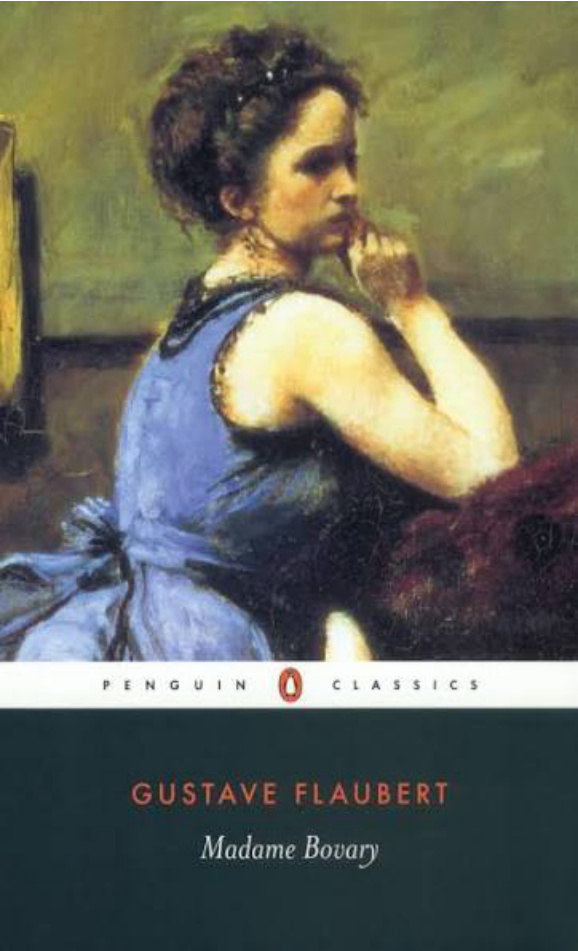
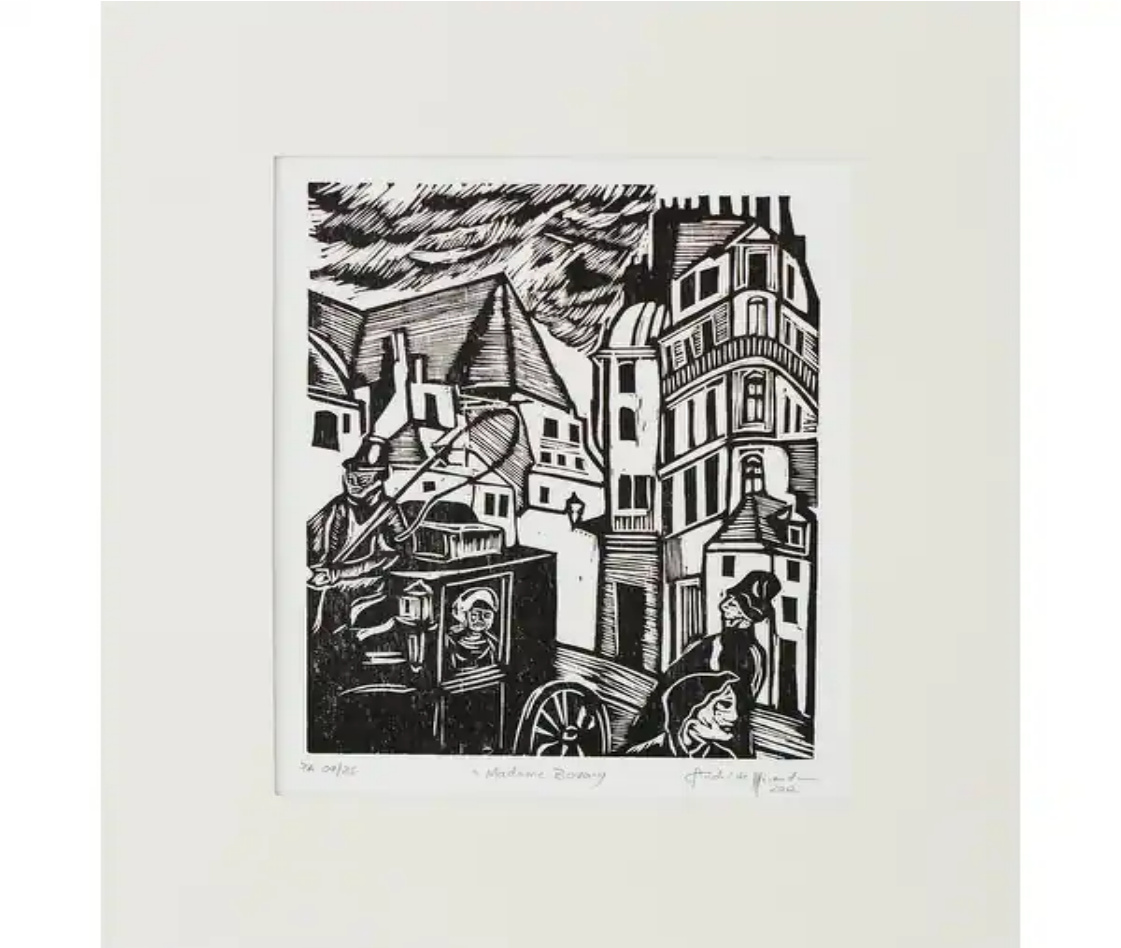
Flaubert’s strong interest in style and form with regard to Madame Bovary
Flaubert’s Madame Bovary is one of the great novels. This student responded to it by considering its ideas and framing them with an exploration of the writer’s style. Flaubert was known as a master of technique and the essay explores how literary process was aligned was thematic intent.
Gustave Flaubert is known for his perfection of modern realist narration. ‘A good sentence in prose,’ he once remarked, ‘should be like a good line in poetry, unchangeable, as rhythmic, as sonorous.’ Yet to reach the ‘Flaubert standard’ style, to achieve a prose that is simultaneously smooth, noncommittal, balanced and rich with detail, is no simple task. As one of the seminal works of literary realism during the 19th century, Madame Bovary remains one of Flaubert's masterpieces in which his techniques for modern realist narration are clearly shown.
The novel is realistic - in the mundane setting, in the bourgeois characters, in the monotonous unfolding of events. It is written in the language of precise everyday details, described objectively yet selected laboriously, as if through a film camera. Free indirect speech is used throughout the novel, blending the first and the third person seamlessly, and allowing the readers to view various characters and events from multiple viewpoints. Often, to create a sense of the flow of time, Flaubert deliberately blends habitual and dynamic details, which though different in the lengths of their duration, are always represented through one continuous flow, viewed ‘from the corner of one's eye’. Sometimes an object or character is described from two opposing points of view, with an interesting contrast in tone, inflicting both empathy and sarcasm at the same time. Moreover, these maneuvers often reflect the conflicted thoughts of Flaubert himself, whose acute observations and nuanced opinions about the bourgeois, romantic relationships and religion slipped into the words of his characters.
This essay will focus on the various techniques discussed above, and also discuss the author's characterization of various characters and how they are achieved.
1. Free Indirect Speech
A critical component of Flaubert's realist narration is free indirect speech, or expressing the character's first-person experiences through the author's third-person narrative. The ‘free’ in the term highlights how the author can dip in and out of the perspectives of different characters, while retaining in his voice traces of his own opinion or style while seamlessly merging with the inner thoughts of the characters whom he is speaking through.
Though Flaubert is not one of the first to use this technique (Austen practised it before him), though he perfected it and is the first to recognize it as a style. I will divide Flaubert's use of free indirect speech into two parts: first on how he changes from one perspective to another, second on how he merged first and third person narration in a single perspective.
1.1 Change of Perspectives
Part 1 of the story contains a diverse set of examples as to how Flaubert used free indirect speech to speak through and switch between the perspectives of different characters, notably a schoolboy, the elder Monsieur and Madame Bovary, Charles and Emma. A small example that shows to some extent Flaubert's ingenuity in this change of perspectives is when the author is describing the young Charles. He starts off from the perspective of Monsieur Bovary, who, ‘in opposition to the mother's inclinations [...] had in mind a certain manly ideal of childhood, according to which he tried to mold his son.’ And yet, the perspective soon changes to the mother. The paragraph continues: ‘The boy responded poorly to his efforts. His mother kept him always trailing after her; she would cut out cardboard figures for him, tell him stories [...] in the isolation of her life, she transferred into that childish head all her sparse, shattered illusions.’ But that perspective would shift again to young Charles. ‘Madame Bovary would bite her lips, and the child would roam at will through the village. He would follow the ploughmen and drive away the cows, throwing clods of earth at them till they flew up. He would eat blackberries along the ditches, tend the turkeys with a long stick, toss the hay at harvest time, run through the woods, play hopscotch on the porch of the church on rainy days [...] he grew like an oak. He acquired strong hands, good color.’
Compare the former paragraph to what another author may write: ‘In opposition to the mother's inclinations, Monsieur Bovary had a certain manly ideal of childhood, but failed in applying this to his child. Madame Bovary, however, would keep Charles running after her, tell him stories, and share her shattered dreams with him.’ While the two paragraphs are similar in content, the second one may sound less harmonious, with a rather sudden change in the viewpoint. This shows the effectiveness of the transition sentences Flaubert used to smooth the change in perspectives. Both sentences ‘the boy responded poorly to his efforts’ and ‘the child would roam at will through the village’ seem to speak from the perspective of Monsieur or Madame Bovary observing Charles, and yet the pronoun refers to the child himself. Observe the next sentences: ‘his mother kept him always trailing after her’ and ‘he would follow the ploughmen’. The first sentence uses the child, a neutral object that is the shared point for attention between the two parents, as a bridge through which the perspective is shifted from the father to the mother. The second directly transitions to the child viewpoint.
This usage of turning the topic to a shared concern before transitioning to another perspective is commonly found in Madame Bovary. Charles's joy at being married to Emma is contrasted with Emma's hidden disappointment on her unfulfilled desires of ‘bliss, passion and intoxication’, showing how the author uses the subject of marriage to open the door into Emma's mind. In the introduction to Yonville -l'Abbaye, the narrative changes to the perspective of an outside observer, and continues straight on from the moment when the couple leaves Tostes, using the Tostes trip as a shared subject, following the road to Yonville and then introducing the scenery around and down the main road of the town. Léon's initiative to invite Homais for a trip in the city naturally shifts the perspective to the apothecary while using the invitation as a common concern.
The freedom of the all-knowing third person and the use of a shared interest to change between viewpoints allow Flaubert to constantly shift between the perspectives of different characters naturally. Like a dragonfly dipping in and out of a pond, Flaubert makes the transition between perspectives as smooth and as subtle as possible. From the mouth of Charles's classmate, Flaubert continues to inhabit the older Madame Bovary, moves into Charles's shoes, and then seamlessly into Emma's consciousness. There he seems to settle - though sometimes turning back to Charles, or exploring the thoughts and sentiments of other characters, for example Homais, Léon and Rodolphe. The difference in viewpoints makes it possible to view the same scenery or event from different angles, and thus intensifying the illusion of reality.
Often, a bit of irony is involved. This can be directed at one character deceiving another, or both him and the character being kept in the dark. One example is when readers are informed of Rodolphe's extremely detailed plan to seduce then get rid of Emma, while Emma rather foolishly strikes out across the country every morning to see him. Another is Homais, whose obsequious cordiality and attention to the Bovary couple was based on his plan to win Bovary's gratitude and ‘prevent him from speaking out later if he noticed’ that Homais was practicing medicine without possessing a diploma. The utilitarian goals of both Rodolphe and Homais serve as a comparison to Charles Bovary, who did not suspect that others had false intentions and had no inkling whatsoever when his wife was compromising herself. Nearly all of the characters, except Léon and perhaps Charles, contrast highly with Emma Bo vary, our protagonist, who lives in the fantasies spawned from her desires and is unable to make decisions within a realistic and practical framework.
1.2 First versus Third Person
The most defining trait in free indirect speech is the confusion of the first person with the third person. While the character's thoughts are directly given in direct speech, in free indirect speech it is wrapped inside a layer of a third person narrative. In the words of the French narrative theorist Gerard Genette, ‘the narrator takes on the speech of the character, or, if one prefers, the character speaks through the voice of the narrator, and the two instances then are merged.’
An example of this is this sentence: ‘One morning, as she was coming back in this state of mind, she suddenly thought she saw the long bore of a rifle pointing at her.’ The thought of seeing a rifle is not put into quotation marks. Yet Emma seems to be speaking directly to us, while the narrator, who must be behind the scenes to orchestrate the third person narrative, seems not to be present. The author is omnipresent, yet seen nowhere. His ideas are merged with the thoughts of the characters, which are half ironically portrayed but sometimes glazed with a touch of the author's own ingenuity. Through the combination of the first and the third person, we get both a sense of Emma's desperation and of Flaubert's own opinions. This allows the double-edged comparison that I will expand on later, in which a character or a piece of scenery is praised and almost immediately criticized to create a life-like effect.
2. Describing Scenery
Another of the ways Flaubert achieved his level of realism in the world he created is through the selection and processing of details related to the environment. The details themselves are listed without comment, without judgement, seemingly objectively. Following his characters up or down the street, he notices what goes on in the corners of their eyes, so that the effect on the readers is realistic, life-like, and the readers themselves seem to be transported into this threedimensional world Flaubert has created and noticing these trifling details with their own eyes. And yet, what readers forget is that these details, seemingly noticed randomly, are specifically chosen by Flaubert so that, under a mask of objectivity, the reader's perception and opinion of the scenery is deliberately guided.
Observe this description of the city, seen by Emma, as she travels to meet Léon: ‘Descending like an amphitheater and drowned in fog, it broadened out irregularly beyond the bridges. The open country rose beyond in a monotonous sweep [...] the ships at anchor were piled together in one corner; the river curved around the foot of the green hills, and the islands, oblong in shape, resembled great black fish that had come to stop on the water. The factory chimneys expelled immense brown plumes that flew off at the tips. One could hear the rumbling of the foundries along with the clear chimes of the churches that rose through the mist. The leafless trees along the boulevards were like thickets of violet among the houses, and the roofs, all gleaming with rain, sparkled unequally, according to the heights of the neighborhoods. Now and then a gust of wind would carry the clouds off toward the Sainte-Catherine hill, like aerial waves breaking in silence against a cliff.’ Then notice what Flaubert includes and what he does not include. There is description of the open country, of rivers, of ships and islands in water, of the sounds of factories, the churches, and of trees, rooftops, and finally an allusion to water again (‘like aerial waves’) while describing the clouds. The environment seems natural and romantic, with everything drowned in fog and glimpses provided of the beautiful nature around the city. However, there is no description of specific signs of human life, not even in the next passage, except when she saw ‘the townsfolk who had slept in Bois-Guillaume descending the hillside peacefully in their little family carriages.’ However, this was exactly what the city seemed to Emma at the time, as her head was preoccupied with the thought of having sex with Léon. The lives of other people became unimportant, unnoticed, while details that add to the beauty and mystery of the city are deliberately enlarged. More important is the confusing of habitual and dynamic detail that Flaubert uses to create a sense of time's continuousness. The rumbling of the foundries is low and continuous, while the chiming of the church is clear and only happens a few times every hour depending on the time of day. The eternal beauty of the country and the river is paired with things that only happen for restricted periods of time, such as the factory expelling smoke or the ships anchored in the harbor. These different events that occupy different lengths in time are integrated together, so that the result is realistic and artificially life-like.
Flaubert's use of imperfect tense in literature is one of the more experimental techniques he uses to achieve style. An example of this is the paragraph ‘every day, at the same hour, the schoolmaster, in a black silk cap, would open the shutters of his house, and the village policeman would pass, wearing his sword over his smock. Evenings and mornings, the post-horses, three by three, would cross the street to drink from the pond. Now and then, the door of a tavern would set its bell to tinkling [...] As for the hairdresser, he too lamented his foiled career [...] When Madame Bovary raised her eyes, she would see him always there, like a sentinel on guard duty, in his worsted cloth jacket with his fez over one ear.’ Notice how the word ‘would’ is used over and over again, which expresses through the past tense the continuous flow of time. The past, the present and the future are mixed together, as dreary and predictable as how Emma finds her life. The confusing of details explained in the previous paragraph can also be found here.
Sometimes Flaubert uses the framing of a negative description right next to a positive description to add realistic elements to the story. This can be found in the description of Yonville and its inhabitants at the start of Part 2. ‘Yonville-l'Abbaye [...] is a market town eight leagues from Rouen, between the Abbeville and the Beauvais roads’ the paragraph starts, in a style that is almost encyclopedic. Next comes a cheerful illustration of the surrounding nature. ‘The grassland extends under a fold of low hills to join at the far end the pastures of the Bray country, while to the east, the plain, rising gently, broadens out and extends its blond wheat fields as far as the eye can see. The water that runs along the edge of the grass divides with its line of white the color of the meadows from the color of the furrows, so that the countryside resembles a great mantle, unfolded, its green velvet collar edged with silver braid.’ However, the upbeat comparison with the great mantle is immediately followed by a somewhat uncommon comment on ‘the escarpments of the Saint-Jean hill, streaked from top to bottom by long, irregular trails of red’ caused by the rain. The area is then said to produce the worst cheeses and yield the least crops, to be secluded from other parts of France until 1835 due to its mountainous surroundings. Due to the persistence of the people in maintaining pastures instead of cultivating land, the town is described to be lazy. And yet, there is a certain beauty in its languidness, in its natural growth toward the river, in how it is ‘stretched out along the bank, like a cowherd taking his nap at the water's edge.’
The focus then shifts to the housing. The houses on the outskirts of the town ‘are enclosed within hedges, in the middle of yards full of scattered outbuildings, presses, cart sheds, and distilleries standing here and there’ and have thatched roofs that ‘cover the top third or so of the low windows, like fur caps pulled down over the eyes.’ As if moving along the main road of the town, the house of the notary is next described, and then the outside of the church, the little cemetery that surrounds it, the inside of the church with its unpainted choir stalls, the market and the Yonville square, the Greek fashioned town hall, and at last the pharmacy, whose ‘red and green jars [...] cast the glow of their two colors far out over the ground’ like Bengal lights. The author ends with the monotonous and somewhat disappointed sentence ‘after that, there is nothing more to see in Yonville.’ And yet, he has shown us a great deal, from Yonville’s geographical location to its houses, to the churches and the shops and the pharmacy. Almost all of it was imperfect, boring, mediocre, just as what Emma would accuse it of when she arrives - and yet many positive opinions have been expressed through the language of the descriptions. Flaubert's use of praise and criticism, in addition to making Yonville seem more realistic and making it possible for readers to see the town from the perspective of the author, the townsfolk, people from other places and Emma, also serves to contrast the ideas of Flaubert and Emma and highlight Flaubert's own opinion about the bourgeoise.
3. Description of Characters
Flaubert's description of characters, similar to his description of the scenery, can contain both praise and criticism simultaneously. This is true with Homais the pharmacist, who is described as ‘a man in green leather slippers, his skin slightly pitted by smallpox, wearing a velvet cap with a gold tassel,’ or Monsieur Binet, who is ‘dressed in a blue frock coat that hung straight down all around his thin body [...] revealing under the raised visor, a bald forehead flattened by the long presence of a helmet.’ The inhabitants are not exactly well dressed, nor can you find any whose personality is not marked by a fault. However, all of them are unique, interesting, when analyzed from an angle in which the author views the characters he has created. Homais built a relationship with the Bovaries simply because of his utilitarian aim, and yet can appear to be knowledgeable to his customers, generous to Charles and Emma, and caring towards his children. He also possesses the rare ability to familiarize himself with an extremely wide range of knowledge, so that when another person disagrees with him, he can argue his own point with reasonable evidence in a piece of dialogue that spans almost two or three pages. Binet seems to be a law-abiding individual, always punctual, sometimes too rigid about rules, yet surprisingly passionate about hunting ducks illegally and cruel after discovering that Emma is visiting Rodolphe every morning. Even the chairman at the agricultural fair could be viewed as respectable, yet simultaneously ridiculous in his long speeches filled with political propaganda.
Below are some specific examples, showing how Flaubert uses his blend of praise and irony on different characters, including Emma, Charles, Homais, Léon and Rodolphe:
3.1 Emma Bovary
3.1.1 Flaubert and Emma
Flaubert characterizes Emma in a way that invites both empathy and criticism. She is like a child, guided by her passions and dreams, someone who has not been ground into the limited existence that a middle-class small-town life must incur. There is a slightly flighty, almost spiritual element to her. It is as if she is trying, in the plainness of daily life and in the company of people with simple wants and disgusting hab its, to reach a kind of indeterminable, indescribable beauty that flutters, always out of reach, like a wisp of cloud upon the sky. That can be viewed as the source of her love, her passions beyond marriage, and her affinity to religion. And yet, there are many instances in which Flaubert forces you to step back and see Emma from a different angle, not as someone who won't submit, but as a creature driven by her desires alone, without consideration for the consequences. Consider her treatment of Léon in the later stages of their relationship, her open requests for sex, her lies to Charles, her treatment of her daughter, and her debts. As one reads on, her death seems not tragic, but rather natural and even slightly relieving, as a just punishment for all of her actions.
The art of criticizing immediately after praising, as with the Yonville description, is used in showcasing Emma's nuanced character. She could ‘sink gently down into the mystical languor exhaled by the perfumes of the altar, the coolness of the fonts, and the glow of the candles,’ but ‘loved the sea only for its storms, and greenery only when it grew up here and there among the ruins [...] rejected as useless anything that did not contribute to the immediate gratification of her heart’. She would weep a great deal when her mother died, making a memorial picture with the dead woman's hair, but immediately after ‘was inwardly pleased to feel that she had reached at her first attempt that rare ideal of colorless lives.’ At mealtimes, she is disgusted by Charles eating, disdainful of his gross manner and the state of his clothes, but herself only engaging in aimless activities such as ‘nibble a few walnuts, or, leaning on her elbow, pass the time drawing lines on the oilcloth with the tip of her knife.’ She is easily seduced by men with a high position and handsome manners, she loves and hates her own child at the same time, she would start being a ‘good housewife’ or read serious books but almost immediately give up. She would cling onto feelings long forgotten, kindle up what was left of the embers, long for the memory of warmth in her dreary and monotonous life.
While Emma Bovary herself does not have an especially complicated mind and certainly doesn't frame her thoughts in such a poetic style (here is one such sentence: ‘like a sailor in distress, she would gaze out over the solitude of her life with desperate eyes, seeking some white sail in the mists of the far-off horizon’), Flaubert has set his own expansiveness of mind and opinions about life in Emma's imagination. His distaste for the middle class is incorporated into Emma's distaste for her husband. His conflicted feelings about love are expressed in the doubleedged effects of Emma's pursuit for love. I will also discuss his nuanced opinion on religion later on. There are also passages in the book that may also reflect Flaubert's own experiences rather than pure opinions. In a conversation with Léon, Madame Bovary replied that ‘doesn't it seem to you, that one's spirit roams more freely over that limitless expanse, and that contemplating it elevates the soul and gives one glimpses of the infinite, and the ideal?’ Such a sentence could just as easily come from Flaubert as from Emma, since though the ideal could represent the ‘perfect love’ that Emma is looking for, the spiritual qualities may have been inspired by the author's own experiences. The scope of Flaubert's influence on his characters does not only include Madame Bovary. Under the cloak of Léon's words, the author expresses his experience in reading, which ‘while reading a book [...] coming upon some vague idea that you've had yourself, some obscure image that comes back to you from far away and seems to express absolutely your most subtle feelings.’ While the true Madame Bovary may not be so perceptive or virtuous, the author has instilled his own opinions on her (perhaps the reason why he partly identifies with her), making her pitiable and despicable at the same time.
Yet despite some similarity in opinion, Flaubert constantly uses his smooth change in perspectives to distance himself from Emma, so that he could observe and criticize her from an outside point of view. Sometimes that is done indirectly, when Flaubert describes the same scenes from an outsider's perspective and Emma's perspective. Yonville, before Emma moved there, seemed beautiful, not perfect but at least interesting, as discussed previously. The observer notes that ‘the countryside resembles a great mantle, unfolded, its green velvet collar edged with silver braid [...] you have the oaks of the Argueil forest and the escarpments of the Saint-Jean hill, streaked from top to bottom by long, irregular tails of red.’ And then, while complaining that ‘there is nothing more to see in Yonville’ for ‘the street (the only one), the length of a rifle shot and lined by a few shops, ends abruptly where the road bends,’ he takes great interest in describing the conversation between Monsieur Homais and Madame Lefrançois, which displays their unique characters and beliefs despite their mediocrity.
Emma, however, is unable to admire all those things that make the village interesting to Flaubert. To her, as Yonville is already near at hand and she could perceive its flaws, her heart would drift to the cities and villages her lovers lived, which are faraway and enveloped in a rosecolored veil. While Flaubert hates small town or village life because of his artistic pursuits, he is able to see the interesting side of the world he lives in while longing for the elegant and the beautiful. Emma has the same opinion out of a fake sense of superiority and the pursuit of things that contribute to the immediate gratification of her heart. This point is made clear as early as her convent years, during which the author comments that she is ‘by temperament more sentimental than artistic, in search of emotions and not landscapes.’ Her greed makes everything in life not enough. She has to love, to feel the tumult of emotions, to hear the voices of people and the rolling of carts, to be in the midst of all the stimuli that a city provides. The walls, the doors, the people, once near at hand, immediately lose their glamour and become objects whose reality she could not tolerate. This short-sightedness, making her dissatisfied wherever she goes, may also be what caused her not to realize the dangers of debt. Similar to the description of Yonville are a range of other beautiful illustrations of nature, all of which went barely noticed by Emma. In Tostes, when out walking with her greyhound, ‘she would rediscover, in the same places, the foxgloves and the wallflowers, the clumps of nettles surrounding the large rocks, and the patches of lichen along the three windows [...] her greyhound, who circled through the fields yipping over yellow butterflies.’ Yet the serene image of the countryside is soon interrupted with her thoughts, dreaming of a different man, drawn towards ‘the city, amid the din of the streets, the buzz of the theatres’, and comparing her own life to a cold attic with a north facing window. Though she is under the direct shine of the sun, she could not find pleasure in life. Riding with Rodolphe and standing at a height, ‘the whole valley appeared to be one vast, pale lake, evaporating into the air. Clumps of trees jutted up at intervals like black rocks; and tall lines of poplars, rising above the fog, were like its shores, stirred by the wind.’ But no feeling of awe for the sublime is inspired in her, and rather, she is frustrated with her fatigue and her skirt getting in the way of her feet. Only when paired with the tumultuous, romantic feelings a lover provides, does nature finally seem appeasing to her. ‘It was not the first time they had seen trees, blue sky, or lawn,’ the author remarks on her three days ‘honeymoon’ with Léon, ‘or that they had heard water babbling and a breeze blowing through the leaves; but they had never before admired all of this, it was as if nature had not existed before or had turned beautiful only once they had slaked their desires.’ That profound appreciation of the landscape must be inspired by a fulfillment of the sentiment, which to her is more important. And yet even that did not last long. After a period of time, she began to appear in Léon's hotel room ‘irritable, greedy, and voluptuous’, unafraid of compromising herself, and controlling Léon more than loving him.
3.1.2 Religion
One of the ideas Flaubert constantly returns to in the novel is religion, and his ambiguous experience of it is somewhat reflected in its influence on Emma. By viewing Emma from the perspective of religion, she can be seen in a different light, a character whose actions should be pitied and even praised.
Having three or four times seriously turned to religion, all in the desperate moments of her life, it seems that the beauty that religion provides is similar to the state Emma is trying to achieve by her novels or her love affairs. And yet, like her shattered illusions about love, there are many instances where religion is displayed comically, such as the episode in which the priest, completely oblivious to Emma's suffering, goes to punish the children for not behaving in his class. This may show a hidden criticism Flaubert holds for religion, and how, no matter what bliss it offers you after your death, it is unable to alleviate your current suffering in life. Emma's days at the convent first introduced her to the mysteries of the religion, and the eternal yet unreachable beauty that emanates from it. Surrounded by the good sisters, among ‘whitefaced women with their rosaries and copper crucifixes’, she ‘would gaze in her book at the holy pictures with their azure edges, and she loved the sick ewe, the Sacred Heart pierced with sharp arrows, or poor Jesus falling’. During confession, she would ‘invent little sins in order to stay there longer, on her knees in the darkness, her hands together, her face at the grille beneath the whisperings of the priest.’ In the depths of her soul, ‘the metaphors of betrothed, spouse, heavenly lover, and marriage everlasting’ stirred ‘unexpectedly sweet sensations’. Her sensitive heart is touched by the love, the venerable, the exalted and the suffering in religion, and her passion for everything tumultuous seems to be temporarily contained in the enticement that mystery and romance that religion naturally brings. She is a top student of the class, not studying religion for any discernibly materialistic reasons, but only for the sense of mystery and the strong currents of emotion it inspired in her. In other words, though the sisters would later say that she had changed and was not ‘suitable’ for religion, she was quite the convent girl they sought to make.
Emma's later passion for love novels is quite natural considering the awe religion has inspired in her, for the mystery and emotions they bring are to some extent similar. Both contained refined sentiments, strong undercurrents of emotion, some level of mystery, and an idealistic setting in which pure love and devotion exist, and are praised, if not rewarded. The books she took from the spinster ‘were always and only about love, lovers, paramours, persecuted ladies fainting in lonely pavilions [...] gloomy forests, troubled hearts, oaths, sobs, tears and kisses, skiffs by moonlight, nightingales in groves.’ She worshipped ‘illustrious or ill-fated women’, who for her ‘stood out like comets against the shadowy immensity of history’. In a flourish of irony, Flaubert added that events such as ‘Bayard dying, certain of Louis XI's ferocities, a little of Saint Bartholomew’, are all that's dimly left in her memory of the world. And, therefore, though changing from religion to romantic novels, Emma continues to grow with an over-perfected worldview, in which the ferocities of history don't exist, but the pure sentiments of fainting ladies seem to be more important. It also shaped her perception of men, who must be ‘brave like a lion, gentle as lambs’, but are always well-dressed and seemingly virtuous. This is everything that she has known of men during her early years, making her extremely surprised that Charles is not well-dressed and does not seem to know everything to be known in books or inspire strong emotions after she marries him. Ironically, the very thing that religion detests, lust, is to some level similar to the sentiments of religion and sometimes the very result of over intoxication of it.
Back in her life in the country and during the early stages of her marriage with Charles, Emma sometimes would miss her convent, remember the days when she had stepped onto the stage to collect her prizes, and the gentlemen offered her compliments. She continues to dream of love as the emotion that she has heard and read during her school years, something that ‘must come suddenly [...] with great thunderclaps and bolts of lightning - a hurricane from heaven that drops down of your life, overturns it, tears away your will like a leaf’. She sees Paris as something vaster than the Ocean, glimmering in front of her eyes like some rosy haze, seeing only two or three of its separate parts, the world of ambassadors, the society of duchesses and the crowd of literary folk. She craves for balls and parties and a ‘life elevated above others’, and everything about the life near at hand seemed not to exist. She confuses ‘the sensual pleasures of luxury with the joys of the heart, elegance of manner with delicacy of feeling’, and sees romance as sighs and embraces in the moonlight, tears and tender amusement in some highclass setting. After her failed relationship with Rodolphe, Emma becomes extremely ill and asked for a Communion, in which she repents for all of her previous actions, and sees, or rather hallucinates, ‘an azure sky, on a throne of gold, surrounded by the saints holding fronts of green palm, God the Father in all His brilliant majesty’ which ‘lingered in her memory as the most beautiful thing she could ever have dreamed.’ Yet the Christian humility, like all her other whims, is not prolonged. She went to the theatre, and soon is enveloped in romantic dreams again.
Even during the end of her life, when she has intentionally swallowed arsenic after finding that no one would help her with her debt, she is still captivated by religion. Unable to save her through medical means, a priest is called to pray for her life. ‘She slowly turned her face,’ Flaubert describes, ‘and seemed overcome with joy at the sudden sight of the violet stole, no doubt reexperiencing, in the midst of this extraordinary feeling of peace, the lost ecstasy of her first mystical yearning, alongside the first visions of eternal beatitude.’ The crucifix is given, and she ‘strained her neck forward like someone who is thirsty, and, pressing her lips to the body of the Man-God, she laid upon it with all her expiring strength the most passionate kiss of love she had ever given.’ Her face bore ‘an expression of serenity, as if the sacrament had cured her’. It is curious that during the final moments of her life, Emma would return to the first stages of her first religious awakening, when she saw that eternal beatitude, a perfection further away from her life than any man or any city could be, something she could not reach. All the kisses she has given, in happiness or in tears, have been combined into that final dedication towards God. Perhaps religion has cured her. Perhaps it is the reason for all her actions, the yearning for that unreachable, mystical and eternal beauty, inspired by her days at the convent.
3.2 Charles Bovary
Adding profuse descriptions concerning appearances, filling the space in between dialogues or inner monologues, is one of the techniques that Flaubert used to make the story seem real and objective. And yet, meaning can be given to almost every part of these appearances. This richness of details not only appears in his description of the scenery. It also applies to his characters.
In Part 1, young Charles Bovary is described as holding his cap, which is ‘one of those headgears of a composite type, in which one may recognize elements of the busby, the lancer's shapska, the bowler, the otter-skin cap, and the cotton housecap.’ He has ‘red wrists accustomed to being bare’, and when asked to shout out his name, ‘opened an inordinately large mouth and bawled at the top of his lungs.’ In these early paragraphs which contain nothing but the outward appearance of Charles Bovary, Flaubert has already revealed several things about the fellow: that he is not rich, that he came from the country, and that he is not especially bright. Almost nothing is revealed about what Charles internally felt at that time, except for a later reminiscence in which he felt that ‘up to now, what had there been in his life that was good? Was it his school, where he remained shut in between those high walls, alone among schoolmates wealthier or better than he at their studies, who laughed at his accent, who made fun of his clothes, and whose mothers came to the visiting room with pastries in their muffs?’ And even this paragraph shows that Charles vaguely feels that he disliked school, but does not possess the ability to conjure more complex and intense emotions from the dislike, such as envy, anger, self-criticism, or depression. This is completely to the contrary with Emma, who, even when life is going on steadily and plainly, is able to experience the most extreme joys and griefs and chase the wildest dreams.
Charles's relationship with his mother is another interesting aspect as well. When he is young, the elder Madame Bovary would keep him always trailing after her, ‘cut out cardboard figures for him, tell him stories, converse with him in endless monologues, full of melancholy whimsy and beguiling chatter.’ In fact, Charles's mother, though she constantly argues and even fights with Emma after her marriage with Charles, is quite similar to her in the aspect of her ‘sparse, shattered illusions’. As Charles grows older, he becomes more and more independent. He has a room all to himself, from which he could see the servant girls playing shuttlecock in front of their doors. After his first wife's death, he begins to realize (though his intelligence only allowed the realization and transformation to happen very slowly) that he could now ‘change the hours of his meals, come home or go out without giving reasons, and when he was very tired, stretch his arms and legs out to the sides, in his bed.’ After Emma's death, especially, he becomes increasingly angry at his mother for interfering with his life, so much so that he dared to shout at her or contradict her whenever he feels like it.
Charles's death is arguably the most tragic event in the story, given that the sorrow given by Madame Bovary's death is somewhat eased by the reader's knowledge of her previous behavior. Charles has always loved Emma truly (Emma herself acknowledges it on her death bed, calling Charles ‘good’) and has had no idea that she was having sex with other men, until he sees her letters to Léon and the portrait of Rodolphe. He becomes despondent after discovering Emma's misconduct, but even then, he forgives Rodolphe during their accidental meeting, exclaiming that ‘fate is to blame’. What is interesting is that throughout the entire process, Charles seems to be only semi-aware of the events around him. A vague and intense sadness has come over him, but the emotion has no definite shape, and no specific person is targeted by it. The fact that Charles cannot explain his sadness or blame anyone, even Emma, for the state he is in, adds to the grief that his death brings to readers. His suffering, compared with Emma's despair, seems more authentic and is more moving.
3.3 Homais
Homais, the pharmacist, is one of those characters who are simultaneously fascinating, comical, and despicable. He is incredibly utilitarian, building a relationship with the Bovaries for fear of them finding out about his illegal occupation, and breaking that relationship after Emma's death since he thought that ‘given the difference in their social status, that the intimacy not be prolonged.’ He does not possess a medical diploma, yet seems to have read, if not deeply at least extensively, scientific texts that allowed him to acquire a range of miscellaneous knowledge about science and some progressive ideas on religion and farming. He constantly engaged in lengthy conversations with his companions who, unlike he, had no scientific knowledge and did not pay any attention to his ideas. He also writes in great length, often exaggerating the facts and adding superfluous detail.
Homais appears first in the description of the inhabitants of Yonville, as ‘a man in green leather slippers, his skin slightly pitted by smallpox [...] his face expressed nothing but self-satisfaction, and he seemed as much at peace with life as the goldfinch suspended above his head in a wicker cage.’ This first image shows Homais as a mediocre man of the middle class, but also a person who is filled with self-importance and seems, unlike Emma, to be free from or even thrive in the boredom and suffocation of small-town life. While this self-satisfaction makes Homais optimistic and resilient in front of challenges (for example building up his business again after being caught practicing medicine without the qualifications), which are both positive characteristics, it also shows Homais's small mindedness, and how he, like a goldfinch in a cage, is too focused on himself to notice the stifling environment which he lives in.
Homais's dialogues with others show us another interesting side of his personality. Though he hasn't been systematically trained in the medical profession, Homais nevertheless can draw from an abundant supply of scientific knowledge, both academic and informal, gathered through books, newspapers, and conversations. Either he is truly interested in science or his wish to seem learned in front of others is so great that he pushes himself to spend vast amounts of time in seeking data to fulfill this image of himself. If his aim is the latter, it seems that he is more pretending to be scientific for his own sake than for the praise of others, since the inhabitants of Yonville usually display no interest in the topics he forced them to engage in. One example is Homais's conversation with Mère Lefrançois to justify his going to the agricultural fair. ‘Certainly, I know something about it, since I am a chemist!’ he exclaimed after being accused of knowing nothing of farming. ‘The object of chemistry [...] is a knowledge of the reciprocal and molecular action of all natural bodies, it follows that agriculture falls within its domain. And indeed, take the composition of manures, the fermentation of liquids, the analysis of gases [...] Do you think that, in order to be an agronomist, you need to till the soil or fatten the poultry yourself? No - but you do need to understand the constitution of the substances involved, the geological strata, the effects of the atmosphere, the quality of soils, minerals, waters, the density of the different bodies, and their capillary attraction [...]’ The surprising thing about Homais's speech is its length, which spans over a page, much more than any other character, even Madame Bovary herself, has ever taken up herself before in a single go. But the even more surprising thing is the number of professional terms used in his speech, such as geological strata or capillary action, which are also accurate and fitting under the topic of the science of farming. The argument itself is progressive for his era, structured logically and delivered passionately, and I would venture to say extremely interesting to readers, even though Mère Lefrançois did not find its contents engaging. It will be later revealed that Homais does not possess any real knowledge about the scientific field, as in his conversation with Doctor Larivière during Emma's death scene, where the famous doctor was amused by Homais's pompous and obligatory manner and made a joke about him being ‘thick’. Perhaps Homais may have gotten these inspiring ideas from newspaper articles or books, or it might be Flaubert voicing his own ideas through Homais, as he did with so many other characters.
Just as Homais's speeches are filled with details and scientific terms, so his writing is done in a fashion that is simultaneously meticulous and exaggerated, flamboyant and delicate. He would spend much time revising his drafts - even when Emma is direly ill, he ‘composed more than fifteen drafts’, whose final version was so indirect for the sake of sensitivity that Père Rouault found ‘it was impossible to know what to think.’ When planning to tell Emma about the death of her father, he ‘had pondered his announcement [...] rounded it, polished it, cadenced it; it was a masterpiece of tact and transitions, of deft phrasing and delicacy.’ It seems almost as if Flaubert is instilling his own method of writing into Homais. Yet, the pharmacist's pieces are usually exaggerated, even comical. After Charles's operation on Hippolyte's clubfoot, Homais sent an article to the Le Fanal de Rouen in which he wrote ‘Monsieur Bovary, one of our most distinguished practitioners, operated on a clubfoot by the name of Hippolyte Tautain [...] the operation, what is more, was performed as though by magic, and only a few drops of blood appeared on the skin, as if to announce that the rebellious tendon had at last yielded to the efforts of art.’ This overexaggeration of facts to fit his narrative, appearing in his speech, his obsequious praise of others, and his writing, contribute to a comical side of Homais, which make the character seem both ridiculous and loveable to readers.
Another possible analysis is that Homais is an extension of Flaubert himself. He certainly fits some of the characteristics. His over-perfectionism in writing, his obsession with style, and his sometimes too flamboyant and fantastic wording (Flaubert was known to be overly lyrical and exotic, especially in his The Temptation of Saint Anthony, and Madame Bovary was one of the few works where he decided to write about his hated bourgeoise) are all in line with Flaubert's traits. However, in his later unfinished satirical novel, Bouvard and Pécuchet, he would go on to heavily criticize characters much like Homais in their application of received scientific ideas on unscientific areas, such as farming.
3.4 Léon
Léon is especially interesting since he is very similar to Emma. Their relationship seems to be a true one, ‘like a murmur of the soul, deep, continuous, louder than the murmur of their voices’, and first Léon and then Emma become love-struck by the other. However, what is interesting is that Emma falls in (what she may call pure) love with Léon only when he is gone, in Paris, among the balls and lights and parties, away from the closer circle of her life. The more faraway and impossible things become, the more she longs for them. Instead, during Léon's stay, she has already decided to fulfill that role of a good housewife, caring for her children, loving her husband, forcing herself to shrink inside that routine of daily life that she detests. This perhaps has something to do with the religious ideals of a married woman that she remembers from her time at the convent, the virtues that she feels she has lost but had to regain. And yet that return to a partly religious lifestyle quickly turns itself back into romantic fervor after she realizes Léon's love for her, and especially after Léon has left her life, just like how her love for religion during her adolescence has transformed into a passion for love stories, which are more tumultuous.
In fact, Léon seems the perfect companion for her. He works as a clerk, and later goes off to the city to study the law. His job in the office is monotonous, dreary, without pleasure, so much so that he has to go off to have dinner at the inn with Binet to stimulate his mind. Like her, he dwells on fantasies, but is timid to speak out his true feelings. Their honeymoon is ‘full, exquisite, splendid’, with kisses in moonlight, singing and sleep inside moored boats, picnic on islands, since Léon likely had the same ideal for love as Emma herself. And yet when he, out of politeness and timidity, invites Homais and agrees to follow him to the places the pharmacist recommends, Emma feels that there has been a lessening of her importance in his heart and takes a turn for jealousy. Though they share the same dreams, their dreams are of the perfect, the everlasting, so that when they have spent a long time with each other, they mutually found faults in each other’s character, and viewed the relationship as a burden, as Emma said even as a marriage, rather than a bright touch on life. Moreover, Léon is slightly more realistic than Emma. About to be made head clerk and urged by his boss and his mother, he discontinued his relationship with Emma so that his career would not be affected, which is the rational thing to do.
3.5 Rodolphe
Rodolphe, who Emma had met last of all, is the man who loves her least, but the person she admires the most. The author sometimes even ironically dips into his consciousness, so readers can get a sense of how Rodolphe, with his cunning and skill with ladies, would devise whole speeches designed to satisfy Emma's vanity so that she would supply his sexual desire. He would analyze Emma's character, actively think how to phrase his speech in order to make Emma react in a way he wanted. ‘And we're bored!’ he exclaimed as he was planning to seduce Emma.
‘We'd like to live in the city, dance the polka every night! Poor little woman, That one's gasping for love like a carp for water on a kitchen table. With three pretty compliments that one would adore me.’ Rodolphe has judged correctly. With knowledge of Emma's foolish and sentimental nature, Rodolphe – who devised honey-sweet words, which would keep Emma always running to him through the countryside, and blind to his true character, even after he refuses their elopement – disappears, even fearing him when she is in a relationship with Léon.
In Part 2, Flaubert uses a bit of humour to describe Rodolphe's seduction of Emma at the agricultural fair. His speech of pretended love and admiration, which consists of the sentences ‘a hundred times I've tried to leave you, and yet I've followed you, I've stayed with you’ and ‘never before have I been so utterly charmed by anyone's company’, is constantly broken by strings of phrases down at the fair including ‘manure’, ‘merino ram’ and ‘porcine breed’. Having taken Emma's hand, whose movement, ‘warm and trembling like a captive dove that wants to take flight again’, somewhat foreshadows the trap that Emma is entering, Rodolphe exclaimed that ‘You don't reject me! How good you are [...] Let me look at you! let me gaze at you!’ Immediately following that, however, are the words ‘use of oilseed cakes’ and ‘liquid manure’, ‘cultivation of flax’ and ‘drainage’ from the chairman down below. In a final flourish as the two were sitting gazing at each other, intense desire making their dry lips quiver, their fingers interlaced, a medal is given to Catherine Leroux for ‘fifty-four years of service on the same farm’. Catherine Leroux, in complete contrast to the current Emma Bovary who was being seduced by Rodolphe to fulfill her instantaneous desires, had been diligently working at the same job for more than half her life, and when she has received the medal, thought of nothing but to give it to the curé so that he could say some masses for her. Though this was religious ‘fanaticism’ in Homais's eyes, it nevertheless contrasts with Emma's emotion driven actions and irreligious conduct by entering a relationship with Rodolphe. The chapter immediately after uses a description of scenery to highlight the intimacy of Rodolphe and Emma's bond. Riding up the hill and surrounded by the early October mist, Emma would sometimes see through a gap in the haze ‘the roofs of Yonville under a ray of sunlight in the distance, with its gardens by the water's edge [..] the whole valley appeared to be one vast, pale lake, evaporating into the air.’ Never had Yonville seemed so small to her. But up here, on the hill, in the forest, surrounded by mist and well above the town, Rodolphe made sure that Emma felt her old life slipping far away from her. Rodolphe tried some intimate but not openly sexual movements. He would, as he rode, lean down to pull ferns from Emma's stirrup, move a branch out of the way, brush her leg with his knee. The horses, too, would copy the sensitive and delicate movements of their masters, leaping together in a single motion, carefully pushing the fallen pinecones before them as they walked, or browsing delicately on leaves.
The setting also creates a feeling of privacy and intimacy. It is, moreover, beautiful by itself, and perhaps Emma and Rodolphe, riding through the forest together, add harmony to the scene. A description of the forest is as follows. ‘Beside them, among the pine trees, a dusky light eddied above the grass in the warm atmosphere. The reddish earth, the color of snuff, deadened the sound of their steps [...] The sky was blue now. The leaves were not moving. There were large clearings full of heather all in bloom, and the expanses of violet alternated with the tangle of trees, which were gray, fawn or gold.’ Then, a description of the pond by which Emma and Rodolphe walked, ‘a little pond, where duckweed made a patch of green on the water. Faded water lilies lay motionless among the rushes.’ Finally, after Emma ‘gave herself up’ to Rodolphe, which could mean she accepted him as lover or submitted to having sex with him by the pond, ‘the evening shadows were coming down; the horizontal sun, passing between the branches, dazzled her eyes. Here and there, all around her, in the leaves or on the ground, patches of light shimmered as if hummingbirds in flight had scattered their feathers.’ One special thing about all this scenery is that, unlike the descriptions of Yonville or the Agricultural Fair, their descriptions seem to have been written from Emma's perspective. Everything was enclosed in a rose-colored haze that had been incurred by love. There are scarcely cases of negative or even neutral descriptions that readers are familiar with when Flaubert is the one telling the narrative. One last interesting thing about Rodolphe is a humorous comparison showing both how he has no compassion and how he believes in the exact opposite things he makes Emma think he believes. In the letter rejecting Emma's proposal for elopement, Rodolphe writes the following sentence: ‘Is it my fault? Oh, Lord, no! Fate is to blame, only fate!’ In fact, he judged it to be ‘a word that always has a nice effect’, perhaps especially on women like Emma. However, when he met Charles after Emma's death and Charles forgives him by saying the exact same words, ‘Fate is to blame’, as he had written in his letter to Emma, ‘Rodolphe, who had determined the course of that fate, found him very good-natured for a man in his situation, comical even, and rather low.’ Rodolphe is the complete opposite of Emma. He sees the world rationally, acts based on his own actual gains, fulfilling his desires by sex with other women but never forgetting his own development. He is a man who believes that he is in control of fate rather than the opposite. It is comical in the episodes in which Rodolphe is surprised by the emotions of Emma or shocked by the forgiveness of Charles, since though he knows that some people are sentimental, he nevertheless applies his own logic to them and is shocked when they give up their gains for something as unpredictable and fake as love.
4. Conclusion
‘An author in his work must be like god in the universe, present everywhere and visible nowhere [...]’ Flaubert wrote in one of his letters in 1852. He believed that a proper author should ‘Let there be felt in every atom, every aspect a hidden, infinite i mpassivity. The effect on the spectator must be a kind of amazement. How did it all come about?’ God in the universe is pretty much the summary of how Flaubert exists in his text, which is to say, behind the scenes. Like puppets on a show, the characters seem to possess life, to act and have ideas of their own, yet there is always a person behind the veils orchestrating the entire process. The scenery seems to be captivatingly life-like, yet the details are selected meticulously, and their different time stamps are merged together, with the contours smoothed just enough that everything seems natural but the author's invisible presence can still be felt. The sentences use free indirect speech, and perspectives change seamlessly so that the ideas of the author and the characters are merged together as one. Praise and irony are used in rapid succession such that a balanced illusion of reality can be built, and the author's own opinion on the bourgeoise, love and religion are shown in addition to those of each character.
Overall, Flaubert's use of style and form portrays the small-town life of France masterfully, capturing both the suffocation it brings and its unique charm. It presents the bourgeoise as despicable but also entertaining, and exposes with sometimes lighthearted humour their blatant hypocrisy.
Yet, though the nuance in the text is exactly what makes Madame Bovary so realistic and captivating, many of the conflicting ideas remain unresolved throughout the novel. Perhaps the reason is that they couldn't be resolved. Emma is a person driven by desire and by lust, yet many of her actions are due to her idealistic assumption that a perfect life is possible based on belief and imagination alone. This idea stems from her experience with the exaltation of religion and the effect of romantic stories on her young mind. A counterexample of Emma exists in Lheureux, in Rodolphe, and to some extent in Homais. The merchant is focused on selling, advertising himself, and giving out small loans that accumulate over time until a large sum of money can be gained. Rodolphe finds women to satisfy his lust, yet never forgets that his fortune depends on his success in the real world and is able to easily ‘seduce and get rid of’ women.
Homais lives somewhat in his own imagined self-importance, but even he doesn't forget that the Bovaries is just a tool for him to get a better reputation in the town, and, when Emma is dead and Charles becomes despondent, that that tool can be most easily thrown away.
Surely Emma's life, dependent on nothing but her own fantasies, is not a practical one to have. But perhaps one also doesn't want to live a life like Lheureux or Rodolphe, who are focused entirely on practical goals related to survival and achieve their aims at the expense of others, caring not for the more delicate fruits of human life. Would you rather spend your time chasing after a cloud of your own imagination, or toil at clods of earth to get your stable supply of bread, like countless other human beings before and around you? If you were to say that these are the two ends of a spectrum of fantastic pursuits and almost meaningless practicality, where would a good life land? Where is the line between artistic pursuits and pure desire, or between reason and pure utilitarianism?
Flaubert praises the first, uses irony to critique the second, and then presents the first again in a mocking tone. He declines to give a definite answer. Perhaps his opinions on such subjects are nuanced as well. How should one approach the bourgeoise, if one was forced to be caged with them for one's life? Should one simply become a member of the middle class? Should one view them as an entertaining source for analysis and inspiration for irony? Or should one try to escape and end up finding himself forever trapped because of his own unquenchable desires, like Emma did? Can religion really be trusted, and can one fully trust one's senses? Do artistic pursuits and love have a meaning, or are they just the meaningless conjuring of one's own imagination?
Ultimately, these questions can only be decided by the reader.
The Odyssey: An essay about the importance of homecoming
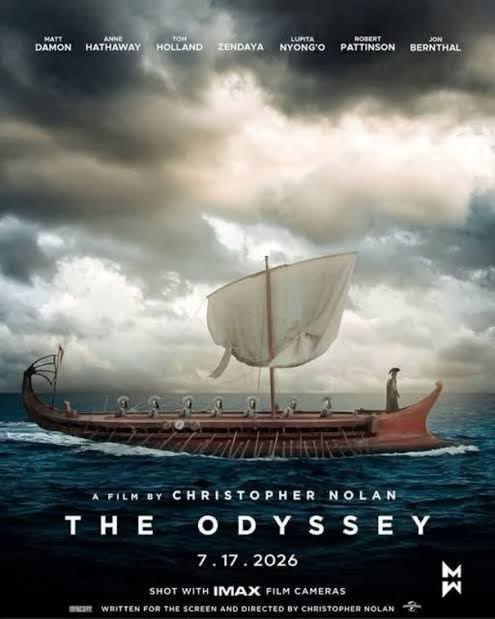
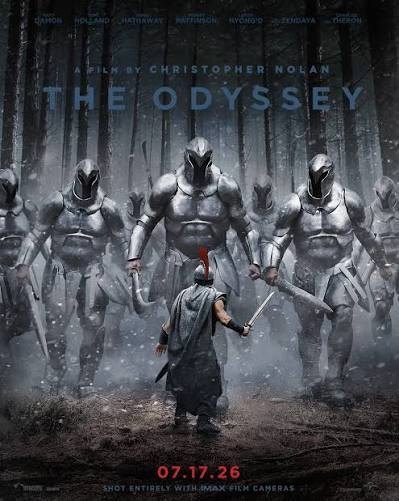
Because of Christopher Nolan’s film, Homer’s The Odyssey has been very newsworthy in the last few months. These students read the story and responded to it by considering in what ways the narrative was about homecoming. Odysseus, after all, had been away from home for twenty years, fighting the Trojan War and trying to make his way back to Ithaca. ‘Returning soldiers’ is an established literary theme and the problem of returning is not simply about getting back to the same place – it’s whether that place is still ‘home’.
The book The Odyssey is basically about how a soldier named Odysseus is coming home after experiencing the Trojan war yet he faces many dangers, including the gods, sea monsters, and – the biggest problem of all – is home the same ‘home’ as when he left it? The entire book explores two major problems, hospitality and homecoming. The reason of Odysseus coming home is due to his foxy and tricky plan, devising of the Trojan horse, the Greeks ended the Trojan War. And since the war ended, Odysseus finally had his chance to go back home after the 10 years of bloodshed. Yet the reason he hasn’t come home after 20 years is because his trick or deception of using and abusing the Trojans’ hospitality angered the gods, which led to him facing sea monsters and other difficult trials.
The basic reason why it took 10 years for Odysseus to get back from Troy to his homeland Ithaca is made of many problems mixed together. First of all, Odysseus and his crew met the cyclops, who ate some of the sailors. Later, Odysseus used his intelligence to trick the cyclops. He first told him that his name is ‘Nobody’ and then poked out the cyclops’ eye. Then, he and his crew hung under the sheep’s bodies so, when the cyclops, as was usual, let the sheep go outside to eat grass, they can escape. Later, the cyclops prayed to his God Poseidon, who was also his father, and Poseidon used his power to destroy all Odysseus’s crew. Odysseus himself was sent to Calypso’s island, where he was fed by lotus flowers, which made him forget about home and his past. He stayed there for 6 to 7 years, which was the main cause of him coming home so late.
Odysseus isn’t really sure where home is, or even what it is, because he knows that Ithaca, after the 20 years, must have changed. He’s actually right, because suitors had taken over his home and Ithaca was like a dead country with no king. His wife, Penelope, was still acting loyal to him and their son, Telemachus, is already an adult, so if he wants to go back to his normal life, everything needed to be in a similar state as when he left it many years before. Hence, he killed all the suitors, made all the maids turn the house back to its cleanest state, and then killed those of them that were disloyal to him.
In addition, before he went back to Ithaca, Odysseus went to the underworld to ask his dead mother about the state of Ithaca so he could plan what he was going to do before his arrival. He also sought advice from his dead general in the Trojan war, named Agamemnon, who had been killed by his own wife.
When Odysseus finally arrived back in Ithaca, he found out that the country was rotten. He doesn’t go straight home, taking notice of the advice given by Agamemnon, who had been murdered by his wife because he had sacrificed his daughter, Iphigenia, in exchange for good winds for the journey to Troy. Odysseus pretends to be a beggar and gathers all the men who are still loyal to him, including his son and the swineherd. Together, they killed all the suitors aided by the goddess Athena, which gets Ithaca back to the same situation Odysseus remembers when he left. When the suitors’ families came for revenge, Odysseus, his father and his son, stand together and prepare to fight them, until Athena intervenes and ends the conflict, creating calm and peace.
In book 24 Homer has two intentions. One is for Odysseus to reunite with his father and secondly is for the problem of the suitors’ families being solved. For the first problem Odysseus reunites with his father, which is basically like a happy ending. This also relates to the solution of the second problem, which is joining with his son and his father, putting on armour, and fighting with the families of the suitors. Athena’s intervention makes sure that there is calm and that the reunion of Odysseus, his father and his son is not damaged.
This kind of relates to the first scene of the television series we saw in class, Heimat, with the German soldier coming back to his home after World War 1. His father won’t accept it’s actually him until he worked with him in the blacksmith’s forge and the son had peed in the pigsty, something he’d done as a child, and showing that he is still part of the family. Like Odysseus, the son needs to show that the idea of ‘home’ hasn’t changed.
The Odyssey tells the story of the homecoming of the warrior, Odysseus. Odysseus was a soldier who fought in the Trojan War. Afterwards, he started his ten-year journey home to Ithaca.
Normally, it wouldn’t have taken Odysseus and his men ten years to make that journey. But their return wasn’t normal. One of the first challenges they met was the Cyclops. When they came to a cave on an island to find food, they met Polyphemus, the name of the Cyclops. He ate some of Odysseus’ men and as part of the escape, Odysseus gouged out the Cyclops’s eye. This infuriated the god Poseidon, who was Polyphemus’s father. So, for the rest of the journey, Poseidon created problems for Odysseus. They also met the witch Circe, who turned Odysseus’s men into pigs and then, after, back into men. After all this, and more, Odysseus got flushed to the shore on a strange island, where he met Calypso, a woman who trapped him by feeding him lotus flowers, which deprived him of his memory of home. In effect, he was imprisoned there for seven years.
Odysseus wanted to go home for many reasons. First, he understood that he should return to his wife and son, Penelope and Telemachus, even though they didn’t know for certain he would be returning. In addition, they were unsure even whether he was alive or not. Also, Odysseus couldn’t be sure Penelope was still in love with or had remained faithful to him – maybe she had fallen in love with someone else?
When Odysseus finally arrived back in Ithaca, he saw the suitors in his home, around forty of them, eating his food and destroying his house. The country was in a mess. Odysseus disguised himself as a beggar so he could test the suitors and observe Penelop e, anonymously, at a distance. He asked the pig-herder, Eumaeus, for information about Ithaca. When Odysseus finally meets with Telemachus and reveals his identity, they come up with a plan to slaughter the suitors, something they are encouraged to do by the goddess, Athena. Odysseus still dresses as a beggar and effectively is unrecognised by Penelope and the suitors, though his wife has suspicions. His old hunting dog, Argos, recognises Odysseus and then, immediately, dies. This is a symbol, showing that the old country, the Ithaca without a king, is also dying. It’s also an indication that Odysseus is truly himself.
When they slaughter the suitors, Odysseus and Telemachus don’t spare a single man, killing every one of them, sometimes in cruel ways. Although Odysseus isn’t a cruel man by nature, he is a husband, a father and a king filled with anger, wanting to put things right and return the situation to its former time. He had to kill the suitors as they were causing damage, also trying to steal Penelope from him. When he kills them, he is cleaning house, making it the same place as it was twenty years previously. Another important reason for Odysseus’s behaviour is that the suitors have abused ‘Zeus’s law’, the Greek belief in the honour of hospitality. By doing this, they were violating the wishes of the gods, a significant crime.
Penelope and Odysseus tested each other in different ways. Dressed as a beggar, Odysseus gathers information about his wife. She, meanwhile, used the immovable bed to determine whether the man in front of her really is the same Odysseus that left home twenty years ago. She also tricked the suitors into giving her gifts, which delights Odysseus because he sees that she is both ‘foxy’ and crafty. Theirs is a good match because he is also wily and tricky.
When the suitors were all dead and had been taken away, Ithaca finally became its former, original self. It was now Odysseus’s old kingdom, with the king and queen restored and acting as they had always done. Some of the suitors’ families were angry at Odysseus, but Athena helped calm them down, and the end of the story depicts a quietened, comfortable place – as it had been all those years before.
Another example of the meaning of homecoming is the old German television series, Heimat, about a soldier returning from World War One. He pees in the pigsty (as he had done when he was a child) and works with his father in the blacksmith’s forge: only then, when he re established old routines, can he be accepted as being ‘home’. This is similar to The Odyssey. Neither Paul (in Heimat) or Odysseus can just walk in. First, the idea of home has to be put back in place. Home is never a place you can take for granted.
Odysseus, who fought the Trojan War, finally returned to his home in Ithaca after about twenty years. He came home because he wanted to live in the same way as before the war. He was also told by Athena to kill all the suitors in order to make his home and his homeland ‘clean’ again. He takes twenty years to return because after the first ten years of the Trojan War itself, the next ten are spent on the actual return. However, he met a lot of problems during the trip.
In the book, it took Odysseus ten years to fight and ten years to return. The normal return journey would have taken very little time. One of the problems he met was when stopping for food and resources at an island where the Cyclops lived. Odysseus and his men went into a huge cave and, after that, the Cyclops entered with a large herd of sheep. When they tried to escape, some of the men died. Finally, they poked out the eye of the Cyclops and fled from the island. But they did not know that Cyclops was Poseidon’s son. He was the god of the sea and he caused problems for Odysseus, partly through creating storms and unstable winds.
Odysseus and his remaining crew therefore had great difficulty. On one island, populated by giants, they didn’t get any resources and lost many men. Later, even though the witch Circe invited them into her house and gave them food, they ate like pigs, so she turned them into pigs. When Odysseus arrived, he made Circe turn them back into humans. Then, the witch told them that all the soldiers would anyway die – and this was what happened. Only one person, Odysseus himself, survived.
He found himself washed up on an island, weak and injured, and Calypso gave him lotus flowers to eat. Although these gave him energy, they also made him forget about Ithaca and everything about home. The island trapped Odysseus for years. By eating the flowers, he forgot about home and where he was supposed to be going. It was only after he thought really hard about it that he realised where he should be going.
Eventually, he arrived back on Ithaca. Remembering what one returned soldier, Agamemnon, had told him when he visited the Underworld, he cautiously disguised himself as a beggar when he returned.
He remembered that home is where his wife, Penelope, and son, Telemachus, lived. He really wanted to meet them but still he tested them. However, there were many suitors who wanted to marry Penelope and he knew that he needed to kill them all. His homeland didn’t seem at all welcoming, which explained why he first disguised himself, so he could be hidden and find out the true situation. The suitors were all crowded into his castle, which was in bad shape. They created chaos. So, he doesn’t go straight there because he’s not sure it’s really ‘home’. He wanted to know what it was before, twenty years ago, and whether he could still call it home.
First, Odysseus stayed with the pig-herder, Eumaeus, and was really saved by him. He stayed at his little place and asked a lot of questions about Ithaca, wanting to know what it was like at that moment. He wanted to know what had happened in the last twen ty years and check whether it was still his ‘home’. It was at this moment that Telemachus returned from his own journey, where he’d been trying to find what happened to Odysseus. When he saw his father, he didn’t recognise him because he’d changed so much and was disguised as a beggar. Telemachus and Eumaeus healed Odysseus, giving him food and shelter. At one point, Athena ‘changed’ Odysseus back to his former self, and he revealed himself to his son. Telemachus was amazed, and father and son hugged each other.
Afterwards, Telemachus returned to the castle and acted as if he knew nothing. Later, Eumaeus went there, too, with Odysseus. On the journey, they met the king’s old dog, Argos, who recognised Odysseus and realised it was his old master. The dog had been waiting twenty years and after one last look at him, Argos died. This is significant because it not only showed the dog’s loyalty but, also, was just like Ithaca, which was both loyal to Odysseus but broken.
Inside the castle, Odysseus still didn’t reveal himself and retained his beggar’s disguise. He needed the secrecy because the plans he had made for the suitors demanded secrecy. They would kill him if he showed himself too soon.
Odysseus observed how badly the suitors behaved, like monkeys, eating their host’s food and abusing his house’s hospitality. Encouraged by Athena, Odysseus wanted to kill them all. He needed to do this because after the war, he wanted to live ‘as before’, and to do this he needed to ‘clean’ his house. Athena was especially angry as she knew the suitors were abusing the hospitality of Zeus’s Law – she wanted them to die, too. Athena was a god and her anger was expressed through Odysseus, who could help her to kill the suitors. Hospitality is important because anyone who comes into your house could be a god, so the rule is that everyone is treated with respect. But the suitors do not return that respect and are using the law to their own advantage and comfort. Odysseus wants to get rid of them and by doing this return the house, his home, to what it was before he left for the war.
Before the slaughtering, however, he needs to know if Penelope was the same woman he left behind. He needs to know if she is still loyal to him and had not married or promised herself to anyone else. So, when he sees Penelope tricking the suitors (into giving her gifts), he is quite sure of her loyalty. Another trick she played on them was every night destroying the work she did on Laertes’ funeral shroud. This delayed her having to choose one of the suitors as her husband, which she had promised to do after completing the shroud. Therefore, she showed how foxy she is and that, actually, she did not want to marry any of the suitors.
When the suitors became suspicious, she gathered them all together and said whichever one of them could string Odysseus’s old bow and shoot an arrow through the middle of twelve axeheads, then she would marry him. Penelope suspected that Odysseus was inside the house so she was gambling and being tricky. She was right and, after stringing the bow, Odysseus killed all the suitors, even the women who had helped them.
Finally, Penelope wants to see if this man really was Odysseus, so she tells the remaining, loyal women to move the bed so he could rest. Odysseus heard the words and was angry, because he knew the bed couldn’t be moved. This was the final proof Penelope required and then she, Odysseus and Telemachus at last came together and reunited.
In the end, Odysseus also reunites with his old father, Laertes, who couldn’t believe his son was back. Not long afterwards, the suitors’ angry families arrive and want revenge. Athena arrived and created peace by calming the families and saying that if they fight, they might all die, too.
After that, Odysseus was still king in his old kingdom. It was like in the television series Heimat when a German soldier, returning from World War One, is tested by his father who lets him help with a job in the blacksmith’s forge. This lets him know that the soldier is really his son, after which he pees in the pigsty, which is what he had always done since he was a child. It’s similar to the situation in The Odyssey – a soldier’s return is tested and only then can he live as before.
Near the end of the Trojan War, Odysseus thought of an idea – the Trojan Horse. The warriors hid in a wooden horse and the horse was presented as a gift. At night, the warriors slaughtered everyone in the city, not only soldiers but also innocent people. This act broke the rules of hospitality, which is that everyone must accept anyone into their house and help them because they might be a god in disguise. After they won the war, Odysseus’s army sets off on a trip back home.
Although the trip from his home to the war isn’t long, it actually takes ten years to return to Ithaca. Plus ten years for the war itself. So, twenty years passed before Odysseus finally got home. But his trip was hard and dangerous. Firstly, he and his shipmates encountered a Cyclops, which ate some of the men. They used a sharpened log to blind the Cyclops in order to escape. However, they didn’t know that the Cyclops was Poseidon’s child. This caused their trip to be extended by bad weather. After that, they met a series of different things; only Odysseus survived. After surviving one storm, he floated to Calypso’s island. There, even though it seemed as if he was happy, actually Calypso was giving him the lotus flower to eat. This flower made Odysseus lose his memory of home, causing him to stay for six or seven years. However, he finally came to his senses and continued his homeward journey.
But not every house or location is a home. ‘Home’ for Odysseus is not so easy. For him, the qualities of home mean that everything should be the same as before, as when he left home. Penelope, his wife, needs to be the same; so does the island and his house. However, the suitors and the death of his mother had changed things. On his journey, he met his mother in the Underworld and acquired the knowledge that the suitors had ruined his house, which made him angry. He also met the old general, Agamemnon. His experience when he arrived home from war is that his family was separated – he was killed by his wife because he had killed their daughter in order to persuade the gods to give him good sailing weather. This was indeed not home for him. It was also a warning to Odysseus that his wife might have changed because of his twenty-year absence.
This leads Odysseus to first observe the island to ensure that it is still his home. He finds out that the suitors had broken the rule of hospitality. The food in the country had been eaten by them and they lived in Odysseus’s palace as if they owned it. There were other, personal reasons why he didn’t immediately reveal his identity. He needed to be sure that Penelope hadn’t changed or been disloyal and, finally, he needed to become the man he was when he left home. Without all this, he wouldn’t be able to have his true home back.
To prove it really is home, Odysseus must first hide his identity. In the book, we are told, ‘…that fine loyal man, who of all the household hands Odysseus ever had cared the most for his master’s worldly goods’. This shows that his pig-herder, Eumaeus, is still loyal to him, and hadn’t changed. This was his first step – find out who is still loyal to him. Eumaeus also gives him information, after which he reunites with his son, Telemachus. First, he gets close to him, and then he reveals his identity. His son doesn’t believe him at first, but the pig-herder provides proof. Together, they plan to slaughter all the suitors. However, before that, he disguises himself as a beggar and returns to his house. He gets beaten by the suitors, then mocked, which provokes more anger in him. An important symbol is his old dog, Argos, who recognises his old master but then immediately dies. This shows that Ithaca, without its king and because of the suitors, is dying.
After several days, their plan went into action. Odysseus was ready to slaughter the suitors. There are several reasons for this. First, the goddess Athena and the upholding of Zeus’s Law – hospitality had been seriously damaged and Athena wants Odysseus to represent the gods’ anger towards the suitors. Second, he wants his house to be as ‘clean’ as when he left it. According to the text, ‘Begin now to bear forth the dead bodies and bid the women help you, and thereafter cleanse the beautiful chairs and the tables with water and porous sponges’. This shows that Odysseus is instructing the servants to clean the dead bodies of the suitors. Later, he will also kill some of them. Lastly, he wants to make his house the same as before. Getting rid of the disloyal servants and suitors was a way of reclaiming his ‘home’.
But the most important thing for Odysseus is whether Penelope has changed. Her tricking of the suitors into giving her gifts proves everything: ‘So spake Antinous and the saying pleased them well, and each man sent a henchman to bring his gifts’. This shows that Penelope was still cunning and hadn’t changed. Another reason for Odysseus’s happiness at this was that it reminded him that Penelope was a foxy and crafty person, and was a good match for him.
Lastly, Odysseus reunites with all his family. He reunites with his father, Laertes, and then together with Telemachus, all three go hunting for animals – a symbol of their being reunited. However, the suitors’ families are angry about what happened to their sons, something which is solved by Athena, who causes a peaceful resolution.
Homecoming is a common theme for soldiers. In the television series Heimat, for example, a German soldier comes home after the war. When he arrives, the first thing he does is work metal with his father in the blacksmith’s forge. They don’t say anything to each other but the special act and their actions show that they have reunited. When the soldier’s mother appears, he pees in the pigsty, something he had always done as a child, and everyone is happy. A true family doesn’t need much conversation but special acts of recognition can prove the presence of a family. This is what happens to Odysseus who is also finally able to reclaim his home and family.
In the Odyssey, Odysseus is trying to return home to Ithaca after fighting in the Trojan War. He wants to reunite with Penelope (his wife) and Telemachus (his son) but discovers about the suitors wasting his wealth and trying to force his wife to marry one of them. So, Odysseus is determined to take revenge and return to his role as king. For the past 20 years, Odysseus has spent 10 of them fighting in the Trojan War and the other 10 trying to return home. In the last 10 years, Odysseus and his men sail home, but they face many dangers and adventures. They encounter Cyclops (a one-eyed cannibal), The Laestrygonians (knights that are 10 feet tall), Circe (the witch), Scylla (the deadly sea monster), Charybdis (humongous whirlpool), and The Sirens (the women who sing to attract men). After that, Odysseus spends 7 years with Calypso before returning to Ithaca, disguising himself as a beggar and taking revenge on the suitors.
The reason why Odysseus spent 10 years trying to get back home is because of Cyclops and his father Poseidon and Calypso and the Lotus Flower. Then Odysseus and his men encounter Cyclops, who traps them in a cave. Odysseus tricks him and escapes, but Cyclops' father, Poseidon, becomes angry and makes Odysseus' journey harder. After all his men died, Odysseus is trapped on Calypso's island for 7 years because she fed Odysseus the Lotus Flower which makes him forget everything. ‘Calypso, lustrous goddess, knew him at once, as soon as she saw his features face-to-face. Immortals are never strangers to each other, no matter how distant she may make her home.’ (p.155). This shows that Calypso loves Odysseus, and wants him to stay with her, but eventually she helps him build a raft to return to Ithaca.
When Odysseus returns to 'home', he mainly thinks of his wife Penelope, because he hopes that she is still the foxy, cunning, and loyal wife she was before he left. He also hopes that Ithaca was still the kingdom he had left behind. After years of war, getting back to Ithaca means getting back his life. The suitors invaded his palace while he was gone, wasted his wealth, and forced Penelope to marry one of them (they assume Odysseus is dead), so they represent the reason Odysseus might be losing his home. His mother died while Odysseus was away, this is painful for him because even returning home cannot bring back the people he used to love. Agamemnon's story serves as a reason Odysseus is hesitant to go home. Because Agamemnon does return home from Troy, but is murdered by his beautiful wife, showing that returning home doesn't guarantee a red carpet and warm welcomes.
When Odysseus finally arrives back home, he finds out the suitors are manipulating the hospitality rule. They waste Odysseus' wealth and live in his palace without paying rent or taxes, eat all his food, and neglect his frail dog. Because of the suitors wasting his wealth, the country is in bad shape, the palace was consumed by suitors, nobody was restoring authority, and Ithaca was worse than what Odysseus left behind. He ensured that the place was still home by making sure Penelope is still the old Penelope, creating an alliance with Telemachus, and talking to old servants who are still loyal to him. He reconnects with Telemachus, Penelope, and his kingdom. He reclaims his throne and makes sure Ithaca is under control again. Although he regains control, he can't become the Odysseus he was 20 years ago; years of war and battling with monsters changed him, but he is still able to restore peace to Ithaca.
To make sure that home was the same as he had left it, Odysseus asks Eumaeus about Ithaca, who tells him about how Penelope is still waiting for him, Telemachus is away searching for Odysseus, and how the suitors are wasting Odysseus's wealth. When Odysseus reunites with Telemachus, he doesn't recognize Odysseus yet because of his disguise. After a while, Odysseus reveals that ‘No, I am your father.’ (p.344). At first, Telemachus believes that Odysseus is a god, but Odysseus convinces him that he is his father. They then begin planning on how to defeat the suitors together. Odysseus disguises himself as a beggar to find out what’s happening in his home without being recognized. This is because Odysseus can return home safely, gather information about the suitors, decide which suitors are neutral and which are evil, and then prepare to regain control over his house. Argos's significance in this book is because even though Odysseus is disguised, Argos is still able to recognize him, showing the dog's loyalty. Even though Argos is frail and neglected, he manages to wag his tail before dying.
Odysseus slaughters the suitors because they abuse hospitality, they live in Odysseus's palace, eat his food and drinking his wine without permission, disrespect Penelope, forcing her into marrying one of them, and waste Odysseus's wealth, using his money while he is away. Athena supports Odysseus's idea because they violated a Greek tradition, where the guest would behave respectfully, and the host was expected to provide food and shelter. The suitors have completely broken the rule. The importance of hospitality is the relationship between the host and the guest. Good hospitality is hosts offering guests food and drinks while the guest behaves respectfully. The suitors are completely opposite. While Penelope treats them with care, they behave like pigs. When the servants cleaned the palace to make the house exactly like before, hinting that without the suitors, Ithaca was going to be peaceful again.
Odysseus needs to know whether Penelope has remained loyal or not because he loves and trusts Penelope, but he needs to know whether she is still faithful or not. Another reason is that the suitors are trying to marry her, so he needs to see if she has accepted any of them or not. Odysseus is relieved when she tricks the suitors into giving her gifts to ‘prove that they love her’ (major setback but minor comeback). He is also relieved when she tests Odysseus to move the bed — which is unmovable because it was built into a tree — hinting that she might know that the beggar is Odysseus.
When he restores Ithaca into the same place he left, he reunites with his father Laertes, which was emotional because he believed Odysseus was gone. Meanwhile, the families of the suitors are furious, wanting revenge. Odysseus and his supporters are about to fight them when Zeus sends a thunderbolt, and Athena orders them all to stop. The book ends with the conflict being stopped and peace finally restored to Ithaca.
By the end of The Odyssey, Odysseus has restored his kingdom and his authority, he returns to Penelope as a husband, he reunites with Telemachus and Laertes, he defeats the suitors, and reclaims his family, palace, and wealth. Connecting Heimat to The Odyssey, both of them are returning soldiers, their homes have changed, and there's a father-and-son reunion. Odysseus's return is successful because he restores his identity, family, and kingdom, while the German soldier's return is more disconnecting. Odysseus reunites with his family while the soldier struggles to reconnect with his old life.
Peter Pan: A discussion about the issue of being a child in the novel
Peter Pan is a famous but often misunderstood story. J.M. Barrie’s novel about Peter’s determination to not grow up reveals a number of uncomfortable things about what it means to be ‘a child’. One group of students responded to the story by considering what it has to say about not being an adult.
The novel tells the story of a boy who never grows up. He lives in Neverland where everything is a big game. He takes Wendy and her two brothers with him because he wants her brothers, John and Michael, to join the rest of the Lost Boys while their sister becomes their mother.
Peter himself, however, doesn’t want a mother because he thinks mothers give you knowledge and make you grow up. Secondly, a mother will make him do things he doesn’t want to do – that all children don’t want to do! – like going to school, growing up, writing homework, and not watching cartoons all night because it will make your eyes bad and affect your learning (like comics do, too). Anyway, they stop things that are supposed to be bad for you and make you do ‘good’ things like eat vegetables (because they give you vitamins). But Peter allows Wendy to play at being a mother because it’s all a game in Neverland, and perhaps he even wants to try out having a mother, just to see what it’s like.
Peter Pan’s life is make-believe because it’s like a big game, so that everything isn’t real or true. Second, he won’t grow up. And, last, he can fly. It’s a strange life and no other children are like him. In Neverland, everything is a game: if you are hit, it won’t hurt. So, it’s a bit like a huge video game. Even if you are murdered, you won’t die and can just keep playing because it’s all an act. When Peter and Hook, the pirates’ fearsome leader, are fighting, Peter is concerned about how fair the fight is because in Neverland there is a rule about not killing others. But Hook broke this rule by killing many of the indians because they were protecting Wendy, her brothers and the Lost Boys. In the end, Tinkerbell, the fairy, will take Wendy, Michael and John, and the Lost Boys back home to London.
Chapter 17 is about when Wendy and the others grow up. The twins and Curly are carrying umbrellas and have bags and work in offices. Michael is an engine driver. Slightly has married a lady ‘of title’ and has become a Lord. And the judge in a wig coming through the iron doors used to be Tootles. The bearded man who doesn’t know how to tell his own children a story was once John. Wendy was married in white and wore a pink sash.
Years rolled by and she had a daughter named Jane. After many years, Peter came back to the nursery where the famous flight had taken place before. He asked some dumb questions about the whereabouts of the children and can’t believe they are adults and that Wendy has grown up and has a daughter. Then, he takes Jane to Neverland to spring clean and act at being his pretend mother. Then, the same with Jane’s daughter, Margaret. Since Peter won’t grow up, he will continue doing the same thing, on and on, so it’s like a cycle. Every spring-cleaning time, Peter will come and fetch a Darling child and take him or her to Neverland to be his pretend parent. He probably did the same to Wendy’s mother, too.
But Peter just doesn’t grow up because he can’t stand to have responsibility. He doesn’t want money problems or have the stress of going to work.
In Chapter 17, we are told that children are ‘gay’ and ‘heartless’ because they just care about themselves. For example, at one point the Lost Boys lock up Michael and John and keep them as prisoners. They just think about what they want to do and have no feelings. Peter is like this because at the end of the book, he wants to bar the windows so that his story becomes true. His story is that once upon a time, he came to Neverland for the first time in his life and he went there for ‘moons and moons’. When he came back, the window was barred and a new baby was lying in his old bed. At another time, he also asks Wendy to come back to Neverland with him so they can pretend to be married. And at the end of the book, Peter came to Wendy’s house, talked to her and glanced at Jane, Wendy’s daughter, and when she asked where Tinkerbell was, Peter said he had no memory of the fairy who loved him. That’s because he doesn’t remember people who once mattered to him in the past. He is heartless because he has no feelings for anything or anyone except what or who he wants.
I agree with the book about children because they really are heartless. For example, if a child wants candy and another child also wants some, and they start arguing or fighting, it shows they don’t care about others – only what they want. In Peter Pan, children can fly and never grow up. They don’t even have to have mothers. They are free from responsibility and even though that makes them heartless it also makes them somehow attractive – they don’t belong to anyone or anything. But that’s not true in real life and it’s why Peter Pan is a work of fiction.
The novel Peter Pan tells the story about a boy who never grows up. His name is Peter pan and he lives in a place called Neverland, which is full of wonderful things. One night, Peter goes into a nursery in London to find his shadow. A girl called Wendy saw Peter and helped him sew his shadow back on. Then, Peter took Wendy and her two brothers, John and Michael, to Neverland with him. On the island, Peter tells Wendy to pretend to be the Lost Boys’ mother.
But Peter himself does not really need or want a mother. This is because mothers make children go to school and grow up. Growing up is exactly what Peter does not want. Going to school and going to classes after school are things which make you learn a bunch of things that don’t allow you to play games. When Wendy pretends to be a mother to the Lost Boys and Peter, she makes them go to bed early, gives them medicine, and tells them stories – just like a real mother would.
Peter always thinks his life is a game and that everything is make believe. He even thinks getting killed or dying is part of the game, and the same with fighting with pirates. I think the reason Peter is concerned when fighting with Hook is because he is afraid of dying. Finally, because of Wendy, he is afraid that if he dies, she will forget him.
In Chapter 17, Peter goes back to the nursery – but he has not changed at all or grown up in the twenty years since he was last there. He does not want Wendy to open the lights because he does not want to see her as a fully grown woman with a child. Peter does not grow up because he refuses to. He thinks the grown-up world is boring and no fun. Unlike a child’s world, there are many things to worry about. Peter keeps returning to the Darling’s nursery. I think it is because he first met Mrs Darling, Wendy’s mother, many years ago. When he goes back, he takes Wendy because he does not want to see Mrs Darling as an adult. And the same with Wendy and her child. It is a cycle that keeps repeating itself.
In Chapter 17, we are also told that children are ‘gay’ and ‘innocent’ and ‘heartless’. This means that children are more free than adults and, therefore, more ‘gay’ or happy. Peter is still very happy when fighting with Hook and even when Hook is dying because he doesn’t take it seriously. That shows how heartless Peter is and how heartless all children are.
I kind of do not agree with the book. I am a child and I am not always happy. For example, today for some reason I was very nervous – but Peter is never less than happy. The book says that children are ‘heartless’: the author seems to be saying that children will not feel in the same way as grown-ups. For example, when Hook got eaten by the crocodile, and even though he is not an especially good man, others will still feel some sympathy for him. But Peter is just happy about what happened. The reason this is attractive is because heartless children are not attached to anything like grown-ups are, who have an interest in all sorts of things. It is children’s lack of attachment, their freedom, that is attractive.
I remember I always liked to build a kind of ‘secret house’ made of blankets and stuff like that. Even though I am nearly eleven, I still like to do it quite often. And every time I finish my ‘house’, I tell my dad not to break it down or clean it up, so that next time I want to play in it, I do not need to rebuild it. But every time, I try to make the house better. By better, I mean larger and more comfortable. I suppose this is an example of me not wanting to grow up and create a childhood space that I can still hide in.
In the book, there is a boy called Peter Pan. He never grows up into an adult. He lives in a magical place, which is called Neverland. Peter and the Lost Boys need a mother, so Peter finds Wendy for them. On Neverland, there are pirates, mermaids and Indians. It is a place of fantasy and make believe.
Peter knows that having a mother will make him have to grow up. Mothers make children learn, go to sleep on time, and do the things that will shape your life, including going to school and learning things you will remember. Remembering means to grow up, which is something Peter doesn’t want to do. Wendy can pretend to be a mother and teach things to the Lost Boys because she is not a ‘real’ mother – she is playing at it.
Peter believes that life is make believe. First, flying is not real and everything on the island is a kind of game. That starts with the fighting between the indians and the pirates, then Peter Pan. In this game, Peter cares most about fairness. For example, in the fight with Hook, Peter never kills him and just plays with him, carelessly. To actually kill him would be unsporting.
Because Peter never grows up, he doesn’t have much memory. And not growing up makes him very careless about things. In the last chapter, Wendy goes back home. Peter asks her to come back to Neverland every year to do the ‘spring cleaning’. But Peter forgets this arrangement and when he does finally remember to come back, Wendy is an adult woman, which he doesn’t want to see by turning on the light. In the end, he takes Wendy’s child back with him to do the cleaning. There is a feeling that this is a repeated cycle and will go on and on. Maybe he even did the same with Wendy’s mother, Mrs Darling.
Children do not have to think about things like money, food and a place to live. This is why they don’t care and are careless – they have nothing to care about. Peter spends all day flying, playing and being irresponsible. He even forgets Wendy and the Los t Boys because he is careless and has an unchanging, forever childhood.
Children are ‘heartless’ because they don’t have to care about anything. They only have their own happiness to think about. Peter shows his carelessness by forgetting people, not remembering promises, not taking notice of other people speaking, and forgetting things like the spring cleaning. He thinks it is lovely to lead a life based on being happy and not having to worry or think about anything.
For myself, I feel that not all children are careless all the time. They do care about some things. They care about things they want or like, for example. Children often do things for a reason and should not be sorry about everything. Still, children can be careless because there are many things they don’t care about. They don’t have the ability. In a way, this is what makes them attractive – they are free and not attached to anything.
Peter Pan tells the story of a boy who never grows up. He’s called Peter Pan and he’s from a place called Neverland, which is made of childhood fantasy and imagination. He flew to the Darling family’s house in London and wanted to take back his shadow. Then, he took Wendy Darling and her two brothers to Neverland. They met the Indians, the Lost Boys, and fought the pirates. They pretend that Wendy is their mother. Afterwards, they all went back home to London and, after a long time, Peter took Wendy’s daughter to Neverland to spring clean.
Peter doesn’t want a mother because a mother makes you learn and teaches you the importance of learning harder and harder things, which will make him feel he is growing up. As Peter doesn’t want to grow up, he doesn’t want a mother. In the opening of the book, Mrs Darling cares about Wendy and wishes she didn’t have to grow up. And when Peter was fighting Captain Hook, she reminds Peter to be careful, which is what mothers do when children do something unsafe. Wendy treats Peter like a child, always protecting him. Peter makes it clear he doesn’t want a mother.
Also, Peter’s home, Neverland, is made of fantasy and imagination. In Chapter 8, it says, ‘If you shut your eyes and are a lucky one, you may see at times a shapeless pool’, meaning life can be like a dream and, as Tinkerbell says, children’s imagination. What Peter also thinks is ‘make-believe’, as if he was still a child, even though he is old enough to be an adult. Peter thinks he is a child, so he has a child’s worldview, believing that life is a game. Games have rules and fairness needs to be a part of all games. Children think fairness is the most important thing so, when Peter is fighting with Hook, he wants to help him and not kill him unfairly, even though Hook uses this to hurt Peter.
As time passes, Wendy grows into an adult, gets married, and has a daughter called Jane. Years later, Peter flies back to London and finds out that Wendy can’t fly anymore because she has grown up. Nevertheless, Jane is ready to go to Neverland with him. This cycle will keep going through every generation of Darling women. A whole line of little girls from the family will become Peter’s mother in Neverland. Peter refuses to grow up because he fears the worries and responsibilities of the adult world. He loves freedom and the fun adventures in Neverland. Growing up for him means losing his imagination and joy. He wants to stay as a ‘gay’ child, forever.
In the book, ‘gay’ means joyful. Children are free from the heavy worries of being an adult. They are innocent, without adult burdens, and also ‘heartless’. This doesn’t mean they are cruel, just that they have not learned deep, lifelong sorrow and responsibility. Their hearts are free. Only children with this quality have proper imagination, something they will lose when they grow up. Peter also seems to be a child because he doesn’t care about time. That’s why it takes him many years to come back to the Darling’s house.
I agree with the book. This is exactly how children are. Children are small and unformed so they don’t know a lot of things. Their ignorance is sort of attractive even though it is also heartless. Also, I know that when my parents were small children, they probably had amazing ideas but now they have lost their imagination. They always think about society whereas I can still pop out ideas like Peter in Neverland. Peter is annoying but what he says and the way he acts is true in what it says about childhood.
Peter Pan tells the story of a boy, Peter Pan, who never grows up. Peter lives in Neverland, which is a place full of fantasy. Then, he takes Wendy and her two brothers there to act as a family. Wendy acts the mother to her brothers and the Lost Boys, who become her ‘children’. Eventually, Captain Hook appeared and was killed by Peter. Afterwards, Wendy went home and became an adult.
Peter himself doesn’t really want a mother because mothers are grown-ups, and this is the thing that Peter hates most of all. Mothers will send Peter to school to learn, do other ‘boring’ things, and grow up. A mother makes children learn rather than play and makes us to do what she wants them to do. Even so, Wendy still becomes a ‘mother’ to Peter, even though it is just a game and everything can be done. She will tell stories to Peter and the Lost Boys, put them to bed, and generally organise them.
Peter’s life is all about make-believe because for him everything is just a game. For example, when Wendy asks how to be a mother, Peter tells her she just has to act. And when Captain begins to kill people, Peter thinks it is not fair because it is against the rules – in games, there should be no actual killing.
In Chapter 17, Wendy grows up and has a child, a girl, named Jane. Peter returns to the darling home and takes Jane to Neverland. Peter always needs a ‘mother’ because he is always a child. He never learns and grows up. He also uses a medicine to stay small. It seems like some kind of cycle. Peter always comes back to the Darling’s house to find a ‘mother’. Whenever a new child is born, he returns.
Also in Chapter 17, we are told that children are ‘heartless’ and ‘gay’ and ‘innocent’. It means that children stay happy and excited but do not have empathy towards others – they are selfish. Peter is like that because after Wendy leaves Neverland, he promises to visit her though he forgets and rarely comes back. Peter is careless of time because he doesn’t let himself worry about death – he will never grow up and is always childish.
However, I disagree with the author about children, because children still do have love in them. They have empathy towards their parents and friends. Well, at least sometimes. They might eat the best food without offering it to others, for example. Peter can be heartless because he wants Wendy back but does not know Wendy wants to go home.
I think the thing that makes childhood memorable is fun. We always have fun when we are children but growing up makes us face problems. Maybe Peter was right, after all.
Psychology: A piece based on the summer psychology camp
One of the summer courses we offer focuses on Psychology (the others are History and Philosophy). During the sessions, students responded in a number of ways to what they learnt. This student has put together a few of the short pieces she wrote and developed them into a more substantial, essay-style reaction to some of the material she explored.
Psychology is a study of your mind, brain, and behaviour. Psychologists often determine what is a normal and balanced behaviour, there are some people who can’t control their brain, so they act a little strange – weird. For example, people who have OCD or autism might have a hard time controlling their actions and their feelings.
Before 1800, people mostly believed that psychological problems were caused by their body, but then William James, the founder of American psychology, found out that most dysfunctions are caused by the brain and the mind. There are mainly four reasons why people can’t think accurately or without prejudice. The first reason is confirmation bias, where people tend to believe what they think is right or want to believe in, sometimes ignoring information which contradicts them. The second reason is emotions: when people are very angry, sad or even happy, it is hard to judge a situation fairly. The third reason is that sometimes a lack of information can cause people to draw conclusions based on incomplete information. The last reason is people who have different personal experiences and beliefs often see things in a different way, and therefore judge a situation from a different perspective.
Most people are unaware of their faults as our mind often protects us from damaging our self-images. Admitting ‘I’m wrong’ could sometimes make you feel bad or embarrassed, so the brain protects you from thinking that way by finding an excuse. Sometimes, lack of knowledge causes people to not know how to act in the right way. For example, a football player who plays well in one game might think that he is doing good, but maybe compared with players in another game, he is not that talented.
The brain has not always been seen as the main cause of psychological problems and ‘madness’. The body, the organs and the blood were thought to be the reasons beforehand. So, a lot of people will not care so much about their flaws. The study of psychology mostly focuses on people’s brains, what they feel, how they think, and how the mind tells you to behave.
William James is very important to psychology because he is one of the founders of American psychology. He identified the ‘stream of consciousness’, which is the continuous and moving thoughts in your consciousness, rather than a single idea. It proved that your brain is always thinking and that all your thoughts are connected. This really means a lot to the study of psychology. So, it’s important to understand that the brain and not the body is the single most significant cause of psychological dysfunction and that consciousness itself is forever moving and interconnected.
How Psychology works – Notes from a discussion
Psychology involves the study of thoughts, feelings, and behaviour. Humans are intuitive or instinctive psychologists, which means that we naturally want to find meaning and patterns regarding the things and the people all around us.
Psychologists see human consciousness as the relationship between the mind, the brain and behaviour. Typically, this is made up of thoughts, feelings, or perceptions, and memories (coding and retrieval). Memories are the encoding storage and the retrieval of the events and the things that happened around you and the world around us. Perceptions are the sense you have about the things around you, the instinctive intuition you have towards the world. Perceptions come to you from sight, smell, taste, sound, and touch.
Feelings are like signals the mind gives you to help you understand and react to the outer world based on your perception and your memory. They start as mental but always become physical. Thoughts are a way you organize and the patterning of the things that are going on inside your head; a thought is a mental product or a mental process you produce in your brain.
The brain is the most important organ in psychology. It is the controlling organ that generates the power to enable us to have thoughts, feelings, perception, and memories. The way we behave is heavily influenced by our brain – it is the human response to our mental state or external environment. Therefore, who we are consists of the ongoing relationship between the mind, the brain and our observation, physical behaviour: the connection and interaction between these three elements forms our psychology and expresses who we are – our identity.
It is only relatively recently that the brain has become the focus of scientific inquiry of human behaviour and identity. Around 1875, as I’ve already said, William James gave his first lecture about the stream of consciousness. The main concept of the stream of consciousness is that your brain does not have single ideas. Thoughts are ceaseless, restless, never stopping. It is the product of interacting and dynamic stimuli coming from both sides of our head. James argued that the mind is far too complex to be understood through separate units. It is an organ that is inter-connected, comprising many parts, and every part has its own use. Before James, a number of people like Da Vinci and Descartes were drawn to the brain as the organ of human thought and behaviour, but it was only the growing significance of science and the diminishing of religion in our lives that finally committed study to the human brain.
Here is a personal example of the way in which the stream of consciousness might work. Like the time I saw my mom walk into a door with her glasses (she always wears contact lenses to work), and for the rest of the day she was very angry. So, the next time I saw my mom with her glasses on when she came back from work, I know I needed to be very careful. This is an example of how what is stored in your memory can influence your behaviour and emotions. After that experience, my brain connected my mom’s wearing of glasses to the memory of her being angry. Even though nothing might be wrong the next time she wore her glasses, my mind automatically brought back the memory of that previous experience. Because of this, I might feel nervous, worried, or afraid, before I even know what is going to happen. The glasses themselves are not actually causing me to feel afraid; it is the memory connected to them that creates the feeling. This shows how our thoughts, memories, emotions, and experiences are constantly connected and flowing from one to another. This is how feeling can be affected by memory, and how the stream of consciousness might work.
William James made the point that the various strands of the mind – in effect, our consciousness – were not able to be usefully separated. He said that trying to do this would be like attempting to understand a house by looking at each individual brick. In other words, each element of each strand was interconnected and somehow related.
In the film Father, an old man called Anthony has Alzheimer’s or Dementia. His memory is failing him. Memory weakens through age although there might also be physical deterioration, but the point is that Anthony’s loss of memory has a terrifying effect on the rest of his life and the other elements in his mind. Their interconnection is very clear.
When Anthony is losing his memory, it becomes harder for him to perceive things as clearly as he did before. Perception is strongly based on our own experiences, but as Anthony forgets more of his experiences, it becomes harder for him to understand and pe rceive the world around him. At the end, Anthony says that he feels like a tree with its leaves falling off. At first, everyone is like a tree, and as they grow, they gain more leaves, which represent their memories. When the leaves fall, it represents Anthony slowly losing his memories.
At the end, Anthony is completely crushed when he discovers where he is and where he might have been throughout the whole film. After he loses almost everything, his thoughts become more like a little baby's thoughts. This shows that the amount of memory we have can affect the way we think about things. For example, if I were lost when I was little, my best choice might have been to start crying. But now, because I have more experience, I would be more likely to stay calm and think about how to solve the problem.
Memory can also affect our feelings. Different experiences can change the way we feel about something. For example, I really love eating apples, but one day I accidentally ate an apple that had maggots in it. I swallowed three maggots with my first bite. Now, whenever I see or eat an apple, I feel disgusted. This shows how a memory from the past can affect our feelings in the present. For Anthony, his attitude changes a lot when he recognizes the second fake Ann as the real Ann. This shows that his memories of Ann affect how he feels toward the people he believes are ‘Ann’.
The actor Anthony Hopkins, who plays the role of Anthony in the film, has talked about the fragile connections between the various elements of mind and the danger of those links breaking down. He is concerned with control, both in his acting and in the need to impose some kind of order or pattern on the relationship between thoughts, feeling, memories, and perception. In some ways, behaviour in our lives is a bit like performance – it is about coordinating the things in our head, the stream of consciousness that William James once talked about, the imposing some kind of acceptable order to them. If that doesn’t happen, then, like the Anthony in the film, there is a chaos, confusion and near madness.
The conscious, subconscious, and unconscious are three different parts of how people think and behave. The conscious mind is what we are aware of right now, such as our thoughts, feelings, and decisions. For example, if I am thinking about what I should eat for dinner, that is happening in my conscious mind. The subconscious is different because it includes things we are not actively thinking about, but that can still affect our behavio ur and, of course, our conscious mind. For example, you might automatically remember how to ride a bike without thinking about every movement. The unconscious is deeper and contains thoughts, memories, and desires that we are not aware of and may not easily control.
These ideas connect to Freud's id and ego. The id is mostly connected to the unconscious because it focuses on basic desires and wants, like pleasure and immediate satisfaction. The ego works more with the conscious and partly subconscious mind because it tries to control the id and make decisions based on reality. In simple terms, the id says, ‘I want this now’, while the ego says, ‘Wait, is that actually a good idea?’
The unconscious and subconscious can also connect to William James' stream of consciousness. James believed that our thoughts are constantly flowing instead of appearing as separate pieces. Memories, feelings, and experiences can enter our minds and influence what we think about next. Even when we are not consciously thinking about something, subconscious or unconscious experiences can still affect the flow of our thoughts. This shows that our minds are more connected and complicated than just the things we are consciously aware of.
How do I see myself?
When we have to think about ourselves, and understand who we are, it’s a complicated process. Here are some random thoughts about my identity and ‘selfhood’. Thinking how they all connect in my brain – through memory and perception – is a dizzying prospect. First, I have been brought up in Shanghai. What I eat and what I believe are greatly influenced by my family and my nationality. Example: my family mostly eat rice every meal, so I also eat rice every meal. In addition, we also drink hot water in the morning, and hot milk, too. We sleep early at night, and wake up early in the morning. Although we live in a house with a neighbourhood, we don’t know each other so well. We speak Chinese at home instead of English; my father sometimes beats me. We eat almost all types of fish, dogs, frogs, and snakes. My grandma believes in Buddhism – me, too, in some ways. (But I’m not a very devout believer.)
I was playing tennis when I first realized that I needed to start planning and constructing my own life. Before high school, everything seemed simple and smoothly organized. I could balance academics, social life, sports, art, and my free time without thinking too much about how they might be connected. But as I entered high school, everything suddenly became more demanding. Academic work, friendships, sports, art, and especially time became some of the most important and scarce resources in my life.
At first, I struggled with this sudden change. I tried to find my homeroom teacher and seek help, hoping that someone could tell me how to manage everything. However, I slowly realized that there was no perfect schedule or person who could organize my life for me. I had to make those decisions myself. That was the moment I began to understand that I need to learn how to take responsibility for the direction of my own life.
Coming to the most important part of student life, my academic grades, I realized how difficult it was to control my screen usage when no one was forcing me to. Self-control became one of the most important lessons I had to learn. It is easy to identify a problem but learning how to fix it is much harder.
At first, I tried locking my phone away, thinking that removing the temptation would solve the problem. However, I still found it difficult to concentrate on my work. I realized that simply taking my phone away was not enough – I needed to change my habits and learn to control myself. I knew this would be difficult, but I was still willing to try.
I started by turning off my notifications and moving addictive apps away from my home screen. These small changes gradually made a difference. Eventually, I was able to bring my daily screen time down to less than an hour. The results weren’t the most important lesson; it was the process.
For me, friendship has always played an important role in my school life. I have a lot of friends, and I make friends very easily. My friends have always been an important part of my life, helping me get through difficult and stressful periods. However, when we entered high school, everything became busier. Everyone had more work to do, and it became much harder to find time to hang out or simply spend time together.
Even so, there were still a dozen close friends who stayed by my side throughout this change, and I am truly grateful for them. I think the main reason we were able to remain close was that we shared similar goals. Instead of only spending time together for fun, we were able to learn from each other, support each other, and grow together.
Whenever I feel overwhelmed, I usually want to get away from everything for a while. For me, that usually means going to the tennis court or getting on a horse. I have played tennis for years, and there is something strangely calming about standing on the court with nothing to think about except the next ball. Even when I am losing badly, I still must serve the next point. I cannot complain about the last one forever.
Horse riding feels completely different. Sometimes I can spend a whole ride trying to get something right, only to realize that the horse is not going to cooperate just because I want it to. I have learned to slow down, pay attention, and understand what the horse is trying to tell me. There have been times when I was frustrated, trying to force the horse but forcing rarely makes it better.
I think that is why I have stayed with both sports. They give me a place where I can forget about grades, schedules, and everything else for a little while. At the same time, they have quietly taught me how to deal with pressure, frustration, and mistakes. In a way, the lessons I learned from sports became useful when I started facing the much bigger challenges of high school.
Art is probably one of the few things I do without worrying too much about whether I am doing it ‘right’. I love art very much, even though I am not particularly good at it. But nobody ever said that you must be good at something just to love it. What I enjoy most about art is the endless possibilities and the freedom I have when I am creating something. I can choose the colours, change my ideas halfway through, make mistakes, or completely start over.
There is no one telling me what the ‘correct’ answer is. No one is judging me, no one is complaining about every little decision, and there is no rubric or evaluation criteria to follow. For once, the choice is completely mine. Maybe that is why I enjoy art so much. In a life where I am constantly trying to meet expectations and make the right decisions, art gives me a small space where I can simply make something because I want to.
Reading all of the above, I see myself as an aggressive, ambitious, self-disciplined, considerable, adaptable, reliable, engaging, and passionate person.
How do I think other people perceive me?
She is not a friend of mine, but we have known each other since year 1. She is not a trustworthy person just because I know her pretty well. She is always making up things that didn’t really happen. She says all those things only because she wants to make fun of me. Eva is a total bastard. Often, she says things that are hurtful and very impolite to me, even though it might sound smart. She knows my sister and my sister knows her, but it is not going to change anything. There is no doubt she doesn’t like me, but she is so annoying in class, so nosey, and feels like she wants to know everything.
When I am talking to others, she always likes to suddenly say something about me and make everyone laugh. She doesn’t want me in the class so she tries to use every way she can to insult me and make me angry. Although we knew each other when very young, she is still very grumpy, harsh and rigid.
I don’t really remember her that well from when we first met, but she must be a good person to be friends with Charlotte. She can be a bit bossy sometimes, and she definitely likes to have things her own way, but she is still my friend. We met each other when we were in second grade, so we have actually known each other for a really long time. I think one thing I like about her is that she is very straightforward. She doesn’t always hide what she thinks, which can sometimes be annoying, but it also makes her easier to understand.
She is my friend from year 6, I’m not good friends with her, she hates me when I swear, but I like to do that. She is not as good as Alison and Emma, but she is still a pretty good person. I don’t like her sometimes because she is bossy, but she gave me a birthday gift that I really love. She hates Atom and Matt so much. I do not know why.
How do I think I look?
This is actually a photo that I really love because I took it with one of my best friends, who is from Singapore. We have known each other since before we were even born because we were born in the same hospital. However, because she had a lung disease and Shanghai’s environment was not very good for her health, she moved to Singapore.
She came back to Shanghai that day, and we went out together to take some photos. This one is definitely my favourite. I especially love the earrings because they are my mom’s earrings. It was actually the first time I took something from my mom and used it myself, so they felt really special to me.
I also love this photo because I think I look really beautiful in it – because, obviously, I am beautiful. 😂 My hair also looks really good in this photo, which is always a bonus. But more importantly, whenever I look at this picture, it reminds me of my friendship with her and how we have known each other for basically our entire lives. That is what makes this photo so special to me.
This is a photo I took in New Zealand. I think the photo itself is actually pretty good, and the scenery in the background is beautiful, but I don’t really like this photo that much. The main reason is the wind. It was extremely windy that day, and my hair was flying everywhere. I didn’t bring anything to tie my hair up, so there was basically nothing I could do about it. My hair looked messy for the entire time, and it honestly made me feel like I looked terrible in every photo.
I was also feeling really carsick at that time, so I wasn’t feeling well at all. I only took one photo because I was already feeling uncomfortable and didn’t really have the energy to take more.
Looking back, I think the place itself was amazing, and the scenery was definitely worth taking photos of, but I just wasn’t feeling my best that day.
Another thing I don’t really like is what I was wearing. The outfit was a little too plain and not colourful enough for me. I really love wearing colourful clothes because I think they show more of my personality and make photos look more interesting. In this photo, I feel like my outfit doesn’t really stand out, and combined with my messy hair and the wind, it makes me like the photo even less.
So even though the scenery is beautiful and the photo itself isn’t actually bad, I still don’t have very good memories of it. I think sometimes a photo is not just about how it looks. How you were feeling when you took it can completely change the way you see it later.
You go to school every day. You hate school. School gives you homework and you do not like homework. You hate your teacher and you hate him because he is ugly. You hate ugly people. You hate your classmates; they play games in the breaktime. You hate them when they swear but the teacher doesn’t understand Chinese. You want to tell them it is wrong. You know that they are playing games. You know the teacher knows. You know that he is not sharing. You know that he is still playing games. You know that he is talking to his teammates. You hate him, you think the class will be better without him. You know he just started.
Metamorphosis: In Franz Kafka’s Metamorphosis, Gregor is transformed into a verminous insect or cockroach. Account for his metamorphosis in any ways you think appropriate.
Metamorphosis by Franz Kafka is one of the most seminal works of twentieth-century literature. It’s opening sentence – ‘As Gregor Samsa awoke one morning from uneasy dreams he found himself transformed in his bed into a gigantic insect’ – is one of the most famous in all literature. The word ‘insect’ is often translated as ‘cockroach’ as the German word Kafka used equates to ‘vermin’. Two classes read Kafka’s novella and explored the reasons why a man might have woken up one morning to find his human form had been so radically changed.
In Kafka’s Metamorphosis, we are told that, ‘When Gregor Samsa awoke one morning from troubled dreams, he found himself changed into a cockroach…’ There is no explanation for what happened and the only reasons we can find are contained in the story itself. These might be things like, for example, the pressure of work and the expectations of his family. Gregor is a travelling salesman who has to get up as early as 4 a.m. in order to catch the train to work. He is on the road for much of the time, and work for him is a punishing routine. One of the reasons he has to go to work is because he is the sole supporter of his family, as well as being the means by which his father might be able to pay off his debts. Moreover, there is no warmth or gratitude from his family for the sacrifices he makes on their behalf. His life is one of unappreciated drudgery and as a consequence he feels insignificant and useless – like a cockroach, in fact. In the story, Gregor becomes increasingly isolated from his family who, after initially trying to look after him, soon began to neglect him. His father kicks him and causes a wound to open up when he throws an apple at his son. This lodges in his back and is one of the reasons Gregor dies, alone in his room, almost forgotten.
Kafka had a really bad time with his father. His father was often very critical and intimidating, which made Kafka feel insecure and not ‘good enough’. This is similar to how Gregor's father treats him in Metamorphosis. In Dearest Father, a long letter Kafka wrote to his father, Kafka says, ‘You asked me recently why I maintain that I am afraid of you... I would have to write a whole book to fully explain this fear, and even then, it might not be understood.’ This quote shows that Kafka was deeply afraid of his father. He felt that his father was overwhelming, which made Kafka feel small and insecure. In Metamorphosis, Gregor's father is also shown as frightening, like when he throws an apple at Gregor or when he's always telling Gregor what to do. These parts show how Gregor feels controlled by his father, just like Kafka did.
Kafka worked at an insurance company, but he didn't like his job at all, just like Gregor in Metamorphosis. Gregor talks about his job and shows how much he hates it. The Chief Clerk says about him that he is doing poorly at his job these days. For example, when the Chief Clerk comes to Gregor's house, he says that Gregor hasn't been doing a good job, which makes Gregor feel even worse. These parts show how Gregor's job makes him feel worthless and like he is doing the job just to torture himself, just like the way Kafka felt about his own job.
Kafka had just ended his engagement to Felice, his fiancée, which shows he wasn't happy in his personal life. In Metamorphosis, Grete, Gregor's sister, starts off as caring but becomes more and more distant as the story goes on. She starts to resent Gregor as the story goes on. By the end, she even says that Gregor isn't her brother anymore and that he needs to go. This shows how Gregor's transformation ruins his relationship with his family, especially with Grete. Also, Kafka's father thought he should find a wife and start a family, but Kafka felt he couldn't do this because of his own sadness. This made him feel even worse about himself and contributes to the fact that he thinks he is worthless.
Kafka often felt disgusted by his own stupid and useless body. He felt like he wasn't strong enough or good enough. In Metamorphosis, Gregor turns into a giant cockroach, and there are many descriptions of his body. For example, when Gregor first wakes up as a cockroach, he feels disgusted by his new body and tries to hide it under the couch. This shows how much he hates his body, just like Kafka did. He also works extremely hard just to open a locked door, which emphasises his weakness.
This story is also influenced by German Expressionism because the cockroach is a visual representation of Gregor’s inner self, which is effectively what he thinks that he is. German Expressionism is a way of expressing an artist’s feelings in paintings. Gregor’s useless and disgusting and isolated feelings got projected outward onto his body and ‘turned’ him into a cockroach. Gregor was treated like a tool for his family and he is now becoming the thing that he thought he was. So, he is sort of like the painting that paints himself into a cockroach to show his own inner feelings.
In Franz Kafka’s Metamorphosis, the main character, Gregor Samsa, wakes up one morning to find that he has turned into a giant insect. The story does not explain exactly why this happens. There is no scientific reason. Instead, Kafka gives us clues through Gregor’s life, his family, his job, and his feelings. Gregor’s transformation seems to show what has already been happening to him inside. Before he becomes an insect, he is already tired, lonely, and treated as if he only matters because he can earn money.
At the beginning of the story, Gregor is a travelling salesman. He wakes up very early, goes to the train station, sleeps, and eats. He does not like his work at all. He says that his job is tiring and stressful, and that he is always moving from place to place without making real friends and having good relationships with others. The Chief Clerk comes to his house to check on him, which shows how much pressure Gregor is under. His boss does not seem to care about him as a person. He only cares whether Gregor arrives on time and does his work, when making money. Gregor cannot leave his job easily, because he must pay off his father’s debt. He feels tired and he feels his existence does not matter.
This part of the story helps explain the transformation. Gregor already feels like a small part of a routine. He did not show his kindness, his dreams, or his personality. He is valued because he brings money home and pays the debts. When a person feels like this for too long, it is easy to understand why he might begin to feel less than human. The cockroach is a symbol. The cockroach body becomes a symbol of that loss. Gregor has been treated as a worker, not as a real person, so the story turns him into a creature that looks weak, strange, and unwanted.
Gregor’s family is another important reason for his change. Before the metamorphosis, Gregor is the only person earning money for his family. His parents and his sister Grete depend on him. However, they do not seem to thank him properly. His father treats him especially badly. When Gregor first appears as an insect, his father does not try to understand him. He becomes angry and forces Gregor back into his room. Later, he throws apples at him, and one apple becomes stuck in Gregor’s back. This makes Gregor weaker. The apple is a powerful symbol. It shows that his father’s anger is not just words, while it also hurts Gregor.
Gregor’s mother is gentler, but she is also afraid. Grete helps Gregor at first, bringing him food and cleaning his room. But even she changes. At the end of the story, she says that the creature cannot be Gregor and that the family must get rid of it. This shows the real side of Grete, who Gregor cares for the most. He wanted to send her to music school and help her have a better life. But when he can no longer support the family and give money, he becomes nothing. His transformation shows the reality of how quickly a good relationship can turn into fear and rejection when someone is no longer useful.
Kafka’s own life helps us understand these ideas. Kafka had a difficult relationship with his father. He felt that his father was loud, and judgmental, while he himself felt small and unsure. In his Letter to His Father, Kafka writes about how his father’s power made him feel frightened and guilty. This feeling appears in Metamorphosis through Gregor’s father. The father is not a comforting person. He is frightening and controlling. Gregor cannot argue with him or escape from him. Even as an insect, Gregor still feels the weight and pressure from his father.
Kafka also knew what it felt like to be trapped by work. He worked in an insurance office and often felt unhappy there. Like Gregor, he lived with rules and duties that did not feel meaningful. Kafka also struggled with relationships. He worried that he could not live the normal life his father expected. These experiences explain why Gregor’s life feels so empty. Gregor has no close friends, no good relationship, and no freedom. His only purpose is to help others and do work and help solve the problems others left behind. When that purpose disappears, he has nothing left.
The cockroach’s body also expresses shame and disgust. Gregor still thinks and feels like a human being, but his body no longer obeys him. He crawls on many legs and eats food that humans would find disgusting. He cannot speak clearly, so his family cannot understand him. This creates isolation. Gregor is still Gregor inside, but the outside world sees only a monster and a disgusting creature. Kafka often wrote about his own body with discomfort, and Gregor’s insect form can be seen as an extreme version of that feeling. Gregor becomes what he already feared he was, which is, weak, useless and uncared for.
The story also belongs to a wider artistic movement called German Expressionism. Expressionist artists did not try to copy the real world perfectly. Instead, they used strange shapes, dark colours, and distorted images to show feelings such as fear, pain, and loneliness. The figure does not look completely realistic, because the painting is trying to show an inner feeling. In the same way, Kafka does not give a realistic explanation for Gregor’s change. The insect is not meant to be a normal animal. It is a physical reflection of Gregor’s inner life.
Gregor’s transformation is therefore not just a shocking event. It is the physical form of his emotional suffering. His hard job, his family’s demands, his father’s cruelty, his loneliness, and his disgust with his own body all lead to this moment. Kafka uses the cockroach to show what it feels like to be uncared for. Gregor becomes an insect because his human life has already been covered by work, fear, and control. By the end of the story, he dies alone, almost forgotten. This ending shows the full cost of being valued only for what you can do, rather than for who you are.
In Kafka’s Metamorphosis, the numerous factors that caused Gregor’s feelings of personal uselessness could be seen in Kafka’s real life. Kafka’s relationship with his father, his own job dissatisfaction, girlfriend, and body weakness inspired him to throw all his conditions onto the character of Gregor.
Kafka always described his father as a giant and hulking man, and in Metamorphosis it is Gregor’s father who gives the most pressure to him and oppresses him the hardest. It is Gregor’s father who throws the apple, which causes wounds that were a major factor in Gregor’s death. In Kafka’s long letter to his father, Dearest Father, the relationship between he and his father is shown to be a complex one. Kafka himself said that he was afraid of his father and didn’t dare to speak his mind directly to him. Thus, the letter.
Job dissatisfaction was another factor. Kafka worked in an insurance company, a boring job he never liked and which he felt stifled him. It is the same in Metamorphosis. Gregor worked as a travelling salesman, which was a tiresome, exhausting job, requiring him to get up at 4 a.m. in the morning to catch an early train.
Kafka once had a girlfriend called Felice, but she broke the engagement with him. This has an interesting link to Metamorphosis because Grete, Gregor’s sister, was Gregor’s inseparable ally at the beginning of the story. But after his physical transforma tion, she became more disgusted by him every day. Grete eventually becomes the one who spoke loudest to get rid of Gregor. At the end, her mother and father consider marriage for their daughter, perhaps reflecting Kafka’s own failure with Felice.
In addition, Kafka thought he had a small and puny body, which made him disgusted and insecure about his own appearance. Kafka turns Gregor into a cockroach for a reason, and that reason remains that Kafka hates his body and felt as small and disgusting as a cockroach.
All these four points could link to German Expressionism, an artistic movement early in the twentieth century, around the time that Metamorphosis was published in 1915. Expressionism is when the way you feel inside is clear from what appears on the outsi de – your external appearance. This makes a kind of logical sense: if Gregor felt like a cockroach, then he is a cockroach.
Kafka wrote Metamorphosis based on real life, through his own conditions and experiences with his father, girlfriend, job, and physical body awareness. German Expressionism gave him a model to pass on these things to Gregor.
In Kafka's Metamorphosis, Gregor wakes up one morning and finds out he had turned into a giant cockroach. It is never explained how this happened, nor does Gregor know. But if we look at the story and at Kafka's own life, we can see that it is actually reflecting both the main character and the author’s inside thoughts and emotions. Gregor felt like a worthless, disgusting insect because of his job, his family, and his own self-loathing. This essay will explain the main reasons for the transformation.
Firstly, Gregor is a breadwinner, paying off his father’s debts, but his family doesn’t appreciate it at all. He felt insignificant and useless, just like a cockroach. He is a travelling salesman who has to get up really early in the morning – 4 o’clock! – to catch a train. He complains about the constant interaction or contact with different people, which exhausts him and he finds uncomfortable. He hates the work but he cannot leave the job because his family depends on him. He is treated as a tool rather than a person.
Secondly, Gregor’s family makes him feel worthless. He is the only one who works and he is paying off his father’s debts. However, nobody thanks him and the family actually treat him as a soulless work machine. His father sits at breakfast reading the paper while Gregor rushes to catch his train. When Gregor turned into a cockroach, the family does not try to help him but quickly decides to give up on him, slowly starting the process of forgetting him. His father kicks him and throws an apple at him, and the only one who shows any care for him, his sister, Grete, who starts off by feeding him, eventually says, ‘We must try to get rid of it.’ Gregor stops eating and eventually dies alone, in his room. His family forget that he is a person and stop treating him as a human being.
Thirdly, the most important reason of all, Kafka's relationship with his dad, which mirrors Gregor’s. Kafka even wrote a long letter to his dad explaining his fear of him. Kafka's father was big and powerful, and he made his son feel small and judged all the time. In Dearest Father, Kafka said his father made him feel ‘annihilated.’ In other words, he felt he was being destroyed by his father. When Gregor comes out of his room, his father unexpectedly didn't even ask what had happened or even show just a little concern, but pushed him back immediately with disgust. Later, he throws an apple at Gregor. In fact, to his father, Gregor is more like an enemy than a son. Gregor becomes the worthless thing his father always thought he was. Kafka felt the same way he believed his father saw him: as a failure, just like a cockroach, in fact.
In conclusion, Gregor's transformation is not a random event. It is , in effect, the outside ‘matching’ or reflecting what is inside. His job reduces him to a machine, his family makes him feel like nothing, and his father's judg ement makes him feel incredibly worthless. Metamorphosis is a projection of Kafka's own life onto Gregor.
A strange opening starts the story of Gregor Samsa, a hard-working travelling salesman. Before his change, Gregor spends all his time working to pay his family’s debts and look after his parents and his sister Grete. He puts his family’s needs above his own and never gets to live for himself. One morning he wakes up and his body has turned into a huge, disgusting insect. What makes this story feel so strange is that there is no clear reason for this change. There is no magic spell, no accident, and nothing to explain why a man becomes a bug. But this strange event is not just a silly made-up story. The bug is a symbol — it stands for how Gregor feels inside. Even as a human, he was worn out from work, lonely, and thought his only purpose was earning money for his family. This essay will discuss several reasons for Gregor’s change, such as his stressful job, his feelings of loneliness, and the way his family treats him.
Before Gregor turns into a huge cockroach, his life as a travelling salesman is already crushing him. He wakes up very early every day to catch the train for work — ‘my train leaves at five,’ he reminds himself — but no one cares about him; no one cares about his feelings; no one cares about his life. He complains that his job is a ‘strenuous career’ full of ‘travelling day in and day out,’ and he confesses that he would have quit long ago if he were not ‘holding back for [his] parents’ sake’ (Part I). This shows that Gregor does not work because he wants to; he works because his family needs his money. When the Chief Clerk comes to the house after the transformation, he does not ask what is wrong with Gregor. He only threatens his job: ‘I speak for your parents and your chief, and I beg you to give a decisive answer’ (Part I). Even in his moment of crisis, nobody treats him like a person — only like a worker who is failing his duty. In the film Modern Times, which represents the era’s concern with consuming work habits, Charlie Chaplin’s character is so swallowed up by factory work that he tries to tighten everything with his wrench, even people. In a similar way, Gregor has become a machine of work: his life has no meaning except earning money, and no one supports him. In my opinion, this is one of the main reasons he turns into a bug: he feels useless and empty, and he no longer sees any point in living as a human.
Kafka’s real-life father and Gregor’s father act in much the same way. Kafka’s dad was strict. He often judged Kafka and did not care about his feelings; he only valued what Kafka could do. In the book, Gregor’s father also uses his son. He is happy when Gregor earns money for the family, and he sits comfortably at home reading the newspaper while Gregor works. But after Gregor turns into a bug and cannot work, his father turns against him. In Part II, the father drives Gregor back into his room and throws apples at him; one apple ‘penetrated Gregor’s back’ and stays stuck there as ‘a visible reminder’ of the attack (Part II). The wound never fully heals, slowly rots, and is one of the things that finally kills him. The apple is a powerful symbol: it is the family’s cruelty made visible, stuck in Gregor’s body like proof that they have rejected him. Both fathers care about their son’s usefulness more than they care for him as a child. When the sons are no longer helpful, the fathers treat them badly.
German Expressionism was a style of art and writing that began in Germany in the early 1900s. Back then, more factories and big cities were being built. Lots of people felt stressed, scared and confused with all the fast changes happening around them. Normal realistic art shows how things really look on the outside. But German Expressionist artists and writers wanted to show how people felt inside. They used odd, over-the-top and sometimes strange pictures to show fear, loneliness and sadness — feelings you cannot physically see. They did not care if everything looked totally normal. This new style helped Kafka show Gregor’s inner fears. Instead of only describing Gregor’s sad thoughts, Kafka wrote that Gregor turns into a large cockroach. The famous opening line, in which Gregor finds himself ‘changed in his bed into a monstrous vermin’ (Part I), is exactly this kind of exaggerated image. This disgusting bug is not just a silly plot twist. It shows how Gregor feels inside: he feels treated less like a human and very lonely because everyone uses him. German Expressionism let Kafka turn ha rd-to-see emotional pain into something readers can easily imagine.
The last reason for Gregor’s change is the way his family treats him — and the way their love slowly disappears. At first, Grete seems to care for him: she brings him food and moves the furniture so he can crawl more comfortably. But as the story goes on, her kindness fades. The family locks him in his room, hides him from the lodgers, and treats him as a burden instead of a brother. In Part III, Grete finally declares that they must get rid of him: ‘It’s got to go... You must just try to get rid of the idea that this is Gregor’ (Part III). She no longer believes the bug is her brother at all. When Gregor dies at the end, the family feels relief, not sadness. The last lines of the story show them planning a new life and noticing that Grete ‘had blossomed into a beautiful and shapely girl’ (Part III). Gregor’s death sets the family free, which proves that they never really loved him — they only needed his money. Gregor’s final thought, that he ‘thought of his family with tenderness and love’ (Part III), makes this even more painful: the family that used him does not even grieve for him.
In conclusion, Gregor’s metamorphosis is not caused by magic or an accident; it is a symbol of the life he was already living. His stressful and lonely job, his cold and demanding father, and a family that only used him for money all crushed him as a human being long before his body changed. Kafka uses German Expressionism to turn Gregor’s invisible pain into something we can actually see — a disgusting bug that his own family cannot wait to get rid of. The real horror of the story is not that Gregor turns into an insect, but that no one in his family truly sees him as a person. His metamorphosis is not the beginning of his suffering; it is simply the moment when his suffering finally becomes visible.
If a person has no target or ambition, then he will turn into a hopeless, and hollow cockroach. Kafka’s job is as an insurance salesman, similar to Gregor’s job as a traveling salesman in Metamorphosis. They meet many customers, take thousands of hours of train travel, promote products in order to sell them, use pleasing and humble language to persuade them to buy them, and never become ‘themselves’. The Chief Clerk, the man pressuring workers, forces them to work, even punishing any time an employee takes a vacation. Under such high workplace pressure, both Gregor and Kafka lose their personal identity. They lose any sense of a dream that might drive them towards a remarkable future, and they become, in their minds, no more than a feeble cockroach.
In Kafka’s life, his father was always the biggest distress. He wrote a letter to his father, which he never sent, diving into the fear and feelings of inferiority he experienced throughout his life because of his domineering father, Hermann. The letter explains how his father's criticism and overwhelming authority made Kafka feel like a weak, guilty, and unworthy insect, a trauma that also shows up in Gregor's shame and dehumanizing experiences in Metamorphosis. In the letter, Kafka directly said he was afraid of his father at the beginning. Between Kafka and his father, there is a thick invisible wall; they can’t get any closer. But Kafka said that his father could never answer or reply to this question. Thus, because of small little tangled memories and fear, Kafka was emotionally paralysed. Even writing this letter cannot fully explain everything, since fear still limits Kafka on the page. In Kafka’s father’s perspective, he sacrifices everything, working hard and earning Kafka an easy, happy life. To Hermann, Franz is ungrateful, cold and distant, and the rift between them is entirely Franz’s fault. Kafka argues that the both of them are blameless for their argument, he only hopes for a little peace, not a whole new life together. The first ten pages set up a tone, which is guilt, fear, limits, and the destructiveness of the father’s authority. Kafka contrasts himself – weak, quiet, sensitive – with his father, who is big, loud, self-confident, and successful. For young Kafka, his father was the measure of everything. Franz bore all the weight of his father’s expectations alone, which causes this invisible, unbeatable, inevitable wall between son and father.
The father is the representation of strictness, norms, authority, the backbone of family, and the shield protecting family members. But the father is also the cause of fear for many. Thus, Gregor’s father only cares about money and benefits, throwing an apple at him through disgust, scolding him for not going to work, and acting inexorably when he becomes worthless. This is the same thing as Gregor’s father. Kafka’s own father pushed him away when he made a demand. For instance, on page 22, his father took him out of the house and locked him outside when he wanted no more than a glass of water. On page 18, he is afraid of his father and hides in his room – remembering the uncomfortable things let him feel even more distress. Father figures in both reality and fiction become sources of pain rather than warmth. Gregor’s transformation is not merely a physical metamorphosis; it mirrors how a parent’s authority can crush a child’s identity. Kafka writes this pain into his story, showing that when love is replaced by harshness, the home, once a shelter, turns into a cage. Such fear lingers deep inside, invisible yet heavy, haunting one’s whole life.
German Expressionism flourished briefly in the early 1900s, prompted by Germany’s experience in World War One. German Expressionism was a new art form which reflected blood, killing, inflation, and shame. Kafka projected his inner emotions – such as fear, anxiety and psychobiology – into the book Metamorphosis. Artists created unreasonable and strange shapes, explosive contrasts and shocking images to show subjective feelings, not objective reality. Kafka uses the same method and outlook in the book Metamorphosis: the cockroach was his trauma.
Therefore, Gregor’s strange cockroach body represents Kafka’s projections of his own feelings of inadequacy, plagued by insecurity, trauma, guilt to his family, and personal compromise. They record Gregor’s awkward, insect‑like movements, how he struggles to move using tiny tentacles, how he forces open doors with his mouth, and how he finally creeps back into his room, giving up hope and accepting his coming death. Gregor’s feeble and strange cockroach body represents Kafka’s projected sense of inadequacy. Just like the themes in German Expressionist works, Gregor is haunted by deep insecurity, personal trauma, guilt toward his family, and the pain of endless compromise.
The story Metamorphosis ends with Gregor going back to his own room and waiting for death. Gregor dies quietly, not with bitterness or anger or rebellion against his father and his cruel fate. After months of neglecting, injury, and repeated rejection by his own family, he does not meet his end shouting, fighting, or burning with frustration. Instead, Gregor gently accepts the horrible cockroach existence he has feared was really ‘him’. In facing his deepest inner fears rather than running away from them, he approaches an unexpected, sad kind of peace that comforts himself. This calm death brought deep personal meaning for Kafka himself. Gregor’s peaceful death is not like a victory, but a release from endless self-doubt and the pressure of not reaching other people’s expectations. By becoming the worthless creature he feared was already inside him, Gregor didn’t need to pretend to be useful or worthy. He lets go of all outer expectations and settles into quiet acceptance. For both Gregor and Kafka, confronting the terrifying truth about how they saw themselves brings a strange sense of ease, even as it ends ‘their’ life.
Franz Kafka’s story Metamorphosis is about a man named Gregor Samsa. One day, he wakes up and realizes he has turned into a giant, ugly cockroach. The story begins with this famous sentence: ‘One morning, when Gregor Samsa woke from troubled dreams, he found himself transformed in his bed into a horrible vermin.’ After his transformation, his family slowly stops loving him because he can no longer work or make money. Eventually, Gregor dies alone, and his family feels happy and relieved.
There is also a theme of German Expressionism throughout the story, such as Gregor turning into a horrible vermin. The not human-like sense reflects German Expressionism, which projects internal states as external images – including, for example, when a person turns into a creature that is unlike a humanoid. It was prompted by Germany’s experience in WWI. Willed and wounded troops, inflation, food shortages and shame are all reflected in new art forms. It shows the metamorphosis from a person to a grotesque, hideous and ugly creature. They expressed the inner pain of the German people. Kafka uses the same methods while writing Metamorphosis, for the cockroach was a good example of trauma.
The cockroach is described as horrifying and ugly. He struggles to get out of bed or open the door. When he opened the door, he was severely injured, since brown liquid is starting to come out of his mouth. After he has accepted his metamorphosis, he started to like rotten food.
Gregor was a traveling salesman. He hated the job, partly because he had to get up very early. He made little progress at work and his bosses were both unkind and demanding. The Chief Clerk suspects him and comes to his house to check on him and force him to get out of bed. Gregor had turned into an insect and was refusing to get out of bed. This made him think he was useless. In the book, his room was described as piled with things he didn’t manage to sell. This matters because it clearly shows his gradually disappearing self-awareness and low selfesteem. At the time, there was a developing awareness that jobs destroyed your spirit through their drudgery and repetitive boredom. This is shown in films like Modern Times and, especially, Hans Richter’s Every Day, which emphasizes the brutal cycle of jobs, the clockwatching and the boredom.
In the book, when he turned into an insect, his father is astonished and furious and is very aggressive to him. He throws an apple towards Gregor and hits him in the shell. His father in real life once locked him outside in his nightshirt, refusing him entry to the family home, effectively the same thing that happened to Gregor in the story. Plus, his father thought he was very difficult and tries to get rid of him very violently. These things are expressed in Kafka’s long letter to his father, Dearest Father, which details the fear he feels about him.
Using Maslow’s Hierarchy of Needs, Gregor was once at the ‘belonging’ and ‘love’ level. He had a job, even though he hated it, and he lived with his family who seemed to care about him. This family connection, though not perfect, made him feel he belonged somewhere. But when his father hit him with the apple, everything fell apart. He could no longer work or earn money, so he dropped down to the lowest level: basic physical needs like food and safety. This quick fall hints at what will happen later. When his family finally leaves him behind and stops taking care of him, he cannot even get these simple things to stay alive, so death is the only end.
This story reflects Kafka’s own pain. He suffered from his father’s unkind treatment and also broke up with his fiancée. Losing this chance for love and family made him feel lonely and hopeless. These feelings become the main idea in Metamorphosis. Gregor’s family used to depend entirely on his money. Little by little, they stop caring about him. They shut him in his room, are scared of his new body, and finally leave him alone to die. They do not turn against him all at once; their kindness fades slowly. The brown liquid that keeps coming out of his wound shows this hopeless gap. The wound will never heal, just like the relationship between Gregor and his family can never be fixed. This injury stands for their broken bond. Once Gregor cannot work and support them anymore, there is no love left. It shows that their care for him was only based on what he could give them, not true love.
In conclusion, Metamorphosis is a reflection of Kafka’s own experiences, projected in a story. It represents his loneliness in the real life. It is shown by the abandoned insect and the gradually growing hatred by his family. Through this surreal story, Kafka successfully expresses his helplessness toward family relationships and the alienation of modern society, making Metamorphosis a reflection of human loneliness.
At the very start of the story, Gregor wakes up suddenly, unexpectedly, as a cockroach: ‘When Gregor Samsa woke up one morning from unsettling dreams, he found himself changed in his bed into a monstrous vermin.’ The story follows Gregor, a hardworking salesman who supports his family, as he suddenly becomes a giant bug. His family becomes horrified and disgusted. They lock him in his room and, over time, they begin to neglect him. Eventually, they want him gone, and Gregor dies alone and rejected, with injuries on his back caused by his dad. The idea of a man turning into an insect seems completely mad and impossible. But this strange transformation is exactly what makes the story so powerful. It turns Gregor's feelings of being trapped, unimportant, and isolated into something physical and real. It is actually a reflection of how Gregor thinks he is as a human. He does a full-time job that is extremely boring for him, only for money. It seems there is no purpose or use in his life other than feeding his ungrateful family. Without him, the world will still go on properly. Even when in the story Gregor dies, the family felt relieved and his sister can finally marry someone. His physical traits of turning into a bug may also reflect his inner feelings and self-perception.
Gregor feels like a bug because his life already made him feel small and worthless. His job as a travelling salesman is repetitive and boring, and he spends his days rushing from place to place, never forming real connections, which makes him feel useless. His boss treats him poorly, and he has no freedom or control over his own life. At the same time, his family depends on him for money, so he is trapped in a job that he hates but has no way of getting out of it. He is also isolated and lonely, with no real friends or personal life. All of these things make him feel less like a human being and more like a mindless, unimportant insect.
In addition, Gregor's father is cruel to him after the transformation. Before, Gregor worked hard to support the family. But once he becomes a bug, his father shows no kindness, curiosity or compassion. He is angry and violent, even throwing an apple at Gregor that badly hurts his back. He never tries to talk to Gregor or understand him. He just sees him as a disgusting problem. This shows that once Gregor can no longer earn money, his father treats him as worthless and unwanted.
German Expressionism let Kafka show Gregor's inner feelings by turning them into something physical. Instead of just telling us that Gregor feels useless, lonely and trapped, Kafka uses a strange and extreme image to make those feelings real and visible. The cockroach is not meant to be realistic. It is a symbol of how Gregor already feels inside , an expression of his psychological state. His job makes him feel like a mindless bug, his family treats him like he is disgusting and worthless, and he has no way out. By turning these feelings into an actual transformation, Kafka shows Gregor's pain on the outside so the reader cannot ignore it.
In the Letter to a Father, Kafka’s father sees things simply—he worked hard, sacrificed everything, and gave Franz an easy life – so, he expects gratitude, not fear. But Kafka feels weak and guilty, describing himself as more like his mother's quiet, timid side of the family, while his father is strong, healthy, loud, and confident. Kafka thinks that if anyone had predicted how they would relate, they would have expected the father to crush the son completely; instead, something worse happened – Kafka grew up anxious and dependent, overwhelmed by his father's power. He admits his father is kind and gentle at heart, which only deepens the contradiction. The opening thus establishes the letter's central themes: Kafka's fear, guilt, and ambivalent feelings toward his father. These are the perceptions about himself that Kafka projects onto Gregor and explain the strangeness of his metamorphosis.
When we first open Metamorphosis by Franz Kafka, the opening line feels like a cold, sudden shock that pulls us straight out of our ordinary daily life. Gregor Samsa wakes up one ordinary morning, not to the sound of his alarm clock for work, but to the realization he has turned into a huge, strange bug. This kind of story does not try to make us feel comfortable or gently guide us into the plot. What makes this short story so unforgettable is not just the strange idea of a man turning into an insect, but how it connects to the art movement of German Expressionism, and how it carries real pieces of Kafka’s own life that we can find in his long letter to his father.
Gregor’s actions and the whole tone of Metamorphosis fit perfectly with the core ideas of German Expressionism, which was a movement that wanted to show the hidden feelings of people instead of just copying what the outside world looks like. Unlike art that paints pretty, clear pictures of daily life, Expressionist works often use strange, sharp, and even upsetting images to show the fear, loneliness, and pressure that people feel deep inside. Gregor, once a hard-working traveling salesman who spent every day running around to make money for his family, does not scream or panic for a long time after turning into a bug. Instead, he first worries about missing his train to work, and then tries his best to hide his ugly new body so he will not upset or embarrass his family.
This kind of behaviour is not just about a man who has turned into an insect. It shows the hidden feeling that many people had back then: that they were no longer treated like real people, but more like tools that only exist to work and make money. The story does not describe the bug in a silly or cartoonish way, either. Every small detail, from Gregor’s sticky little legs slipping on the smooth bedroom door to the way his voice turns into a strange, unrecognizable hiss, makes that invisible, heavy feeling of being trapped in a life you cannot escape feel real enough to touch. That is exactly what German Expressionism was all about: using a wild, impossible situation to show a truth about human feelings that normal, realistic stories could never make us feel so clearly.
Many parts of Gregor’s story are not just made-up fiction; they are closely tied to the real pain that Kafka felt in his own life, and we can see this most clearly in the long, honest letter he once wrote to his father. In that letter, Kafka told his father that he always felt small, quiet, and afraid around him, like he could never be the strong, successful son his father wanted him to be. He said he often felt shut out of his own family, as if he was a stranger living in his own home, no matter how hard he tried to earn their care and approval.
This is exactly what happens to Gregor in the story. Before his transformation, Gregor worked every single day to pay off his father’s debt, feed his sister and his parents, and make sure the whole family can live comfortably. But the moment he can no longer work, his family slowly stops caring about him. They lock him in his room, forget to clean his space properly, and finally start to see him as nothing more than a disgusting burden they want to get rid of. Kafka never turned into a bug in real life, of course, but he knew exactly what it felt like to be seen as strange, useless, and separate from the people he lived with. The sad, lonely ending of Gregor’s story is not just a made-up tragedy. It is Kafka putting all those quiet, unspoken feelings from his own life into his writing, turning the heavy weight he carried in his heart into a story that anyone who has ever felt misunderstood can recognize through its physical realisation.
In the end, Metamorphosis is far more than a weird story about a man who turns into an insect. It uses German Expressionism to turn the quiet, hidden pains of ordinary life into something we can all see and feel. At the same time, it carries the very real, personal marks of Kafka’s own relationship with his father. It does not just tell a story about a man turning into an insect. It tells a story about the parts of ourselves we rarely dare to talk about.
Mary Poppins is a much-loved children’s book that its author, P.L. Travers, didn’t actually intend to be a children’s book. At one point, she thought she was writing a more grown-up critique of society. In part, this explains its timelessness and cross-generational appeal. One of the most magical scenes in the novel is the one where the two children and Mary ‘disappear’ into one of Bert’s pavement drawings. The next few pieces were inspired by this and students were asked to imagine what might happen if they vanished into a specific painting. The first few paragraphs of the response were written collaboratively and are common to all the students. This is the centred narrative just below the painting, below, and is only written once though it should be read as common and introductory to each subsequent piece.
One minute I was looking at the painting, and the next minute I was suddenly in it…
The weather looked like rain even though there was none at that moment. The clouds were grey and almost without colour. A train was in the station. Steam came from the engine. A man in uniform was standing on the platform.
‘Where’s the train going to?’ I asked.
‘Berlin,’ he answered, but not in a friendly way.
‘Can I get on?’ I asked.
The man shrugged. ‘If you want,’ he said.
‘But I don’t have a ticket,’ I admitted.
He shrugged again. ‘Doesn’t matter.’
I climbed onboard. There were only a few seats, which were painted blue. One seat was available. The others were taken by soldiers and their officers. Otherwise, the train was full of food. As I looked, I saw sausages, bread, cabbages, cakes, and beer. Lots of beer.
‘Why’s the train so full of food?’ I asked one of the officers.
He was a very thin man, with enormous, elephant-like ears.
‘Because there’s a war in Berlin and the soldiers need the food,’ he replied.
I looked again at the piles of food. Much of it was actually in large boxes, which supposedly contained many smaller boxes.
I thought the thin man probably needed some of the food himself. Now that I looked at him properly, he was no thicker than a broomstick.
Then, without warning, the train started to move. It steamed and hissed and clanked and whistled and whirred.
…The train rattled through the grey countryside. I sat on the blue seat, watching the soldiers share out bread and sausages. The thin officer with the enormous ears sat opposite me, his eyes fixed on the food boxes.
‘Are you hungry?’ I asked him.
He shook his head. ‘We must save it for Berlin,’ he said, ‘The people are waiting.’
But I noted he kept swallowing, as if his throat was dry.
The train slowed down. Outside, the fields were empty except for a single black tree. Then I saw something strange: a line of children standing by the track, waving. They wore old clothes and no shoes. The soldiers moved back, but no one threw them any food.
‘Why don’t they get some?’ I asked.
The thin man looked away. ‘Orders,’ he whispered.
Suddenly, the train stopped with a jerk. The lights flickered. In the silence, I heard a distant sound of horses. The officer stood up quickly. He put a finger to his lips.
‘Stay here,’ he said and walked towards the door.
I didn’t stay. I followed him. Outside, the platform sign was covered by a red flag. And the sky was no longer grey. It was burning orange.
…The sound was so loud. As loud as an elephant’s thundering roar. When the train started to lurch forward, I saw the train moving and the platform going backwards.
We sat for a long time on this big train. It was boring and I had nothing to do. The only thing I could do was just sit there, watching the landscape and looking at the pile of food.
I watched the clock on the side of the train for what seemed like hours and hours.
Finally, after a massive time of five hours, we arrived at Berlin. But the train station there did not actually look like a train station. It was more like a disaster zone.
Most things were destroyed and there was a big hole in the only wall left standing. It was a catastrophe in Berlin.
When we got out of the train, we saw more buildings with holes. Bombs were flying from the sky. I saw a bunch of soldiers with guns and grenades , and all sorts of fighting and war equipment. Everyone was frightened and fires were everywhere.
The officers told me to get as much food as I could, and run as fast as I could, and follow them.
When we got to the war zone, there were airplanes and bombs and all sorts of weapons. I now understood why no one had tried to stop me when I boarded the train or even bothered about me having a ticket.
The train went fast and soldiers and officers swayed unsteadily on their feet.
The journey was quick and, after three hours, the train finally stopped at Dresden.
Immediately, soldiers and officers climbed off and went to relax for ten minutes, having been travelling for such a long time.
Some went to buy a bite to eat. Some of them just went to sleep. But after the ten-minute stop, they returned to the train and, like lightning, they were suddenly on their way to Berlin.
I saw a huge bomb exploding, shattering a house, ripping right through it. Thousands seemed to have died because of the blast.
The soldiers were on a mission.
When they arrived in Berlin, they gave all the food on the train to the people there.
Then they joined in the despicable war.
New soldiers arrived. The war raged on. Battles were fought.
Many died.
Finally, the war was won.
Ten million people, who would otherwise have died, survived.
Their capital city had been saved.
Afterwards, the broomstick ate all he could and he became fat as a pig.
All the people cheered and were happy because their home city, Berlin, had been spared.
And then I thought back to where it all started, in a lonely train station, hundreds of miles away.
…His hands shook a little as the train rolled forward through the countryside.
The old train rocked from side to side, making soft creaking noises all the time. Dark fields flew past the window, and bare trees blurred quickly out of sight.
No one talked much inside the noisy carriage. Most men sat still, quiet and tired. Some soldiers closed their tired eyes and tried to rest, while others stared blankly into space.
He wondered what Berlin would really be like when they finally got there. He feared there would be loud guns and fighting everywhere in the city.
Many sad thoughts filled his mind. He thought about the homes people had left far behind, wondering if they might never see them again.
His heart beat fast with worry. He pressed his forehead against the cold glass and watched the grey land slip slowly behind them. Outside the window, the sky turned dull and grey.
There was no joy among the men on the train.
He hoped they would arrive safely and finish their hard task soon, yet fear sat heavy and deep inside him. He could not stop thinking about what dangers were waiting for them in Berlin.
And he began to wonder why he had ever got on the train in the first place.
Suddenly, I found myself in the picture I had just been looking at. Warm, soft winds brushed against my cheeks. I looked around and saw large golden fields and round green bushes. They were almost too perfect.
This all seemed very strange to me.
I was thinking, ‘Is this a real place? Can I get out of here?’
Many questions flooded into my brain.
At that time, I didn’t know what to do in that place. And at the same time, I thought of the countless possible bad things that could have happened next.
But, almost immediately, calm triumphed over fear.
I walked to a village that was in the distance in the original picture, just over one of the fields. There were beautiful flowers and attractive, small houses. Through one of the windows, I saw some pretty teacups.
Even so, it was strange that I didn’t see a single person. The place seemed deserted. This discovery made me afraid again. But I had no one else to rely on, no one to share my feelings. So, I could only keep moving forward.
Suddenly, I saw a house that was very different to the others. I stepped inside. My heart was pounding. The air was thick with dust and silence. A faint sound echoed from the back of the house.
Was it a whisper – or just the wind?
I had to find out what lay beyond the next door.
I went through it and saw broken dolls on the floor. There were also some garage tools, coated with dust.
Then, as I was about to go back through the door, something strange happened. A gust of wind blew a piece of paper onto my face. I took it off and read it. On that paper was written the words, ‘If you see this paper, that means I have died.’
There was more.
‘I think you have also found yourself in the picture. I tried for many years to build a door back into the real world but in the end I died here. Thankfully, I wrote this just before my life ended. So, you should get out now, through this door.’ I looked up and saw there was another, smaller door next to the tools.
Reading the letter made me relieved and happy because I could return to the real world through that door.
I went through it and returned to my world, the world I knew and where I lived.
Dorothy is going to the Emerald City to meet the great Wizard of Oz. On her way, she meets a talking scarecrow standing in a field. The scarecrow really wants a brain, so he asks Dorothy if he can go with her to see the great Wizard of Oz. Dorothy accepts his request happily. Then they set off together. Both of them hope the great Wizard of Oz in the Emerald City will help the scarecrow get a clever brain and send Dorothy back home.
Chapter4
Dorothy, Toto and the Scarecrow walk along a bumpy yellow brick road. At noon, they stop by a river to rest and they start to talk about their experiences before. Later, they go into a dark forest and find a small wooden house. Dorothy and Toto are very tired so they fall asleep fast. The Scarecrow is not tired. He stays awake and looks after them all night. They will continue their trip to the Emerald City when the sun rises tomorrow.
Chapter5
On their trip to the Emerald City, Dorothy, Toto and the Scarecrow hear a sad groan in the woods. They find a Tin Woodman next to a tree. His joints are rusty and he cannot move. Dorothy gets an oil can and puts oil on his joints so he can move again. The Tin Woodman tells them his story. A bad witch cursed him and his body became tin. He does not have a heart, so he cannot feel love. He wants to go with them to see the great Wizard Oz to give the Woodman a heart so he joins their team and travels to the Emerald City together.
The period between the fall of Rome and the beginning of the Renaissance is often called the ‘Dark Ages,’ which suggests medieval Europe was stagnating, that it was an era of decline, before the spectacular humanist developments of the Renaissance. This description is misleading because it overemphasizes the apparent shortcomings of medieval Europe without focusing enough on what and how medieval Europeans were changing themselves. During the High Middle Ages, improvements in agriculture increased food production and helped support major changes in population, towns, and economic life. The period between the fall of Rome and the Renaissance is misleadingly called the ‘Dark Ages’ because the High Middle Ages were actually a period of agricultural and economic development rather than simple stagnation; in fact, the most significantly overlooked legacy of this period was the Agricultural Revolution because changes in crop rotation, ploughing, and the use of animal power increased agricultural productivity and helped create the surplus that supported population growth, the expansion of towns, and new forms of economic and cultural life. Greater agricultural productivity changed what European society could support and helped create the context and conditions for the Renaissance.
One reason the ‘Dark Ages’ label is misleading is that medieval Europeans were actively changing how they produced food. Archaeological evidence from Stafford, England, shows that crop rotation was already being practiced by at least the middle of the tenth century.1 Helena Hamerow and her colleagues identify ‘two- and three-field crop rotation’ as one of the major innovations behind the medieval increase in agricultural production because it ‘enabled a larger proportion of arable land to be cultivated.’2 This evidence shows that medieval farmers weren’t just using the same agricultural methods that had existed for generations. They were changing how they used land to make more of it productive. Crop rotation allowed farmers to get more out of the land they already had, increasing the amount of food that could be produced without needing to expand farmland. This made agricultural production more efficient and gave medieval communities a stronger food supply to support their growing populations. Hamerow and her colleagues also explain that the combination of crop rotation, the moldboard plough, and low-input cultivation produced ‘much larger overall yields.’3 That directly challenges the idea of medieval Europe as a society defined by stagnation. The changes were gradual, but they were still meaningful because farmers were finding ways to produce more from the resources available to them. This makes the High Middle Ages important not because one invention suddenly transformed Europe, but because agricultural improvements were accumulating and changing the possibilities available to medieval society. Crop-rotation was one of the ways in which the status quo was not accepted. Progress was both sought and achieved, changing forever how people thought about land, which now became a changeable entity, responsive to human innovation.
The heavy plough provides even stronger evidence that agricultural improvements affected more than farming, especially the growth of towns and population, and urbanization. Hamerow and her colleagues explain that the widespread adoption of the moldboard plough allowed farmers to cultivate ‘heavier, more fertile soils.’4 This was important because much of northern Europe contained soils that were difficult to cultivate effectively with lighter ploughs. Unlike crop rotation, which made existing farmland more productive, the heavy plough made it possible to cultivate types of soil that had previously been harder to use effectively. As more land became productive, European communities had a larger agricultural base to support growing populations. More importantly, research by Thomas Barnebeck Andersen, Peter Sandholt Jensen, and Christian Volmar Skovsgaard provides measurable evidence that this agricultural change was connected to urbanization. They found that areas of medieval Denmark with more fertile clay soils experienced higher urbanization after the heavy plough became widespread around AD 1000.5 Their study concludes that the heavy plough accounted for ‘more than 40% of the increase in urbanization’ in medieval Denmark and ‘almost 15%’ of the increase across Europe.6 This phenomenon connects a change in agricultural technology to a major change in how European society was organized. The heavy plough did not create towns by itself, but it helped make greater agricultural production possible, and that production could support larger populations and more permanent settlements. The fact that the researchers can measure a relationship between the heavy plough and urbanization shows that agricultural had the ability to influence where people lived and how communities developed. That makes the ‘Dark Ages’ label misleading because it ignores the ways technological changes in agriculture had indirect, unforeseen consequences in contributing to broader economic and social development.
The growing use of animal power also changed the organization of agricultural labor by allowing farmers to rely more heavily on animals for demanding work. Medieval farmers increasingly used horses alongside oxen for tasks such as ploughing and harrowing, with evidence for agricultural use of horses appearing by the eleventh century. Horses worked faster and were stronger than oxen, therefore enabling farmers to literally harness technological innovations in agriculture. Thus, the appearance of the horse collar during roughly the tenth or eleventh century is also associated with this increased use of horses for agricultural work.7 Archaeological research on medieval France notes that horses were being used for ploughing and harrowing by the eleventh century and identifies the horse collar as evidence of this development.8 Unlike crop rotation, which changed how farmers used their land, animal power changed how they carried out the work needed to cultivate it. Horses gave farmers another source of power for demanding agricultural tasks, although they did not simply replace oxen across Europe. The fact that horses were gradually incorporated alongside existing methods shows that medieval farmers were adapting their labor practices rather than relying on a single, fixed system. This change therefore reveals another form of agricultural development that is easy to overlook when the Middle Ages are described as a period of stagnation.
A potential counterargument is that calling these developments an ‘Agricultural Revolution’ makes medieval change seem more sudden and widespread than it actually was. Crop rotation, improved ploughing, and the increased use of animal power did not appear at the same time, spread evenly across Europe, or immediately transform the lives of every farmer. Hamerow and her colleagues' research on the Rhineland, for example, shows that agricultural development was part of a much longer process rather than a sudden transformation.9 This uneven development makes it difficult to point to one moment when European agriculture was suddenly transformed. However, the gradual nature of these changes does not support the ‘Dark Ages’ label. It shows instead that medieval innovation developed through a series of changes that accumulated over time. The significance of the Agricultural Revolution, then, should not be measured by whether one technology immediately changed all of Europe. Its importance lies in the fact that these developments continued to reshape European society long before the Renaissance, challenging the idea that meaningful innovation only began when the medieval period was supposedly ending. The authors also note that these agricultural changes increased overall production while enriching landowners and contributing to population growth.10 This shows that agricultural development had unequal effects rather than creating a uniformly better society. Even with those limitations, the evidence demonstrates that the High Middle Ages were a period of sustained change rather than the economic and technological stagnation suggested by the term ‘Dark Ages.’
Thus, the High Middle Ages should not be characterized as the ‘Dark Ages’ because agricultural development shows that medieval Europeans were actively changing how they used land, technology, and labour. Crop rotation made existing farmland more productive, the heavy plough allowed farmers to cultivate more difficult soils and contributed to the growth of towns and populations, and the increased use of animal power made agricultural labour more efficient. Although these changes developed gradually and unevenly, their accumulation helped reshape European society and created conditions for greater population growth, urbanization, and economic development. The most significantly overlooked legacy of the High Middle Ages was therefore not simply the production of more food, but the way agricultural improvements expanded what European society could support and made later developments associated with the Renaissance possible.
Helena Hamerow et al., ‘An Integrated Bioarchaeological Approach to the Medieval ‘Agricultural Revolution’: A Case Study from Stafford, England, c. AD 800–1200,’ European Journal of Archaeology 23, no. 4 (2020): 585.
Hamerow et al., ‘An Integrated Bioarchaeological Approach,’ 585.
Hamerow et al., ‘An Integrated Bioarchaeological Approach,’ 585.
Hamerow et al., ‘An Integrated Bioarchaeological Approach,’ 585.
Thomas Barnebeck Andersen, Peter Sandholt Jensen, and Christian Volmar Skovsgaard, ‘The Heavy Plough and the Agricultural Revolution in Medieval Europe,’ Journal of Development Economics 118 (2016): 147.
Andersen, Jensen, and Skovsgaard, ‘The Heavy Plough and the Agricultural Revolution,’ 147.
Laëtitia Bertin et al., ‘The Exploitation of Equids in the Middle Ages on the Clos d’Ugnac Archaeological Site (Pennautier, Aude, France),’ Journal of Archaeological Science: Reports 15 (2017): 181.
Bertin et al., ‘The Exploitation of Equids in the Middle Ages,’ 191.
Helena Hamerow et al., ‘The Cerealisation of the Rhineland: Extensification, Crop Rotation and the Medieval ‘Agricultural Revolution’ in the Longue Durée,’ Germania 99, nos. 1–2 (2021): 170.
Hamerow et al., ‘The Cerealisation of the Rhineland,’ 179.
Bibliography
Andersen, Thomas Barnebeck, Peter Sandholt Jensen, and Christian Volmar Skovsgaard. ‘The Heavy Plough and the Agricultural Revolution in Medieval Europe.’ Journal of Development Economics 118, no. 1 (2016): 133–49. https://doi.org/10.1016/j.jdeveco.2015.08.006.
Bertin, Laëtitia, Palmira Saladié, Yves Lignereux, Anne-Marie Moigne, and Nicolas Boulbes. ‘The Exploitation of Equids in the Middle Ages on the Clos d’Ugnac Archaeological Site (Pennautier, Aude, France).’ Journal of Archaeological Science: Reports 15 (October 2017): 179–93. https://doi.org/10.1016/j.jasrep.2017.07.026.
Hamerow, Helena, Amy Bogaard, Michael Charles, et al. ‘An Integrated Bioarchaeological Approach to the Medieval ‘Agricultural Revolution’: A Case Study From Stafford, England, c. AD 800–1200.’ European Journal of Archaeology 23, no. 4 (2020): 585–609. https://doi.org/10.1017/eaa.2020.6.
Hamerow, Helena, Tanja Zerl, Elizabeth Stroud, and Amy Bogaard. ‘The Cerealisation of the Rhineland: Extensification, Crop Rotation and the Medieval ‘Agricultural Revolution’ in the Longue Durée.’ Germania 99, nos.1-2 (2022): 157–84. https://doi.org/10.11588/ger.2021.92156.
Animal Farm: An essay asking whether the animals are in a better or worse situation at the end of the novel than they were at the beginning
Animal Farm is one of the most iconic texts of twentieth-century literature. George Orwell wrote the allegorical fable in the immediate aftermath of the Second World War. Although it is an intensely political novel it also works as a compelling story in its own right. The students who read it responded to the question, ‘Are the animals in Animal Farm in a worse situation at the end of the book than they were at the start?’
In Animal Farm by George Orwell, the animals on the farm are mistreated by their original owner, Jones. After their rebellion, the animals claim the Manor Farm as their own, but the leader of the pigs, Napoleon, seemed reluctant to share access to farm resources with Snowball and the other animals. At the end of the story, the pigs dominate the farm and perform the same evil tasks Jones did. The pigs morph into masters of the farm like humans, and no animal can really tell if the lower animals’ situation is better or worse than Jones’s time. They are still treated like slaves, and any sign of protest is silenced by the dogs (standing for military) or said to be misguided by the pigs, who push responsibility and blame elsewhere. In this essay, there will be reasons introduced why the animals’ situation is worse than before.
After the animal rebellion, the pigs’ action started turning peculiar and fathomless. At the end of the story, the original Seven Commandments were forcefully changed to ‘all animals are equal, but some animals are more equal than others.’ The more equal animals are certainly the pigs, as their man-like behavior and exceeding trickery always succeeded in benefiting themselves. The pigs themselves are selfish and voracious. They always change rules and distort the truth to gain for themselves only. By mimicking humans, the pigs get feared more by lower animals. For example, when the pigs wore the clothes Jones and his wife left, the animals are first astonished by their actions but then turn their astonishment into fear that the pigs shall transform into humans. During the pigs’ affair with people from other farms, while animals stayed outside the house to watch the pigs’ meeting with the humans, ‘the creatures outside looked from pig to man, and from man to pig, and from pig to man again; but already it was impossible to say which was which’ (Orwell 141). When the pigs’ faces alter from human to animal, the book already implies that the animals’ situation is no better than at the start of the story.
One might be familiar with the words ‘power’ or ‘corrupt’, but their definition when they are joined together represents the pigs very well. A person corrupted by power is someone who slowly corrodes and starts to do evil or unjust things using the relentless, unceasing power in their hands. They often appear because a person (a pig, in another case) has excess hold of power and there is no one to stop them from doing something catastrophic. For example, if a kid’s parent is at home and forbids him from eating junk food, the kid cannot do anything. But with the parent gone and no one to suppress the kid’s ambitions, he can do whatever he likes. The pigs can be perfectly substituted into this situation. Without Snowball, Old Major or anyone who is intelligent enough to realize what is happening and suppress the pigs’ power, the pigs will only get fatter and greedier from all the benefits they get from being the ‘high-class animals’ of the farm. Their intelligence can help them in multiple ways: training puppies for military force in the farm, Squealer distorting truth to make Napoleon seem like a great leader, educating the younger pigs so that the leaders’ places will pass on from pig to pig. The constant changing of the Seven Commandments shows the pigs’ corruption with clarity. Additionally, the pigs know how the lower animals act much better than Jones did, and that results in them making propaganda about the justice and sacrifice of the pigs. At first, the pigs also obeyed the rules, but as more power seeped into their trotters, they began to change the Commandments for their recreation. At first, they only added a few but fatal words to change the rules, but at the end, they dared to rewrite the rules into only one law that reinforced their position. Clearly, the pigs are being driven by greed and too much power that enables them to do anything they wish that gives them even more power than Jones, because in Jones’s view, he is just earning money from his ‘pet animals.’ In the essay ‘Shooting an Elephant’, also written by Orwell, he demonstrates himself as being ‘corrupted.’ While he acted as a British police officer in Burma, his one little action cost him his freedom of choosing whether to kill or try to tame an elephant he’d discovered wrecking fields and killing one person. When he asked for an elephant rifle, all the local people reckoned that he would shoot the elephant. So, because people expected him to shoot the elephant, he must be continuously corrupted by the wishes of his audience. This is just like Napoleon. Once he chases out Snowball, he must keep performing behavior like this, or some animal or pig will consider him as weak and do something that might threaten him.
The pigs are much harder to defeat than Jones. Jones mistakenly saw his farm animals as tools with no intelligence, but in fact, rather a few animals (like the pigs) lead the rebellion. On the other hand, the pigs have already experienced a rebellion. They are prepared for a rebellion, so that is why some of them cracked whips at the end of the story to show their power to lower animals. Additionally, the earlier rebellion was unexpected and unauthentic to Jones. But as the pigs are prepared, they might leave guards or monitor lower animals. This makes any spark of rebellion impossible to keep burning. It is like when a match lights up on its own, unexpected, it might fall onto something that is easy to burn. But once the owner of the place or matches realize that they might cover the match in an inflammable material, which puts out the spark.
In conclusion, because the pigs are already corrupted by the power given to them, they are more direct on treating animals, and they have preparation for a rebellion if it happens, the animals’ situation is worse than the start of the story.
At the beginning of Animal Farm, the animals are unhappy because Jones treated them badly. They worked hard but received only small amounts of food and had no control over their lives. After the rebellion, they hoped to build a farm in which all the animals were equal. However, by the end of the book, the pigs have become just like the humans they once hated. Although the animals kicked Jones out, their lives haven’t improved in any way. In some respects, their situation had become even worse because they had been betrayed by their own kind.
The most significant signs of this change are the pigs’ behaviour in Chapter 10. Firstly, the animals believed that the rebellion would bring equality and freedom. The Seven Commandments were created to protect the rules. However, the pigs slowly changed these to benefit themselves. For example, the commandment, ‘All animals are equal’ is changed to ‘All animals are equal but some animals are more equal than others.’ This highlights the fact that the pigs no longer believe in the principles of the rebellion. They use the rules simply to excuse their unfair actions. At the end, the pigs walk on two legs, wear clothes, and drink alcohol – just like humans. When the other animals look through the window, they can’t tell the difference between the pigs and the humans. This proves the rebellion has failed to create the fair society all the animals wanted.
The novel also presents how power can corrupt leaders. Napoleon becomes more interested in keeping control than helping the other animals. He brainwashed dogs to frighten anyone who disagreed with him, while Squealer uses propaganda to convince the animals that the pigs are always right. The animals are often told that their memories are wrong or that life was worse under Jones. This makes it harder for them to question Napoleon. Education is also very important. Most of the animals cannot even read well en ough to check the Seven Commandments by themselves, so they depend on the pigs to explain the rules. The pigs take advantage of this lack of knowledge. As a result, they gain more power while the other animals remain powerless.
Boxer’s story is another example of how little the animals’ situation has improved. Boxer works harder than anyone else on the farm, and believes that Napoleon is always right. He trusts the pigs and keeps working even after he was injured. When his wounds prevent him working, Napoleon sends him away to be sold to a horse slaughterer, where he will be turned into glue. This emphasises the fact that the pigs care more about profit than the animals who helped them build the farm. At the beginning, the animals suffer because Jones exploits them. At the end, they suffer again, this time because of Napoleon and the other obedient pigs. The main difference is that the animals once believed their new leaders would protect them – now, they are also disillusioned.
Nevertheless, the ending does not mean that nothing could change or everything is exactly the same. The animals have already shown they can gain authority through teamwork. They know that they could run the farm without Jones, but Napoleon became the new l eader. This experience helped them understand the danger of trusting leaders or those with power. On the other hand, the pigs have control over the farm, the food and the information the others receive. This makes it difficult for others to challenge them. The ending is pessimistic because the animals have returned to a similar situation, but it also suggests that change may be possible if they’ve learnt from their mistakes.
In conclusion, the animals’ situation at the end of Animal Farm is similar to that at the beginning, but in many ways, I believe it is actually worse. They are still manipulated by powerful leaders, forced to work hard, and denied the equality they were promised. The pigs almost literally ‘become’ like the humans they’ve replaced, which indicates that power corrupts when no one can be held responsible for their actions. George Orwell suggests that rebellion can’t guarantee freedom and fairness. If the leaders are allowed to do anything without limits or boundaries, they eventually become just as cruel as the people they replaced. Realisation of this cycle and its hopelessness probably makes the situation for the animals worse at the end than it was at the beginning of the novel.
In the book Animal Farm, the revolution against humans ended in tragedy. The lives of the animals appear similar to what they had been through when Mr Jones was there. Their situation didn’t seem to have changed. And for the pigs, they changed from having a strong coleader, Snowball, into having a tyrant, Napoleon, as replacement for Jones. This makes the animals suffer even more than the situation at the start of the novel. This also connects with what I’ve been learning at school. We had been learning about Athenians and this empire started as a group of people who fought for their country. But, after many victories, their power grew and they started to run over the whole country, threatening its citizens and making them pay high taxes.
At the start of the story, the animals are treated badly and weren’t given enough food to maintain their hardworking life. They were forced to labour, and if they didn’t obey the orders, they were punished and some eventually died in pain. When Old Major gathered the animals together, they knew they were going to rebel. During a fight, Jones was ejected from the farm.
After the rebellion, the farm turned from being Manor Farm to Animal Farm, which reflected the change in its situation.
But not long after, the pigs began to show human-like features and characteristics. They drank wine and experienced the ‘joy’ of being human. They ordered the animals to work like slaves, and without Boxer they had to work harder than ever before. In Chapter X, the slogan on the barn was changed from ‘ALL ANIMALS ARE EQUAL’ to ‘ALL ANIMALS ARE EQUAL BUT SOME ARE MORE EQUAL THAN OTHERS’. This showed that the pigs are in control and saw themselves as superior – ‘more equal’ – to the other animals. The book also mentioned that the pigs were at that point standing on two feet and acting like humans, as if they were no longer pigs. Animal Farm was also turned back to Manor Farm, representing the return of the old ways and showing that total control was back, that the animals themselves no longer had power.
George Orwell uses this story to show the moral that power corrupts. The pigs use three methods to keep control – force (from the nine dogs petted by Napoleon), propaganda (Squealer’s persuasive lies about Napoleon) and limited education (secretly changing the Seven Commandments) to justify what they did to some of the animals.
And connecting this to Orwell’s essay ‘Shooting an Elephant’ is interesting as this essay also shows how power corrupts. In this story, Orwell is a policeman who not only represents himself but also the whole of England as a colonial power. Due to the pressures of his role, he does what he does not want to – he shoots an elephant that is out of control. He does this in front of thousands of local citizens as a sign of power, because he has to show he is in control. This need to show power forced him to shoot and corrupted his own wishes.
My thoughts on what Animal Farm is really talking about is that the animals, including the pigs at first, are all just normal citizens and the human, Jones, is the ruler of the country. What the citizens did was to pick out two leaders to fight against Jones after suffering all their pain. However, one of the new leaders, Napoleon, had secretly gained power and chased away the other leader, Snowball, and so got to the very top seat. Over the years, Napoleon changed and became greedy, craving more and more things to entertain him and forcing the citizens, the other animals, to do more and more work. So, in the end, the animals hadn’t changed anything. They suffered the same pain and hardships as before.
In conclusion, the animals’ lives didn’t turn out to be much better and were in some ways even worse than at the start of the novel. The pigs have taken control in the same way as Jones. The tyrant was no longer human but had changed from the companion that had fought side by side with the animals at the start. This is why at the end, the animals, when they look through the window of the farmhouse, can’t tell the difference between the humans and the pigs. Orwell is telling us that the situation is the same at the end as the beginning.
At the end of Animal Farm, the animals’ lives are both similar to and worse than they were at the beginning. At first, they suffer because Mr. Jones treats them badly. He does not take care of them and uses them for his own benefit. After the rebellion, the animals believe they will finally have freedom and fairness. However, by the end of the story, the pigs become the new leaders who control everyone else. The farm is changed back to Manor Farm, the animals are hungry and afraid again, and they are controlled by fear and lies.
Chapter X shows this change clearly. The pigs start walking on two legs, wearing clothes, and carrying whips. The sheep change their old saying to ‘Four legs good, two legs better!’ The final rule becomes, ‘All animals are equal, but some animals are more equal than others.’ When the pigs eat and drink with humans, the other animals cannot see any difference between the pigs and the humans. The dream of the rebellion has completely failed.
The story shows that power can change people. The pigs use their knowledge, violence, and lies to keep control. They take the milk and apples for themselves, force Snowball to leave, use dogs to scare others, and have Squealer change the rules to make their actions seem right. Slowly, the pigs gain more and more power until they become just like the humans they replaced.
However, the situation is not exactly the same as before. The animals have learned that they can manage the farm themselves, and some still remember the dream of freedom. This shows that change may be possible in the future. Overall, though, their lives are worse because the pigs control them even more than Mr. Jones did. Orwell’s message is that revolutions can fail when leaders have too much power and control information and education.
At the beginning of Animal Farm, the animals are tired of being controlled by humans. Mr Jones does not treat them well, and they have to work hard while having very little in return. They dream of a world where all animals are equal and can live happily without humans controlling them. However, at the end of the novel, their situation is almost the same as before. The pigs have become just like the humans. Although the animals have successfully removed Mr Jones, they have not really achieved their dream. In some ways, their situation is even worse because they have been tricked into believing that their lives are better (like Boxer).
One of the clearest examples of this is in Chapter 6, when the pigs start acting exactly like humans. At the beginning, the animals believe that humans are their enemies, so they create the Seven Commandments to make sure that no animal becomes like a human. However, Napoleon and the other pigs slowly break these rules. They start sleeping in beds, drinking alcohol, wearing clothes and walking on two legs. The final change to the commandments is especially important. The original rule says that ‘All animals are equal’, but it becomes ‘All animals are equal, but some animals are more equal than others.’ This is honestly a very strange sentence, because how can some animals be ‘MORE’ equal? It is like saying everyone gets the same amount of cake, except Napoleon gets the whole cake. The pigs use these words to make their unfair behaviour seem acceptable. At the end, the animals look through the window and cannot tell the difference between the pigs and the humans. This shows that the revolution has failed to create a fair society.
The novel also shows how power can corrupt people. This means that when people get too much power, they may become selfish and start caring more about themselves than others. Napoleon is a good example of this. At first, the pigs claim that they are helping all the animals, but Napoleon eventually becomes a cruel leader who only cares about keeping his power. He uses the dogs to chase Snowball away and frighten the other animals. After this, nobody really dares to disagree with him. It is basically like having a school principal who brings a group of angry dogs to every class just to make sure nobody complains. Obviously, nobody would want to raise their hand in that school!
Napoleon also uses propaganda to control the animals. Squealer is very good at making bad things sound good. Whenever the pigs take more food or change a rule, he gives the animals an excuse. He even tells them that life was worse under Mr Jones, making them doubt their own memories. The sheep also repeat slogans such as ‘Four legs good, two legs bad’, which stops the animals from thinking deeply about what is happening. The pigs also control education because most animals cannot read very well. Since the animals cannot check the commandments themselves, they have to trust what the pigs tell them. This makes it much easier for Napoleon to lie without being caught. The pigs do not need to be very clever at everything; they just need to make sure that everyone else knows less than them.
The changing of the Seven Commandments also shows how the pigs become more corrupt over time. The rules are supposed to protect the animals, but the pigs keep changing them whenever they want to do something that was originally forbidden. For example, the rule against sleeping in beds is changed to allow beds with sheets, and the rule against drinking alcohol is changed to allow drinking it in excess. Instead of following the rules, the pigs simply change the rules to fit their behaviour. If everyone could change the rules whenever they broke them, school detentions would probably disappear overnight! The pigs show that they do not care about equality anymore. They only care about making sure that they remain in control, by whatever means necessary.
However, there is still a small reason to believe that the animals’ future could be different. They now know that animals can run a farm without humans. At the beginning, they believe that humans are necessary to control everything, but after the rebellion, they prove that they can work together and manage the farm themselves. Although Napoleon ruins their original dream, the experience of the revolution could help the animals understand what went wrong. They might be able to rebel again in the future. On the other hand, most of the animals are still uneducated and frightened, so another rebellion might end in the same way. The animals have learned that humans can be defeated, but they have not fully learned how to stop a new leader from becoming another Mr Jones. This means that their experience could help them, but only if they learn from their mistakes.
In conclusion, I believe that the animals’ situation at the end of Animal Farm is mostly the same as it was at the beginning, but in some ways, it is even worse. They still work hard, receive little food and have almost no control over their own lives. The biggest difference is that, at the beginning, they have hope for a better future, while at the end, their dream has been destroyed by the pigs. Orwell shows that power can change people and that leaders may become selfish when nobody can stop them. However, I do not think this means that every person will always behave badly when given power. If people can question their leaders, receive a prope r education and make sure that rules apply to everyone, society has a better chance of being fair. The animals’ biggest mistake was not simply trusting the pigs; it was allowing the pigs to gain so much power that nobody could challenge them. Their revolution changed the leaders, but it failed to change the system. In the end, the pigs got everything they wanted, while the other animals were left wondering why their ‘perfect’ society looked suspiciously like the old one.
Animal Farm by George Orwell tells the story of a revolution launched by farm animals to escape human exploitation and build a society of equality. On the surface, the animals’ living conditions at the novel’s ending seem similar to those under Mr. Jones: they work exhausting hours and receive little food. However, their situation is actually different. At the start, their oppression and hard lives come from human enemies and they hold hope for the future. By the end, the revolution has been corrupted. The pigs become new tyrants, and the animals suffer exploitation from their own leaders, making their ending more devastating than before.
At the beginning of the story, Manor Farm is run by Mr. Jones, a careless and lazy human farmer. The animals are overworked, underfed and treated as property. Old Major delivers his speech, planting the idea that all animals are equal and that they can fre e themselves by overthrowing humans. The dream of the future unites every animal to bring about a rebellion and fight for the goal of being equally treated. After the successful rebellion, the animals take control of the farm and rename it Animal Farm. At first, the ideals of Animalism are respected. Gradually, however, the pigs, who are more intelligent, begin to grab power. At the end, their own revolution has destroyed the original dream. They cannot trust their own leaders anymore. When the animals look through the window of the farmhouse, they cannot tell the difference between pigs and humans. This betrayal makes their suffering far worse.
Power starts to corrupt. Napoleon drives Snowball away, denying all his contributions to the rebellion. He uses the dogs as a force of fear, constantly applying them to situations where he needs control. He changes the Seven Commandments secretly to suit his own needs. From ‘Bed with sheets’, we can see that the original rebel was far from succeeding and Napoleon had developed a system where he could do whatever he wanted without punishment. By the end of the book, the pigs have fully adopted human behaviour: they walk on two legs, wear clothes, drink alcohol and negotiate with human farmers. The core principle ‘All animals are equal’ is twisted into ‘All animals are equal, but some animals are more equal than others.’ This shows how the pigs have turned into the new ‘humans.’ The ideals at first have been entirely abandoned and the farm goes back to having tyrants who rule over others. The other animals face hunger and heavy labor, but what’s different is that they can’t unite anymore.
In conclusion, although the animals continue to live in hardship at the end of Animal Farm, their situation is not the same as it was at the start. Oppression originally came from outside the animal community, and hope existed. In the end, tyranny rises from within. This tyranny is constantly reinforced by the fear and propaganda -something Jones never did. The revolution’s ideals are destroyed.
However, they do have the experience to run a farm, think on their own, and the choice to rebel again. Does that leave them in a better situation? I would say no. The idealism and power from uniting at the start have been lost, and the animals aren’t naïve idealists anymore. The pigs have learned how to control, use and manipulate power, something that would take the animals a long time to learn. Also, most of the animals don’t know how to read, which gives them the disadvantage of following others without much choice. This is how the pigs changed the Seven Commandments and a similar thing could still happen (again?) if the other animals rebel in the future.
I think in the story, the pigs are not really changing a lot from Jones. It’s about the same, in fact, because there is not a very big difference. Jones doesn’t have partners or others to assist him, but Napoleon has the other pigs and a pack of dogs, which is like an army. He also has Squealer, who helps him tell lies. The hard part of making differences between Jones and Napoleon is that sometimes Napoleon is even more evil than Jones, because he lets people tell lots of lies and he has his enforcing military.
So, really, Jones and Napoleon don’t have a lot of differences, because they’re just working for animals rather than working for people. The other animals don’t really see the truth. They only think that working for animals is better than working for people, but what they don’t see is that Napoleon is only a pig-like Jones.
In the second half of the story, Napoleon starts to sell things produced by other animals, which causes the chickens to revolt. By the end of Animal Farm, the pigs become just the same as humans, which is what the reader wants to tell us. The pigs and Napoleon become just like humans: they walk on two legs, wear clothes, sleep in beds, drink alcohol, trade with human farmers, and give the other animals bad eating and others, just as Jones did.
The horror part of the novel is the ending, where the pigs ‘looked from pig to man, and from man to pig... but already it was impossible to say which was which,’ showing that the revolution's absolutely not what they had wanted. Mostly, it has disappointed and failed. That's what the author wants to tell us. The animals learn some fake things, but never learn the real lesson: to remember their own history.
Benjamin, who can read and understand, refuses to act until it's too late. The sheep only know ‘four legs good, two legs bad’, then they change it to ‘two legs better’. Boxer's ‘I will work harder’ and ‘Napoleon is always right’ show how the strong horse is nevertheless in some ways stupid. Napoleon and the pigs take advantage of this kind of ignorance. It is possible to have power without corruption, for most of the time, but only under strict conditions and rules.
By the end of Animal Farm, the animals' situation comes to be the same as the beginning — a human-type of class ruling in the farmhouse while the rest have less food, while for others it is actually worse. Under Jones they were treated badly but still had hope. However, under Napoleon, they had the bad treatment from their own kind, but hope has been taken away by their experiences. The animals are still saying, ‘All animals are equal’, but have now added ‘but some animals are more equal than others.’ Propaganda has stolen all of their memories. The revolution did not simply fail: the cycle had stopped, forming in another, different way, even though everything seemed the same as before.
At the beginning of Animal Farm, Mr Jones treats the animals badly. They work very hard but do not get enough food. Led by Old Major, the animals kick Jones out and start their own fair society called ‘Animalism’. By the end of the book, the animals are suffering again under the pigs, now led by Napoleon. This essay will discuss whether their situation is exactly the same, and how power changes the pigs.
When Mr Jones was in charge, ordinary animals did all the hard work. They had little food and no say in decisions. At the end of the story, life is still terrible for most animals. They continue to work long hours and often go hungry. At first sight, it looks like the revolution changed nothing. One cruel leader has just replaced another.
In Chapter X, we see how far the pigs have fallen. The famous rule ‘All animals are equal’ is changed to ‘All animals are equal but some animals are more equal than others.’ The pigs now walk on two legs, wear human clothes and drink wine with other, human farmers. When the other animals look through the window of the farmhouse, they cannot tell the difference between the pigs' faces and those of the humans. The pigs have completely forgotten the original ideas of the revolution and, effectively, become human.
Orwell shows us that power can make people cruel. The pigs use three ways to stay in control: fear, lies and keeping knowledge to themselves. First, Napoleon uses fierce guard-dogs to scare or kill any animal that disagrees with him. Second, Squealer tells lies and uses simple slogans to trick the other animals. And third, only the pigs learn to read. Most other animals cannot check if the rules are true. We can see this from the Seven Commandments. The pigs secretly change the rules at night so they can enjoy special rights. They break their own rules but pretend they are still following the rules.
Orwell's short essay ‘Shooting an Elephant’ helps explain this idea. As a policeman, Orwell does not want to shoot the elephant, but his position of power pushes him to do it. Like the pigs, he is changed by power and the expectations it brings. The pigs start with good hopes, but power turns them into oppressors.
Even though life is hard, things are not totally the same. The animals remember that they once won a revolution. They know animals can run the farm. They have learnt what betrayal feels like. This means another rebellion could happen one day. The film ending shows the animals rise up again, and it shows this hope clearly.
In short, the animals' daily life is nearly as bad as it was under Mr Jones. The pigs are corrupted by power and rule with fear and lies. However, the animals now have the memory of their revolution. Their living conditions are similar, but their understanding is different. If power makes leaders selfish, revolutions may fail. Still, the story suggests that the beliefs can change people in many ways.
In the very beginning of the book Animal Farm, the animals are treated badly by the human (Jones). They worked hard, but when they get weak they would be killed. Anyway, their circumstances are bad. At the end of the book, they worked hard, the pigs gave them little food and, overall, it’s very bad. Their situation was actually very similar to the very beginning of the story. The pigs and humans treated them so badly. At the end of the novel, the animals can't even see the difference between humans and pigs. One reason is because the pigs started to stand up on two legs, wear clothes, sleep in beds, and drink beer. They began to live just like humans. Another reason was that your brain tells you how to understand things through memory. The way the pigs treated them was just like the way Jones once treated them. Their memories of the two experiences are so alike that they got mixed up.
So, what make the pigs become so bad? It's because their power corrupts them. I think this is what makes the pigs become so bad. I do believe in the way that power corrupts. I think you will be corrupted when you are in a high position and there is no one who can control you. You will become greedy and every bad thing in you will be exposed. An example is when the animals see the pigs as leaders because they are smarter than them. Then, the pigs get greedy and start to discover it’s easy to lie to the other animals, which is when things begin to go downhill. When Snowball gets chased out and Napoleon takes over is when things turn bad.
At first, Napoleon finds excuses to explain what he is doing but soon, he and the pigs don't even bother with reasons. They start to drink beer, sleep in beds, and make the animals work so hard – all the things they said they should not do when Animal Farm first started. From this, we saw a full circle of power corruption. But from a short piece of writing, also by George Orwell, called ‘Shooting an Elephant’, he talks about the same thing. When people don't want to do something, they still end up doing it because of the crowd around them. And once you start to do something, you can't stop it. Maybe Napoleon didn't intend to go as far as he did. But what will the other pigs think if he stopped? And if he stopped, he might be abandoned by the crowds. All the animals are watching. He is just a puppet of the crowds, even though he did actually have ‘real power’ and was not an ordinary puppet.
I think the animals’ situation was not the same as in the beginning, because the animals know they can rebel, just like in the film which shows the animals rebelling again. This time they have more experience and know what to do to make their situation better: Don't have centralised power. Also, if there is any sign of one animal dominating power, then step on it. Don't follow anyone – small or big – without thinking, and don't let anything slip out without thinking. Even if there might be further corruption, this time the good times would last longer. They will improve because they had more experience.
In conclusion, I think the animals' situation was a bit better than at the beginning. Although the pigs treated them as badly as the humans, in their brain, in their memories, there is still recall of a good time when everyone seemed to work hard and live better lives. Although it is only a short period, they know how it felt. They have memory of that. If necessary, they can rebel again, this time with a lot more experience. They are not a baby that is learning to walk for the first time anymore.