supplementnoun 1 the handout is a supplement to the officialmanual. addition, supplementation, additive, extra, companion, add-on, accessory, adjunct, appendage, appurtenance. 2 the single room supplement is$30. surcharge, addition, increase. 3 a supplement to theessays. appendix, addendum, endmatter, tailpiece, codicil, rider, postscript, addition, extension, coda, sequel. 4 our specialsupplement is packed with ideas for healthy hair. magazinesection, pullout, insert, special-feature section. verb most of the families in the villagesupplemented their incomes by working in the wool-spinningmills. augment, increase, add to, boost, swell, amplify, enlarge, makelarger/bigger/greater; complement, roundoff, complete; widen, broaden, expand; British English top up.
Welcome to the fifth edition of ‘The Supplement’.
A few parents have asked about the ‘best way’ to teach writing. This is an intriguing question as it not only touches on such things as, for example, various categories of skills and techniques, but also and necessarily asks another question: what kind of writing? Naturally, different sorts of writing demand different sorts of skills.
Although knowing things like vocabulary and grammar can and do help ‘writing’, in my experience these are by no means crucial to ‘good writing’. Much more important is wanting to write and, critically, feeling that you have something to say. Moreover, you are not afraid to say it. Typically, the impulse to write is often numbed or even paralysed when a writer feels that he or she might make a mistake, or will be judged, or will be criticised (or penalised) for such things as technical errors.
While it is, of course, helpful if writing is accurate and technically adept, there is never a single ‘best way’ to express thoughts and feelings. If that was the case, all writers would end up writing more or less the same thing.
Essential, I think, to improving one’s ability and willingness to write is the journey that a thought or feeling takes from our consciousness, down the arm, into the pen, and onto the paper. This trip should be as free and uninterrupted as possible – an enjoyable stroll rather than an arduous, cautious trek. Relax and let the unconscious do its work, to paraphrase the writer Martin Amis.
Wanting to write means writing more, or more writing, which eventually means better writing.
‘The Odyssey’ and some observations about homecoming
Using Homer’s ‘The Odyssey’ as a starting point, consider the idea of home and homecoming.
Everyone loves a happy ending. We cheer when the hero finally walks through their front door after a long and hard adventure. Movies and stories are full of these moments. But if you look closer, you’ll see that coming home is often much harder than leaving home. It’s a feeling that has been explored for thousands of years, from the ancient story of ‘The Odyssey’ to modern films like ‘Finding Nemo’ and ‘The Lord of the Rings’. This journey is so hard because of all the changes the heroes have faced, and they are a different person now to face the same environment. The door they walk through is the same, but the person walking through it is not. In Homer’s ‘The Odyssey’, the hero Odysseus spends ten long years fighting to get back to his island, Ithaca, and his wife, Penelope. You’d think his biggest problem would be monsters like the Cyclops or the tempting Sirens. But when he finally arrives, his real struggle begins. He doesn’t look the same, and no one believes it’s him. His own home is full of rude men who have taken over, trying to marry his wife. Odysseus has to fight, trick, and prove himself all over again. He’s not just coming back to a place; he’s coming back to a life that moved on without him. This highlights a painful truth: while he was away fighting for his survival and his very identity, time at home was not frozen. His son, Telemachus, has grown from a boy into a man, and his wife has been forced to become a master of deception just to survive. The home he returns to is not the one he left, and he must earn his place in it through a final, brutal test of strength and will.
The Supplement 5, p. 2
This same idea is shown in a very different way in the Disney movie ‘Finding Nemo’. Marlin, a clown-fish, travels across the entire ocean to rescue his son, Nemo. When they are finally reunited, the adventure isn’t over. Nemo has grown and become braver, but Marlin still sees him as the fragile little fish he needs to protect. They have to learn to understand each other again. The real homecoming isn’t just being back in the same anemone; it’s rebuilding their relationship and seeing each other for who they are now. Sometimes, the people we come back to have a fixed image of us in their heads, and it takes time for them to see how we’ve changed. In Marlin’s case, his entire identity became wrapped up in protecting Nemo, and letting go of that image is a terrifying prospect. For Nemo, proving his newfound independence to the father who sacrificed everything for him is a delicate task. Their story shows that home isn't just a place, but a relationship that must be constantly renewed and renegotiated. Another great example is from ‘The Lord of the Rings’. After Frodo destroys the Ring and saves the Shire, he returns home a hero. But the Shire is the same peaceful, simple place he left, and he is not the same simple hobbit. He carries deep scars from his terrible journey, both physical and mental, and he feels like a ghost in his own home. He even says, ‘How do you pick up the threads of an old life?’ This is a powerful question. After someone has been through a huge experience—whether it's a war, an illness, or just living in a different city—they often feel disconnected from the small things that used to fill their days. The people at home haven't shared their experiences, and it creates a gap. For Frodo, the laughter and cheer of the Shire feel distant and almost inappropriate after the darkness he has witnessed. He finds that he can no longer enjoy the simple pleasures of eating, drinking, and gardening that once defined him. His physical home is intact, but he has been psychologically displaced, demonstrating that the most profound homelessness can occur when you are standing in the very place you longed for. So, what is the core emotion of homecoming? It’s often a mix of joy and sadness. It’s relief mixed with loneliness. The reason it’s so hard is that everyone involved has changed. The person coming back has seen new things, while the people waiting have lived their own lives without them. Movies like ‘Spider-Man: Homecoming’ even show this with a superhero— Peter Parker learns that being a hero in his own neighbourhood is just as important as saving the world. He learns that true heroism isn't just about big, world-saving gestures; it's about showing up, being present, and applying the lessons of his journey to the place he calls home. He has to learn that the small-scale problems of his neighbours are just as valid and important as the cosmic threats he's faced.
In the end, the story of homecoming teaches us that the journey isn't really over when you walk through the door. The hardest part is finding your place again, bridging the gap between who you were, who you've become, and who you left behind. It requires patience, humility, and a willingness from everyone to let go of old expectations and build something new together. It’s a journey of the heart, and for many people, it’s the most difficult adventure of all. The happy ending isn't the arrival; it's the slow, sometimes painful, but ultimately rewarding process of building a new home with your old life.
Eva, Grade 7
Homecoming for me is to arrive at the familiar embrace of family members and home. It is the feeling of reunion and belonging probably for a long time. For some cases, homecoming can be returning to home countries after studying or working abroad, or just after a trip. In other cases, it can be more extreme, such as returning home from war. In ‘The Odyssey’, the story of Odysseus is an extreme case of homecoming. He comes home for twenty years to a grownup son and a wife that hasn’t seen him for twenty years. What he doesn’t know is that suitors are occupying his house and trying to take over his throne.
When Odysseus leaves for the Trojan War, his son is just a baby. He goes to war for 10 years and takes 10 years to come home. The experience and exotic things he has witnessed is far from imagination and he is, in a way, a completely different person.
However, Odysseus is determined to reunite with his family and come home. He knows the value of home-sharing your ups and downs with family members, having someone to confide in and rely on and just being in a place with love for him. However, he will have to face all challenges and his fear, to get home, and embrace the family he has known before he set sail for the war twenty years ago. He disguises himself as an old beggar and asks the maid who has recognized him to keep quiet about it. Afterwards, he waits until the other suitors have gone to try accomplishing the challenge and then tries at last, succeeding. Penelope tries to test him with the bed and Odysseus; despite knowing she will test him, only quietly waits until she does and doesn’t try to prove anything beforehand.
Seeing his son is also difficult. However, Odysseus teams up with him and earns his trust through the fight with suitors. We can see that Odysseus is scared and nervous that he will not be accepted so he chooses to not reveal his identity, get rid of all the strange things that are different from before he left, and then shows that he is Odysseus by silently passing through all the tests Penelope sets for him.
A major part of Odysseus’s homecoming is about slaughtering the suitors-an act that brought his son and him together and the kingdom to peace. The significance of this is that getting rid of suitors is like getting rid of the things that, in Odysseus’s view, doesn’t belong to his house. With the suitors there, home isn’t home. So, by slaughtering them and firing the people that have loyally served them, the house becomes ‘home’ to Odysseus again and goes back to where it has been before he left.
Towards the very end of the book, Odysseus meets with his father, who has gone to live in the quietness of the mountains. This moment symbolizes that all difficulties and barriers that have been there when Odysseus left for 20 years has come to its final end. This is because Odysseus owes just as much or even more to his parents compared to his wife. His mother died of grief of his not-returning and his father chose to go and live a quieter life, without being able to be reminded of the missing of his son. His reunion with his father signifies the end of the barriers between his family and him and that their family is reunited as before again.
Other than Odysseus, there are so many other examples of homecoming. I also have times when I feel homeliness. For example, when I’m in a summer camp that’s far away from home, I miss the coziness of my bed, the usual dialogues and the food. The feeling is around all the time, just that in some nights when I lie in hotels’ bed, it gets very clear and urging.
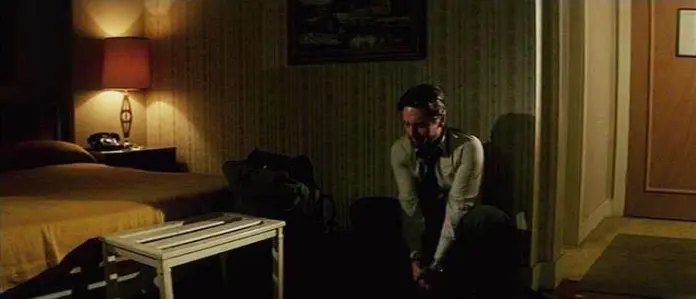
Other films and movies have explained this concept well. In the movie, ‘The Deerhunter’, the main character returns home from the Vietnam War. Years in war has made him very uncomfortable with the surroundings in the hotel. He can’t go back to his own house because he doesn’t have the nerve even though seeing the flags and banners held on the front door to welcome him back. After he chooses to stay in a nearby hotel for the night, he doesn’t get used to the big, soft bed and instead sits down in the corner of the wall and sinks his head into his hands frustratedly. Homecoming is hard and uneasy for him and continues that way as he goes up to the house the next morning and can’t make himself come to the front door. This mixed- up feeling is caused by years of longing of home, but actually fearing the moment, the scared feeling that everything will be different, and the ‘not-fitting in’ feeling he has.
Ivy, Grade 7
A still from the film ‘The Deerhunter’: Michael is afraid to ‘go home’ after he returns from Vietnam.
What is homecoming? It is the thing to go back to the place where you feel warm and loved, especially after a long and hard time away. Many people have the experience of an intense homecoming, like soldiers returning from war. Some walk a long road to get home, and their hearts are full of hope.
‘The Odyssey’ is the most famous story of extreme homecoming. Odysseus is away from Ithaca for twenty years, ten of which he spends journeying back to his home. His journey is full of dangers and difficulties.
Simon Armitage’s poem ‘The Homecoming’ talks of coming home after making mistakes, and the love of family is still there. The yellow jacket still fits, reflecting the love of his family, which still ‘fits’ and is the same. This is very similar to Odysseus. When he finally gets back to Ithaca, he doesn’t immediately go straight home. He is scared and unsure what he will find. Possible, he is also unsure if he is the same person and whether he ‘fits’. He has been away for many years, fighting monsters like the Cyclops, and losing all his men. The cyclops episode shows that although he is smart, he is also proud. He can’t resist telling the cyclops his name, which brings trouble to him.
The Supplement 5, p. 6
Neither is Ithaca the same when he eventually arrives home. There are a crowd of suitors, trying to marry Penelope, his wife, and take over his home. Penelope is as crafty as her husband. She weaves a cloth every day and unpicks it at night, prolonging the deadline she has given to the suitors and still hoping that her husband is alive. She is prepared to wait for him. Telemachus, Odysseus’ son, grows up and helps him fight the suitors. The swineherd is kind to him and helps him when he first arrives back on Ithaca, as a beggar. Stringing the bow and understanding the secrets of his marital bed are proofs that he still the same, the ‘real’ Odysseus. The bed is made from a tree root and can never be moved, just like his love for home and family.
In order to be accepted at home, Odysseus not only has to show others that he is authentic. He also has to prove to himself that he is who he says he is, and this involves much more than physical similarity. Home is about the spirit and the soul as much as anything else.
Serena, Grade 7
What is homecoming? You are homecoming, or coming home, when you are in places that are far away and now you are going back to the place where you lived. Many examples of these kind of homecomings start in a war or a journey. One extreme and famous homecoming is ‘The Odyssey’, which became famous because of all the trauma Odysseus faced and the peculiar relationship with his wife, Penelope. They loved each other very strongly despite the time spent away from each other – twenty years – which diminished the feelings they had for each other.
I think the most valuable thing about home is that it can provide a special feeling, of safety and familiarity. For me, home is a place where I feel ‘cosy’. If you live in a big mansion it may not give you the feeling that a real home should give you, even if it is big and expensive. In this case, it is not a real home. But if you feel safe and cosy, even if the place is under a bridge surrounded by garbage, then this is your home, despite not looking like a proper home. This holiday, I went to many places and spent a lot of time away from home, but when I was in the car driving towards my house, I felt excited about going home. I thought that I had been away for so long that everything would feel new, but when I took my first step into my room, everything felt so familiar. Every memory that had been kept away during my holiday surprisingly came back into my head so quickly. And, suddenly, the holiday just fely as if it had happened years ago. It felt a bit odd.
This feeling shows that home is not just the walls or furniture. It is the little things that make it special: the smell of my room, the way my bed feels, the sounds I hear every day, and the people who care about me. These small details stay in our hearts even when we are far away. They are like a quiet promise that no matter where we go or what happens to us, there is always a place that accepts us completely. Home does not judge us for changing or for making mistakes. It just waits for us to come back – and that is why homecoming is such a powerful experience.
We watched part of a movie called ‘The Farwell’, and this film relates to me a lot. My greatgrandma is in Fuzhou, and every Spring Festival we always visit her. I think her house is my second home. We go there every year, and I still can still remember the big, black dog that always shakes its tail when it sees us. And, just like the movie, China’s tradition is to reunite with families and our family is together, too. Reuniting can be a type of homecoming, too – a part of it.
After saying how I feel when I am in my home, I want to talk about a difficult time when I was separated from my home. It was in Beijing, when my mom and I had just been told that our hotel was cancelled. We had to find a place to stay at the last minute. That night was horrible. I just noticed how important my home is to me and how unsafe it feels when we are in a bad situation and living in a place that is in the middle of nowhere.
In Simon Armitage’s poem ‘The Homecoming’, the author says how even though he had grown up, he can still fit into a yellow jacket that he wore when he was younger. The jacket might be a representation of the safety and love of home, and after many years you come back to where you grew up and put on the jacket again. Well, I have some thoughts about the poem. The author uses primary colours to describe what his childhood looked like. Yellow is happiness; red can be anger; and blue can be sadness. These basic emotions stay with you even in adulthood – you actually never change. And when you return home, you can still fit into the same, childhood jacket.
In ‘The Odyssey’, Odysseus was gone for twenty years and he had changed in so many ways. For example, he had turned from a young man into an older and more messy person, and he also had less connection with his family – not like before, when they were closely bonded. When he finally goes home, he finds that many suitors (for his wife) are living in his house, which was once peaceful and clean. It is different from what he imagined. For years and years, he had imagined how wonderful it would be to return home, but the truth is that home has changed, and so has he. He can’t believe the suitors and shows no mercy. This shows that homecoming is not always happy or straightforward. Sometimes, we come home to find things broken or different, and that makes the journey even more painful.
Home is an important place for every living creature, and homecoming is a healing after experiencing trouble and chaos. It links the old self and the new self together and lets us experience again the happiness we had before, as with Odysseus. Home is a place that contains the things you love and the love of others. Home is a place where you belong.
Anson, Grade 6
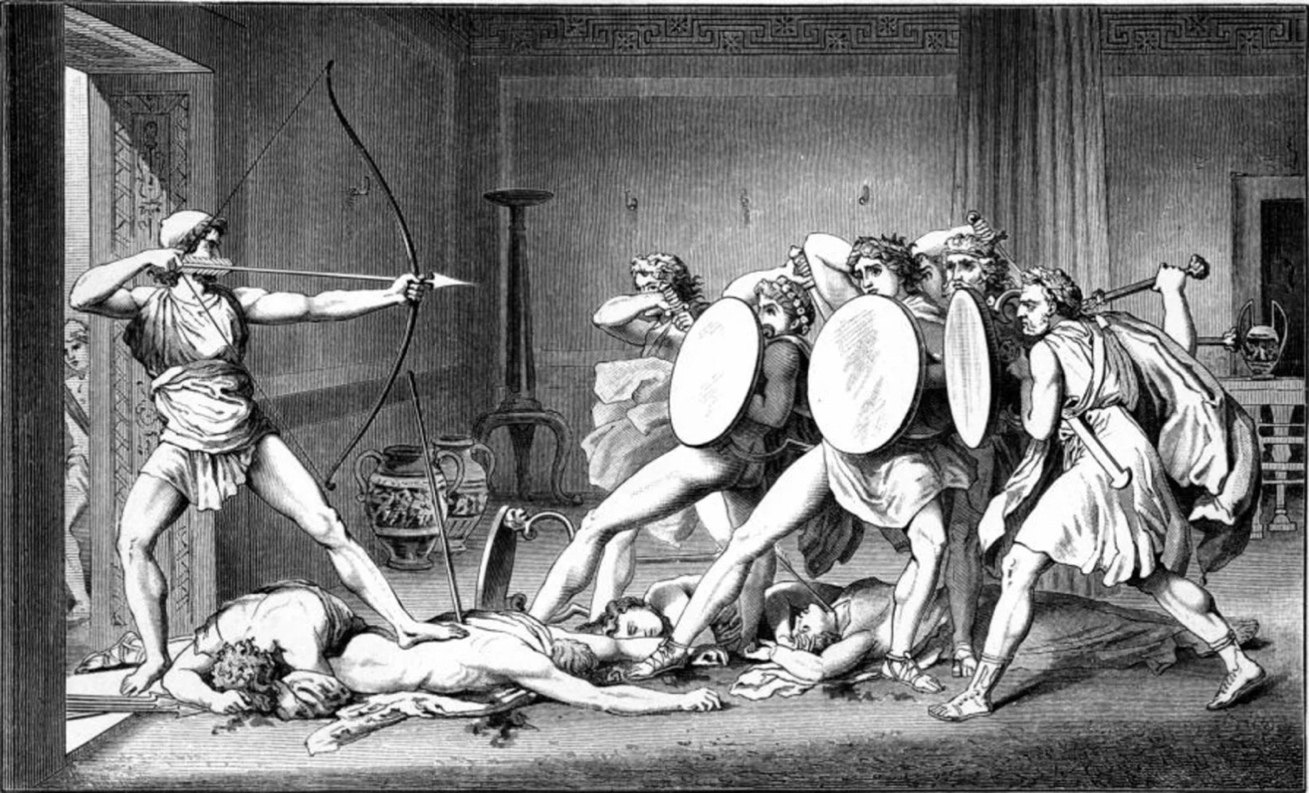
Odysseus slaughters the suitors in his home at the end of ‘The Odyssey’
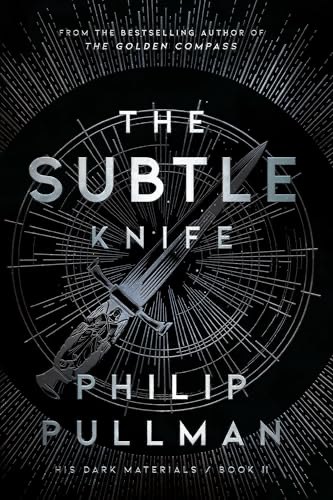
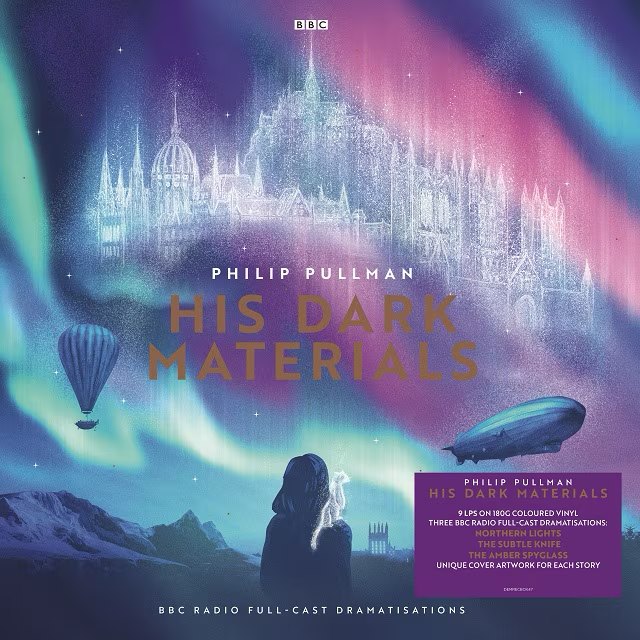
‘The Subtle Knife’ is the second book in Philip Pullman’s ‘His Dark Materials’ trilogy. After
the discovery of other worlds in the first book, ‘The Golden Compass’, Lyra begins to pose real problems to the power of the Magisterium. Students considered the kind of threat she posed and why the authorities wanted to destroy Lyra.
‘The Subtle Knife’ is a very interesting and breath-taking book. It contains great ideas, which were developed from ‘The Golden Compass’, such as daemons and the alethiometer, but it also adds new things such like the subtle knife itself. There are lots of questions worth thinking about in this book, but one question that is possibly the most interesting is the reason for the Magisterium wanting to stop Lyra from growing up.
First of all, a prophecy is mentioned in ‘The Golden Compass’, where Lyra will do something significant. There are many signs indicating she is special – she can read the alethiometer, she’s the daughter of Mrs Coulter, and so much more. According to the prophecy, Lyra will destroy, or in some sense, defeat the Magisterium. That is one reason the church tried to capture or kill her multiple times, even though she escaped and survived.
Second, Lyra is everything the church doesn’t want. The church wants everyone to obey them, to stop thinking for themselves, and do exactly what the church tells them. But Lyra is the antonym of all that. She thinks a lot and acts independently; she is a convincing liar; she is rebellious and high-spirited, often disobeying adult orders. She is already a troublesome threat to the church – so, what will become of the church if she is allowed to grow up?
The Supplement 5, p. 10The Supplement 5, p. 10The Supplement 5, p. 10
Third, Lyra will have a major role to play in the third book, ‘The Amber Spyglass’. The great war will begin. Lyra, Will and Asriel will be on one side, with the Magisterium on the other side, and Mrs Coulter somewhere in the middle. Lyra, according to the prophecy, will be a significant factor in destroying the Magisterium. That is another important reason for them wanting to capture and kill her.
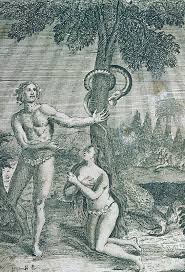
Fourth; when Mary Malone successfully connects with and talks to Dust, it reveals that Lyra is Eve and that Mary will play the serpent. In the Bible, the serpent tells Eve the truth, persuading her to eat the forbidden fruit, which allows her to have consciousness and to think. She also gave humans consciousness and allowed them independent thought. Mary Malone will tell Lyra the truth about Dust – that it allows her to think and discover the truth about the Magisterium.
Either way, Lyra is one of the greatest threats to the Magisterium. She lies, causes trouble, thinks for herself, and fights like a warrior. Sooner or later, she will help to destroy the Magisterium and cause its downfall. The church needs to prevent this by stopping her reaching adulthood.
Derrick, Grade 5
The church in the ‘His Dark Materials’ trilogy is represented by an organisation known as the Magisterium. It holds power over people by controlling the way they think and disallowing independent thought. In other words, the Magisterium has a tight grip on the ways in which people think, act and behave. There is a prophecy that a young girl will grow up to challenge the church’s power. This is talked about in the first book, ‘The Northern Lights’ (or ‘The Golden Compass’). The witches reveal the prophecy and say that Lyra is that young girl. Thereafter, they vow to protect Lyra while at the same time saying that she must not know she is so important – she must be allowed to act in an instinctive way, without feeling the weight of the prophecy on her shoulders. The point of all this is that the church wants to stop Lyra from growing up because she might be a threat to its power.
In the book ‘The Golden Compass’, Lord Asriel believed in other worlds but the Magisterium does not like it so they tried to poison him. Lyra saved her father and he opened a door to another world. In other worlds, people do not have daemons. Their lives were similar to Lyra’s but also different. Meanwhile, the Magisterium does not like the idea of other worlds because they wanted to control everyone and don’t want people to experience different ways of doing things. They want total power, which is why they are opposed to Asriel. They also are against Lyra because she is connected to Asriel, who is her father. Like him, she believed in the other worlds, refused to let the Magisterium control her, and fought them. The point of the church’s hate is that it doesn’t want to lose control and knowledge about and existence of other worlds would be a threat to it.
The Magisterium think that Dust is sinful because it is mostly attracted to adults, who are more sinful than children and have full consciousness. This is opposed to what the Magisterium wants – different worlds and other kinds of consciousness. Because Dust is associated with these things, they assume it must be bad, whereas Lyra begins to think it might be a good thing. The alethiometer functions because of Dust and it tells the truth and lets you know how to act. The Magisterium, on the other hand, hates Dust because of its consciousness, associating with harmful things like the Spectres. They do not want Lyra’s radical thinking to influence other people and make them think that they have the chance to think for themselves or believe there are other living things outside of their known world. It is similar to Adam and Eve, where God wanted to control them, not wanting them to have knowledge and think for themselves.
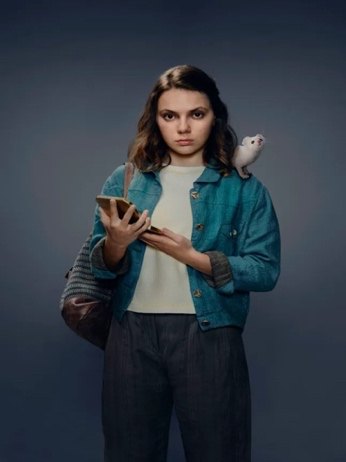
Lyra is capable of being a threat to the Magisterium because like the witches say, she will be important and maybe be significant in taking power from them. Also, she is strong, instinctive and determined. She always opposes the control of the Magisterium. She is stubborn and doesn’t give up easily, and she is also brave. As the daughter of Lord Asriel and Mrs Coulter, she is powerful and connected to important people. At first, she might have been weaker but as she grows stronger, she gains influence. At one point (in the television version of the book), her daemon even defeats Mrs Coulter’s golden monkey in a fight. The Magisterium begins to realise Lyra’s power and the threat she poses, especially as she is also close to the knife bearer, Will. If he can get the knife to Asriel, it could be crucial in his war against the church. Lyra is therefore a threat to the Magisterium as she is connected to many things which might destroy it.
In the book ‘The Golden Compass’, Lyra learned the new skill of reading the alethiometer, which showed how powerful she is. In the world in which she lived, very few had the kind of open mind she used to read it. The fact that she could read it shows how open-minded and independent she was becoming, indicating she was able to think for herself and could not be easily controlled.
Evan, Grade 5
In the book ‘The Golden Compass’, Lord Asriel found other worlds. And at the end, he opened a light tunnel which led to another world. In the book ‘The Subtle Knife’, Lyrs was always passing through the three main worlds: Cittagazze, Lyra’s Oxford, and Will’s Oxford. Lord Asriel finding other worlds finally was not good for the Magisterium, whose goal – like the gods – is to control everyone. But the other worlds might lead to other forces, which the Magisterium must fight to complete its goal. Also, the other worlds act like the Tree of Knowledge in the Bible. They might make people become curious and leave their own worlds, which is of no benefit to the Magisterium. The Magisterium and Lyra are enemies because Lyra has a close relationship with Asriel, and her believing in other worlds provides a lot of threats to the Magisterium’s plan.
In the book, an important thing was dust. Dust was sinful to the Magisterium. They think that Dust is bad and want everyone to believe the same thing. So, that’s why the Magisterium doesn’t allow Lyra to try and influence other people into believing that Dust is actually good. Dust was mainly attracted to adults, so the Magisterium experimented with children by cutting their daemons from them to make them half-alive. Dust was also bad for the Magisterium because it’s conscious, which means it’s kind of alive and has its own thoughts. This idea was proved by Dr Malone, who was able to communicate with Dust on her computer, while Lyra was able to use the alethiometer. This shows that Dust is very powerful and might destroy the plans of the Magisterium.
Lyra is a huge threat to the Magisterium. First, she is very strong, instinctive and determined person. Second, she is the child of two very strong and important parents – Lord Asriel and Mrs Coulter. Lord Asriel is making an army with the angels by his side. Mrs Coulter was with the Magisterium but she is very strong herself and is an unreliable ally. In the television version of ‘The Subtle Knife’, Lyra fought with Mrs Coulter and her daemon won when fighting with the golden monkey. This shows her increasing strength and power. Lastly, she was a connection with Will – the knife bearer – and Asriel needs the knife to win. Will could pass through worlds with the knife. So, Lyra proves a threat by having strong characteristics, strong parents, and a close relationship with Will.
Lyra’s ability to read the alethiometer shows how powerful and strong she is. It also shows that she is open-minded, which was the type of person the Magisterium hates and fears the most. It is easy to control the close-minded because they don’t think too much. But open-minded people think a lot and might question the Magisterium. Lyra also embodies other things that the Magisterium tries to forbid – independent consciousness, etc. This is why Lyra and the Magisterium are on different sides and why she poses a huge threat to the Magisterium.
In the book, Mary Malone successfully communicates with Dust. The most important thing that the Dust tells her is to act like the serpent to Lyra’s Eve, like in the Bible. This is a direct challenge to God and the Magisterium because in the Bible, God and the serpent were doing two different things, showing they were on opposing sides. The implications of Lyra becoming an Eve figure has been shown by her characteristics – open-minded, independent consciousness, etc. This is like Eve when she ate the fruit. All people will acquire consciousness. Eating from the Tree of Knowledge let everyone have a chance to gain knowledge. It’s something the Magisterium doesn’t want to happen so it tries to stop Lyra’s ‘Eve moment’.
It’s human nature to be independent-minded and, consequently, to be flawed. Being different and imperfect are also important parts of human nature. However, the Magisterium wants everyone to lose that part of their nature and become close-minded. Some examples of the ways in which the ability to feel and have emotions, even if they might sometimes be uncomfortable, are: 1. Life would be boring and without interest; 2. It would be very easy for everyone to be controlled, which is what the Magisterium wants to happen. Lyra is not only open-minded – she is also capable of influencing others to believe in her. For example, when she persuades Iorek Byrnison to help her.
In conclusion, Lyra was a huge threat to the Magisterium because of her ability, her characteristics, her friends, and her parents. The Magisterium wanted to control the whole world, so they needed Lyra out of the way. However, Lyra had all the things that they disliked. Also, her father had discovered other worlds, increasing the probability that the Magisterium’s plan for domination wouldn’t work. Now, the Magisterium are on the opposite side to Lord Asriel, the angels, and Lyra and Will. This meant that it had a big possibility of losing the battle.
Nathan, Grade 5
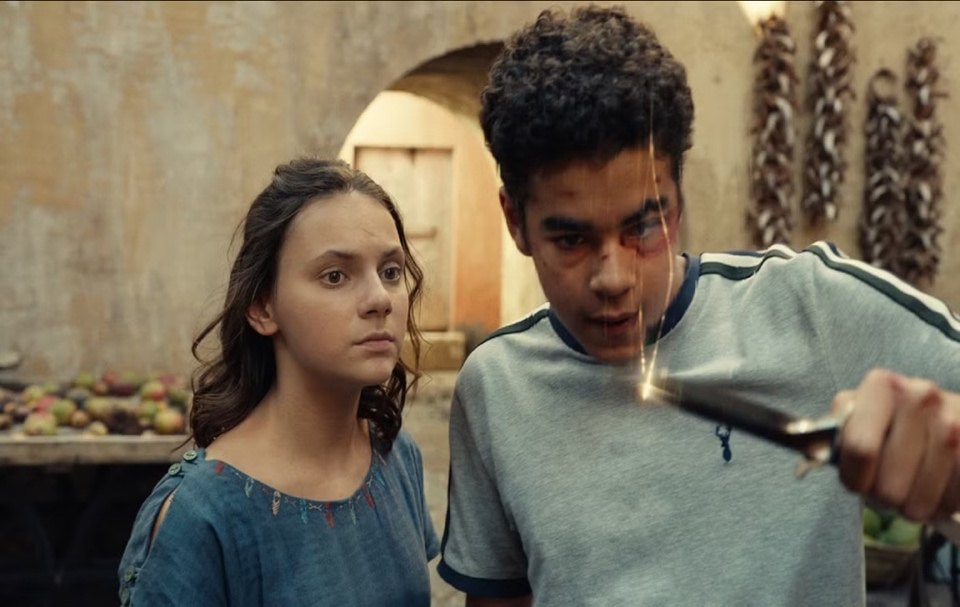
Lyra watches as Will learns how to cut between worlds using the Subtle Knife
The series of ‘His Dark Materials’ books is based on the existence of many different worlds. However. The Magisterium don’t want people to think that way because if everybody knows that it only controls one world, this realisation will greatly diminish its power. Lord Asriel, on the other hand, believes in the other worlds, and Lyra, his daughter, also believes in them. Both characters are very important and could spread belief about the other worlds, making people believe in them. And that could put the Magisterium in a very weak situation. Therefore, Asriel and Lyra are its enemies.
Dust is also very important throughout the series. It kind of plays many roles in the books at the same time. It is what makes the alethiometer work, the one that communicates with Lyra and Dr Malone in ‘the Cave’, and is also the thing that is mostly attracted to adults. However, Dust is also seen as sinful by thr Magisterium. As I said, it is the thing that enables the Cave and alethiometer – it is not only ‘smart’ but has consciousness.
The Supplement 5, p. 15
However, as the story progresses, Lyra understands that the Magisterium is bad, and that Dust is actually good. The Magisterium is bad, she thinks, so if it says that Dust is bad, then it must be good. Knowing this has only endangered herself even more because the Magisterium sees her thinking as radical and dangerous, and she can’t be allowed to influence others with her way of thinking.
Other than the first two problems, there are also many ways in which Lyra is capable of being a threat to the Magisterium. For example, she is strong, instinctive and determined. More than that, she is the child of two powerful parents, Lord Asriel and Mrs Coulter. And she is growing up fast, becoming more powerful herself, something which is shown in the television series by her daemon defeating her mother’s daemon in a fight. It is impossible to realise how powerful she might become if she is allowed to grow up.
In addition to all this, Lyra is very close to Will, the bearer of the Subtle Knife, which is the key that will allow Asriel’s army to defeat the Magisterium. In other words, Lyra has the capability and the connections to cause the church big problems.
Her ability to read the alethiometer is a rare gift that not many people have. Not only does she have this ability, she didn’t have the proper training that others needed. She learns not by training her memory and remembering the meaning of the symbols, but by becoming openminded. Dr Malone calls this special and unusual ability ‘negative capability’. This statement might seem strange to readers, yet it is an important clue in telling us why Lyra is a threat to the Magisterium. The statement means that she embodies everything the Magisterium tries to forbid and that includes things like open-mindedness, independent consciousness and many other related ways of thinking.
The story is closely related to parts of the Bible. Many of the characters are just playing roles from Biblical characters. For example, Lyra throughout the whole story is playing the role of Eve, while Dr Malone is the serpent or snake. In other words, a direct instruction from the Dust is to challenge the authority of God and the Magisterium. Its first instruction is to let Dr Malone be a serpent to Lyra’s Eve. Lyra’s ‘Eve moment’ will allow everybody consciousness in the same way Eve acquired knowledge, which was by eating fruit from the Tree of Knowledge. However, the Magisterium doesn’t want people to have knowledge or independent consciousness, so it does its best to stop Lyra achieving her ‘Eve moment’.
Being a human, it is natural to be independent-minded and, flawed and imperfect, and most importantly, to have your own emotions. And having emotions is kind of appealing because it is one of the most important parts that makes you ‘you’. Without emotions, you would just be a kind of robot who follows others’ commands, which means there is little point in living. For example, in the television series ‘Pluribus’, everyone in the world is connected to one communal mind, except for a small handful of people. The others are all friendly and helpful but they actually have no independent purpose, no point to their lives. Lyra not only embodies independence, she also has the courage to help others. That is why the Magisterium wants to stop her growing up.
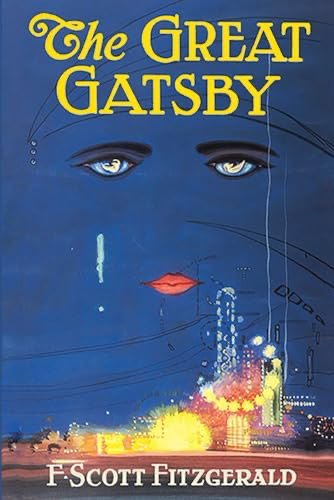
‘The Great Gatsby’, by F. Scott Fitzgerald, is narrated by Nick Carraway. But what would
change if one of the scenes was seen through the eyes of another narrator?
‘I work at the Plaza, trying to make ends meet for my acting gigs. It’s where the wealthy drift in and out like guests at a party that never truly ends. I am taught to notice things, remember details about the guests. They arrive flushed with drink and perfume, laughing too loudly, leaning on people who are not always the ones they leave with. I see men being escorted upstairs by women who are not their wives, women stumbling out at dawn with their heels in their hands, their dignity long gone. Champagne softens voices, loosens promises, and blurs loyalties. I do not know their private arrangements, but I learn quickly that what looks permanent in the lobby often shifts behind closed doors.
I am called up to the suite with a bucket of ice. The room is already stifling when I enter. Sunlight presses hard against the windows and I sense tempers rising.
The Supplement 5, p. 18
Mr. Buchanan is the powerfully built man who ordered the ice. His booming voice easily fills the space. He seems confident and practiced. As if the room were his. If you ask me, he’s a little presumptuous. Mr. Gatsby is a slighter, softer-spoken man. He’s a regular here and is now standing near the window. Willpower alone keeps him upright in the stronger man’s presence. A pretty young woman sits between them, pale and rigid, her hands folded tightly in her lap. She looks frightened, or perhaps only overwhelmed. I can’t be sure which.
I set the ice down and wait for my orders. There is a brief silence, thick and expectant. Then Mr. Gatsby speaks, his voice calm but steady, insisting that the young woman (he calls her “Daisy”) says she never loved the loud mouth, apparently her husband. He does not raise his voice. He does not need to. He repeats the words as though saying them clearly enough would make them true.
The pause that follows lasts only seconds, but it feels much longer to me. Mrs. Buchanan draws a breath and begins to speak, then stops. When she finally answers, her voice wavers. She does not deny loving her husband, now or ever. Instead, she hesitates. I find myself holding my breath, waiting for her to choose whatever it is she needs to say. She glances anxiously at her husband before finishing her reply. Immediately, I feel a sudden understanding, not of her love for such a man but of the heaviness behind her words, the careful way she navigates him. I see her fingers twisting, almost imperceptibly. And her shoulders shift, a subtle signalling of hesitation, of thought measured against consequence. Every gesture carries meaning, though none of it is spoken aloud.
You see, I know what’s like to steer a course across a stage, and that’s exactly what she was doing.
In recognition of her efforts, I see Mr. Buchanan almost casually place his hand on Daisy’s shoulder. Speaking now, he does not raise his voice as before, nor does he sound threatened by the other fellow, Gatsby. He sounds self-assured, almost complacent. And watching husband and wife, I recognize how alike they are.
The other man stands apart, tense, rigid. His shoulders are set. His hands clench and unclench. He leans forward slightly, then stops. I felt embarrassed for him, for his defeat and for the annihilation of his idea of love.
My presence now feels awkward. Clearly, my services are no longer required. The battle is over and I quietly leave the room.
Even though the entitled ease and social certainty of the Buchanans appall me, I cannot help applauding the pragmatism in their connection. They know how to move around each other. They know how to stay together. It is not perfect, but it functions.’
Years later, when I showed this diary excerpt to my teenage children, I told them the biggest lesson I learned in life was that love is never flawless. It is always messy, often imperfect, sometimes frightening, and yet never less than real. And it is that understanding, seeing love in all its uncertainty and deformity, that helped me recognize and cherish the kind of steady, quiet, enduring love I found with their mother.
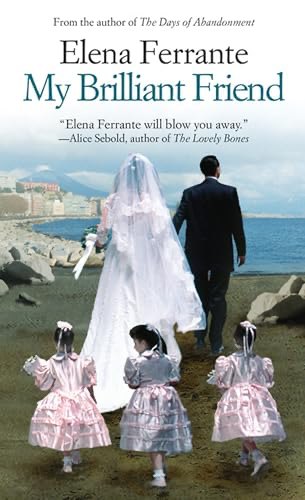
‘My Brilliant Friend’ and the idea of ‘dissolving margins’
‘Dissolving Margins: What are they are where can they be found?’ An exploration of Elena Ferrante’s ‘My Brilliant Friend’
‘Smarginatura’, or dissolving margins, is the sudden and intuitive awareness of the true nature of life though the observation of minute daily details, often with the boundaries of life becoming blurred or dissolved. Though the term was first coined by Elena Ferrante, a uthor of the renowned series the Neapolitan Quartet, ‘dissolving margins’ is an idea present and experienced throughout real life, and expressed in numerous other novels, movies and artworks as well. In this essay, I will discuss the various ways in which smarginatura is portrayed through a collection of literary and artistic works, starting with Elena Ferrante's ‘My Brilliant Friend’, in an attempt to determine its cause and its effects on people in the actual world.
‘My Brilliant Friend’ by Italian author Elena Ferrante is a novel like no other. Following the continuously intertwined yet drastically different lives of Lila and Elena, two young women born in the impoverished 20th century Naples, this book is a beautifully constructed replica of life in its most genuine form, revealing underneath its garish wrappings life's fundamentally chaotic nature. The concept of ‘dissolving margins’ in this story acts as both the essence of the Lila's spirit and the well-hidden thread behind both her and Elena's fate, stringing together all the seemingly discrete events in the book in their deepest and most rudimentary forms.
The Supplement 5, p. 21The Supplement 5, p. 21
Lila's dissolving margins, as she puts it, is ‘the impression that something absolutely material, which had been present around her and around everyone and everything forever, but imperceptible, was breaking down the outlines of persons and things and revealing itself ‘(Ferrante, 90). It is the direct and intuitive awareness of chaos as the true essence of life in human society, the randomness and unpredictability of the world that we so often try to ignore with our rigid and self-centred minds. Lila, only Lila with her brilliant mind and wild soul, has the courage to strip away all the colourful trivialities of life and with the naked eye, expose the blackened core of chaos, of evil, of greed and of poverty beneath all the daily violence, the horrible yet recurring truths behind the neighbourhood, its people, all that she has ever loved. The realization of chaos as the fundamental nature of life is the reason behind her dreams to throw away the ‘before’ and start with the ‘new’, the ‘different’, and partly explains why she is attracted to Stefano, who promises such a future.
Another interesting aspect of Lila's smarginatura is her perception of not just the chaos and unpredictability of life in the human society, but also of the inexistence of any entity beyond the ‘dissolving’ boundaries of life, the line that is between the known and the unknown, the precipice beyond which everything will lose their meanings, shed the forms they have taken throughout their journeys in time, be merged back into the original and most fundamental state of life. Unlike most people, who are able to trick their own minds into ignoring the existence of such a ‘beyond, Lila's longing for the truth is too strong, her perception of the world around her too acute, her observation of the people on the streets too intense, for her to be able to ignore what seemed to her to be clear and evident.
However, these internal traits of Lila's character are not the only reasons for her unique sensitivity to life's chaos. One must also consider the environment into which she was born into: a poor neighbourhood in Naples, dusty streets, a society divided by economic hierarchy, a family full of violence, neglecting her of the love and attention she deserves. Both her mind and the environment around her helped shape Lila's singular response to the chaos of life and her ability to face ‘dissolving margins’.
For Lila herself, dissolving margins is probably one of the most significant features of her soul. Indeed, one can argue that the term can be used to define the entirety of Lila's spirit, whereas Lila is only a device through which life reveals its "dissol ving margins" to ordinary understanding. Unlike the more traditional Elena, Lila has a mind so open and so beautiful that she can experience the margins of entities dissolving everywhere, all the time. In a sense the wildness and destructiveness is a kind of beauty. To cope with the overwhelming despair and fear this experience brings, Lila cleverly instils her dreams and her doubt into the objects around her. Elena, to her, is a person who is smart, but not bright, conventional, responsible, a stable anchor against the tide of life's unpredictability. The shoes, emblems for roaming and for motion, are reminders of her childhood self and hope for freedom and for escape out of Naples. Stefano, a figure who seems to be honest and well-mannered, acts as a buffer between her and Marcello, the very embodiment of all the greed and violence of the neighbourhood which she detests. She has built this wall of protection around herself, step by step, rock by rock. Everything shatters, however, when Marcello walks into her wedding wearing the shoes that Stefano has bought, shoes she has made in her childhood. The margins have, despite her efforts, dissolved again. The protection she has built carefully against them would always be breached. In the end, the shoes have roamed right back to where they had started: the neighbourhood she hates, foreshadowing Lila's fate from her marriage until her disappearance. As episodes of smarginatura multiply, Lila's life slips and slides into the abyss of poverty and despair, her mind and body chained ever tighter to the neighbourhood from which she wants to escape. Then, at the age of sixty-six, Lila herself is finally swallowed entirely into the margins of life, accepting and disintegrating with the entity the she has instinctively perceived as being existent throughout her life. After a lifetime of searching, of struggling, of breaking down all the forms, she finally returns to where, for her, the world started.
For Elena, dissolving margins has always been present in her life, though she fails to feel it as acutely or name it as Lila has done. However, instead of experiencing the chaos of the world, Elena's smarginatura is more focused on the dissolving of the margins of her body and the changing world around it. After suffering the loss of Tina and Nu, Elena said that , ‘I was overcome by a kind of tactile dysfunction; sometimes I had the impression that, while every animated being around me was speeding up the rhythms of its life, solid surfaces turned soft under my fingers or swelled up, leaving empty spaces between their internal mass and the surface skin. It seemed to me that my own body, if you touched it, was distended, and that saddened me’ (Ferrante, 57). The transformation of her body during adolescence happens to occur at the same time as the changes that are happening to her neighbourhood, which she describes, thus: ‘in those middle school years many things changed right before our eyes, but day by day, so that they didn't seem to be real changes’ (Ferrante, 109). The industrialization and urbanization of Naples during the 20th century gives rise to new hopes and opportunities, making businesses grow and bloom. The transformation of Elena's body during puberty and the rapid changes happening to the neighbourhood are, in this light, margins dissolving and rebuilding themselves, throwing away old forms and morphing into new ones, forever changing, forever growing. However, the chaos behind all the new and exciting things that are happening during Elena's teenage years stays forever in the backdrop.
Lila's dissolving margins has a curious effect on Elena. Although she succeeds in the conventional way at school and in the eyes of her teachers, the presence of Lila's wildness and inextinguishable brilliance in her life has instilled a seed of doubt in Elena's heart, a doubt not only of her own intelligence but more importantly of her forthcoming future, of the new life that education will lead to. She feels inferior and insubstantial compared to her friend, even during the times in which Lila is stuck in marriage and abused by her husband, when Elena herself has already successfully escaped out of the grasps of the neighbourhood and has moved to a bigger city to study in university.
Yes, Elena has won the fight. She went to high school, applied to university, wrote a book. But always, beyond her mind's grasp, there is some attribute of Lila that she cannot attain, that she can neither imitate nor surpass. It has revealed itself on the stairs that led to Don Achille's apartment, in the classroom, on the road to the sea. It has come again and again in the form of dissolving margins, in Lila's writing and in her speech, in her gestures and in her actions. It is not just the genius, or the determination, or the courage. Rather, it is the wildness of soul that Elena lacks, the ‘forever desire’ to dig deeper, go further, travel beyond the known and beyond the unknown, break all the forms, and seek the truth about life. Dissolving margins comes both as a curse and as a blessing. A curse to be forever overwhelmed in despair and fear, but a blessing to be the only one who sees the world as it really is.
Elena's doubt of the future proves to be correct. The form that education and success has enforced upon her turns out to be a new type of imprisonment, different from the physical and mental imprisonment that the neighbourhood has inflicted on Lila. In fact, it is even stronger than that. It is a spiritual cage, a form that traps one using the identity that all the choices in one's life have helped to impose. It captures not just the mind or the body, but also the freedom of soul. It is that which prevents Elena from stepping out of her comfort zone again, from just walking out the door leaving everything behind. Only Lila, whose soul is forever roaming and who has broken every form that has been set upon her, even during childhood, is capable of that act.
When Lila and Elena first take their journey outside the neighbourhood towards the sea, it is Lila who falters. ‘ ‘And the sea? ‘It’s too far.’ ’ (Ferrante, 77). She is afraid of betraying her family, afraid of betraying her friend, and also afraid, to some extent, of losing the life that she has led since her childhood. But Lila has never abandoned her search for the sea, for freedom and for the unknown, deep in her heart and soul. She has never reached ‘the sea’ physically, never in her lifetime, partly because of the lack of support she has had from her family, partly because of the tragic love, trust and loyalty she still holds to her father, mother and brother, despite the fact that they have never loved her back. But in the end, it is she who takes the real leap of faith into the yawning abyss of the unknown, a step taken to pursue her freedom, one taken without a backwards glance. It is a moment of spiritual redemption, not just for her but also for the reader. She has the courage, the determination, the brilliance, the perseverance. But more importantly, she has something that Elena will never have: the wildness of soul that enables her to not only seek freedom, but on top of that to pursue the unknown. The far end of the tunnel which forms the boundary of the neighbourhood. The edge of the world just beyond the horizon and the reach of the eye. The glittering line where the sky meets the sea. That line she is determined to cross ever since she was young, when love for her family had restrained her. But now she has seen all, now she has learnt all, now she has nothing to lose. In the end, contrary to the popular view, it is Lila who truly succeeds, preserving her soul against all the odds, who truly becomes the ‘brilliant friend’ who Elena can only try to give shape to, but will never surpass.
Although Ferrante's version of dissolving margins is defined very clearly, its sensations and the awareness of dislocation can exist in other ways as well. Different writers and artists have experienced similar types of disconnection and separation from their worlds. A similar mental experience is found in ‘A Portrait of the Artist as a Young Man’, the predecessor of the renowned ‘Ulysses’ novel by Irish author James Joyce, and a unique Bildungsroman novel that uses the stream of consciousness narrative technique to portray the protagonist Stephen Dedalus's childhood and teenage years. A troubled and philosophical youth, Stephen spends his time roaming the streets of Blackrock, Cork and Dublin as the seeds of the Irish Revolution are sown, pondering the ultimate question of the meaning for one's existence.
Dissolving margins for Stephen are the complete alienation of himself from the outside world. During a travel with his father in Cork, he experiences ‘[a]n abyss of fortune or of temperament sundered him from them. His mind seemed older than theirs: it shone coldly on their strifes and happiness and regrets like a moon upon a younger earth [...] Nothing stirred within his soul but a cold and cruel and loveless lust. His childhood was dead or lost and with it his soul capable of simple joys and he was drifting amid life like the barren shell of the moon (Joyce, 82). The excerpt is followed by one of Percy Shelley's poems: ‘To the Moon’.
Art thou pale for weariness Of climbing heaven and gazing on the earth Wandering companionless ...? (Joyce, 83). Here, it is clear that the moon is being used as a symbol for Stephen's isolation from the world and his cold observation of society from a third perspective. Though seemingly similar to Lila's description of ‘a storm across the sea on a moonlit night’ in ‘My Brilliant Friend’, Joyce's dissolving margins is different from Ferrante's in a fundamental way. It does not reveal the chaos of the world we live in, with a passionate intuition and a flash of the mind. Rather, it is the total detachment of one's mind, soul and emotions from the fast-moving and perplexing outer world, the distancing of oneself from external influences in an attempt to preserve one's independence and control over oneself, until one is almost observing the world from another dimension in a way that is completely objective.
In doing so, one also loses part of what makes them human, setting one in a spot of feigned control, making one more outwardly aloof and arrogant yet inwardly trying to keep oneself separated from the world and not willing to face reality in its most terrible and yet most authentic form. This shows an interesting contrast with Lila, whose fierce sense of humanity and unrestrained mind and imagination are the building blocks for her outstanding courage, allowing her to face reality in its fullest with unwavering boldness.
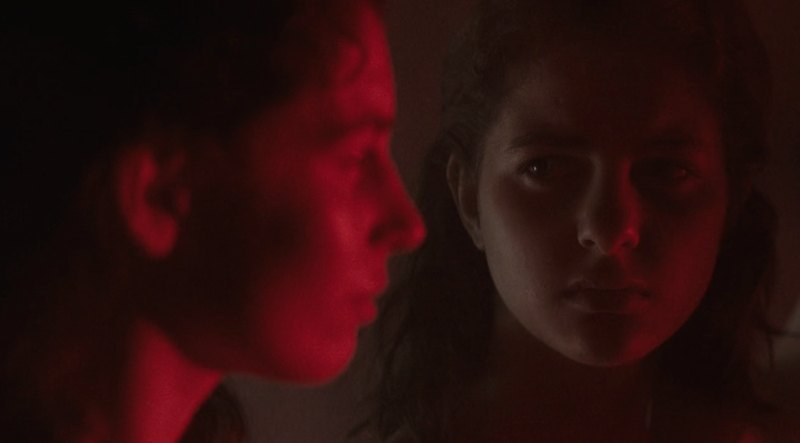
As well as books, dissolving margins are also apparent in the thriller movie ‘Don't Look Now’, which presents a very different experience of it from either Lila's or Stephen's smarginatura. Here, the concept is expressed in a supernatural perception of the unknown, in both the present and the future. The repeated appearance of the girl (dwarf) in the red cloak in the movie show that the protagonist's period of subconscious awareness of his fate before it has happened. His conscious mind, which is very vulnerable to his unconscious, spans well over the ordinary range. His dissolving margins are more likely to be the result of the instinctive observation of small details, extraordinary reasoning skills, emotional trauma and isolation from the world following the loss of his daughter, and an element of the perception of the unseen force of the supernatural. However, John was never fully aware or accepting of his ability to see ‘the beyond’. Unlike Lila, he is afraid to face his potential directly, preferring to keep life as it is instead.
Poetry, too, can offer a sense of dissolving margins, perhaps most clearly in the poems of Keats, Byron and Shelley, all second-generation English Romanticist poets. Their poems are most inspiring in the way that they contain ‘negative capability’, or the ability to simultaneously hold opposite perspectives and treasure the unknown. Even in a single ode, the poet can celebrate the beauty of life and despair at the poverty and illnesses devastating the human world at the same time. To a greater extent, this would align with both Lila's perception of life as chaotic and her longing for the discovery of the unknown at the boundaries of life.
The dissolving margins of the following poems, unlike the terrifying and mysterious illusion of‘Don't Look Now’, celebrate the beauty of nature around them and strive to deliver a specificsense of purity and harmony at the heart of nature through vivid descriptions of the wind, thestars, the trees and the water. Here, for example, is something from Keats’ ‘Ode to aNightingale’:I cannot see what flowers are at my feet,Nor what soft incense hangs upon the boughs,But, in embalmed darkness, guess each sweetWherewith the seasonable month endowsThe grass, the thicket, and the fruit-tree wild;White hawthorn, and the pastoral eglantine;Fast fading violets cover'd up in leaves;And mid-May's eldest child,The coming musk-rose, full of dewy wine,The murmurous haunt of flies on summer eves.
And this from Percy Shelley’s ‘O! there are spirits of the air’:
O! there are spirits of the air,And genii of the evening breeze,And gentle ghosts, with eyes as fairAs star-beams among twilight trees—Such lovely ministers to meetOft hast thou turned from men thy lonely feet.
With mountain winds, and babbling springs,And moonlight seas, that are the voiceOf these inexplicable things,Thou didst hold commune, and rejoiceWhen they did answer thee; but theyCast, like a worthless boon, thy love away.
In contrast, other poems might feature a sort of "dissolving margins" similar to Lila's or Stephen's. They reveal the chaos, cruelty and cold meaninglessness of the world and of humans, along with their evil and chaotic nature. At many times, both cases can occur to the same poet – the opposite sides of a ball, existing and being perceived simultaneously as the poet wanders on through the forest of words in search for the meaning of life and of existence, as with this extract from Keats’ ‘Ode to a Nightingale’: Fade far away, dissolve, and quite forget What thou among the leaves hast never known, The weariness, the fever, and the fret Here, where men sit and hear each other groan; Where palsy shakes a few, sad, last gray hairs, Where youth grows pale, and spectre-thin, and dies; Where but to think is to be full of sorrow And leaden-eyed despairs, Where Beauty cannot keep her lustrous eyes, Or new Love pine at them beyond to-morrow. Romantic poets are especially well-attuned to this marginal side of life, the dream ‘which was not all a dream’, as Byron expressed it. Like others, he relished wandering ‘in the eternal space’ and found ‘pleasure in the pathless woods’. For myself, smarginatura has a more personal character, perhaps something like a combination of Ferrante's, Joyce's, Shelley's and Byron's dissolving margins. On these occasions it seems to me that I am observing the world and the people in it through a film of water, so that the voices and the movements distend, echo and lose their meanings, like listening to another person while being immersed in a swimming pool. Usually when this happens there are a lot of people around, all talking loudly and raucously, but to me the world is eerily silent, the existence of others erased, the connections cut off, until I am conscious of only myself in the vast sea of bleakness that used to be a classroom or a corridor. My mind feels separate from those of others, segregated, as if they spoke in an alien language.
Sometimes I am distant, detached, observing the world with a cold indifference. This feeling seems to be more connected to Stephen's perception of dissolving margins in his alienation from others and his search for the meaning for life. At other times I fe el chaos among all the disorganized and numerous thoughts in every person's head, as Lila has done, but less acutely. But in most cases, when the special feeling of dissolving margins is not present, I feel only anguish, wondering why others cannot understand me or be interested any topic that I wish to discuss, such as philosophy or math. Physically and mentally I also feel cut off from the school norms, as I am usually the only girl in almost everything that I do, and I begin to wonder if I should have been born with a different gender or, even, if I am in some ways autistic, have Asperger's syndrome, or am on some kind of spectrum, as seems to be the case with many (unprofessional) online tests I have taken.
However, my smarginatura seems to only exist when there are other people around. When people ‘disappear’, my awareness of the chaos and alienness of life fades along with them. Perhaps Lila might feel that life is harmonious when she is alone. She has always been caged in the crowded Naples neighbourhood, which is her home, and thus she has had no chance of doing so. Maybe she will feel a sense of harmony, at last, when she ‘disintegrates’ or even evaporates at the age of sixty-six. For myself the feeling of detachment is not always there. It is either ‘on’ or ‘off’, depending on the occasion and my emotions. And, sometimes, I do not feel it at all. I feel only the blissful harmony of the empty nature all around me, of trees and the occasional sound of water. I have never been to the woods in real life, but in my imagination, I go in search for the source of the water, and then follow the stream down to the river, and then to the sea. In my dreams I lie on the sunny beach reading as Elena had done during her vacation in Ischia, then go for a swim in the ocean. The pathless woods, the lonely shore, the deep sea, the mountain winds and babbling springs, all the things in the poetry of Shelley and Byron I connect with in that private part of my heart that yearns for peace.
It is certainly worth exploring the essence and different versions of dissolving margins, especially the various ways it might be expressed in literary works. I believe that life has a true and unified truth, a ‘meaning’ waiting to be discovered. In a way, this is one of my methods of ‘wilful myopia’ to smarginatura: to believe that life has a purpose, and believe that reason and mathematics can lead us to it. However, the truth may vary with the definition of life that is used in the argument. Life in nature is ordered and harmonious. Life in human society is chaotic and violent. Life in the universe is both – at the same time. Thus, dissolving margins, offer a glimpse of the true essence of life under its thick veils, not just the illusion that everyone wishes to see. It is both a curse and a privilege to the shrewdest and sharpest minds; a capacity to see the beyond but also a disability that renders one unable to tear one's eyes away from the most evident and most apparent and yet most horrible, an incapacity to cheat one's own mind through wilful myopia or connection to others.
Different people can react differently to dissolving margins. To most people, the unknown is terrifying, and they therefore adopt wilful myopia to protect themselves from this fear. We live in our own small circles, in friendship groups and family, in school and companies, in neighbourhoods and communities and nations. Every form of human society is a way for us to seek belonging, to bind ourselves more securely and permanently with other human beings, to help ourselves believe that the environment that we live in is reality, both against the chaos of the world and against the knowledge that forever, in the distance, there is a boundary of life, beyond which it is meaninglessness. In a way, the history of mankind is driven by a single desire to turn away from the evident, from the horrible reality of the beyond. Throughout history people have made communities, believed in religions, created more and more elaborate social norms, condemned the ones who do have the courage to look as outliers. In the fast moving and even more brutal 21st -century, teenagers are coping with this world through social media and tight friendship groups, numbing their senses through massive waves of information. The learned and the wise may not be chosen by life to reveal its truth. Nor are the richest or the brightest. Only ones who are bold, ready to face the horrible reality head-on, like Lila did, will be able to break the chains in Plato's cave and catch a glimpse of the outside world, a world that may be far less satisfying than one thinks. But to those with resolve, the risk and the pain is worth the final discovery of truth.
This broadens my discussion of smarginatura and concludes what I want to say about dissolving margins as they are expressed in various literary contexts. As readers may see, smarginatura is a process that can be seen in different lights and can vary and have different effects, from person to person. However, universal to all of them is the struggle to maintain individuality against the crowd, the search for one's own purpose in the universe, and the forever pursuit of freedom, of the unknown and of truth.
Shakespeare’s Romeo and Juliet is a famous story that stands for impulsive love and romance.
The two young lovers showed that sacrifice is the biggest test of love, they end up giving up their family ties and even their lives for each other. Most people know Romeo and Juliet for their determined passion and deep connection and commitment to one another, as they love each other deeply influence their families’ hatred. But it is not just a love story, it also tells us how hatred and impulsive choices can lead to unexpectable, intolerable endings, making it more than just love.
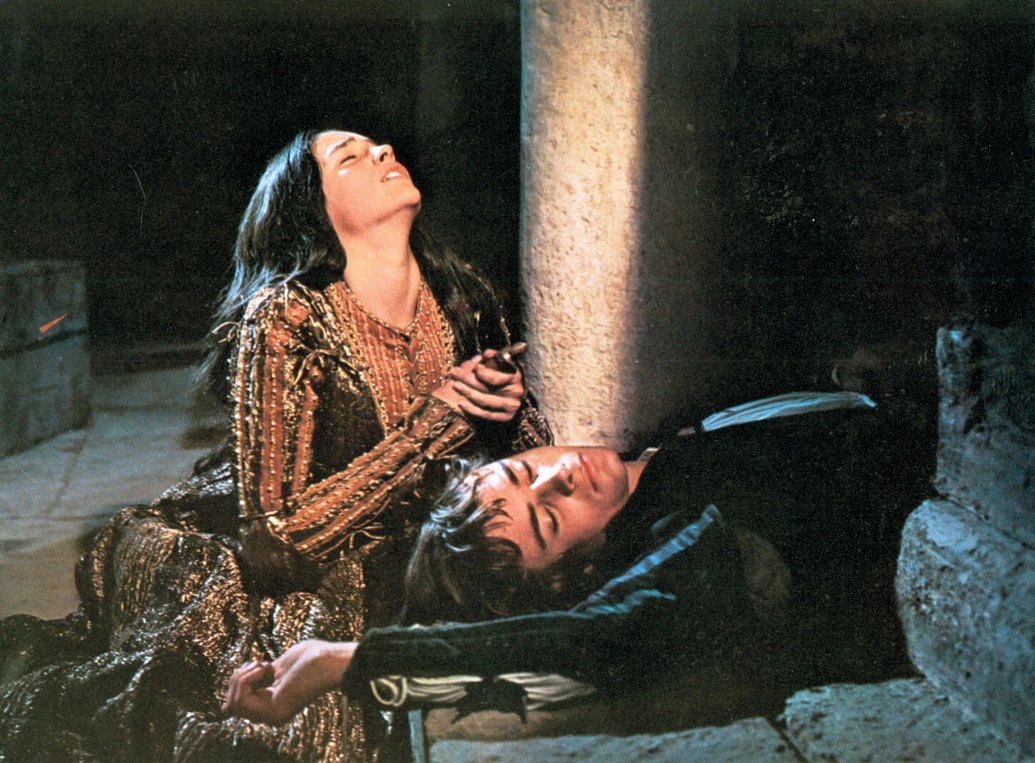
Juliet kills herself in the tomb after she wakes and finds that Romeo has committed suicide
Out of the story, in our life, love can divide into several kinds of loving, all types are extremely different; Family love, including parental love and kinship, it plays a big role in the story. Romeo’s and Juliet’s parents show parent love in their own way, they care about their children’s future, so they make decisions for them, like arranging Juliet’s marriage to Paris. But their love is mixed with control and tradition, not true understanding.
The Supplement 5, p. 32
Tybalt, Juliet’s cousin, shows strong kinship: he loves his family deeply and is ready to fight anyone who piss off the Capulets. His actions defending their family even leads to tragic conflicts. Some characters show love through duty, care, friendship and loyalty. The Nurse has looked after Juliet since she was a baby, so her love is full of care and duty, she wants Juliet to be happy and even helps her meet Romeo secretly. The Laurence also shows love through duty: he cares about the peace of Verona and the two young lovers, so he tries to help them with his wisdom.
For Romeo, his friends Mercutio give him love through companionship and loyalty. Mercutio jokes with Romeo but defends him bravely; Romeo’s other friends comfort him when he is sad, stays loyal to Romeo until the end, even bringing him sad news about Juliet. Romance in the play are extremely different, from fake obsession to true passion. Before meeting Juliet, Romeo’s love for Rosaline is obsessive and fake, it is a fashionable, love others for the objective of love, not real love. Paris’s love for Juliet is also not true: it is an arrangement based on duty, not feelings. He marries Juliet because it is like a proper, not because he loves her deeply. In contrast, Romeo and Juliet’s love is passionate, impulsive and real. They love each other with all their hearts, ignoring their families’ hatred, and their love is so strong that they are willing to give up everything for each other, even their lives.
In Romeo and Juliet, Shakespeare lays bare the many faces love can take, like Paris's feelings for Juliet are never genuine affection or a connection of the heart; instead, they are a product of social expectation, the family duty; the kind of love that defined the odd, noble life in Verona, where marriage was trading, not a choice. Paris wants to marry Juliet is not because he knows her, admires her, or cares for her, but because she is the daughter of the Capulets: a noble family that matches with the identity of Paris. For him, this is love as a social arrangement, hold the unwritten rules of the upper class, where marriage combine powerful families together and not disrupting the social order. It is love as duty too, a responsibility of the wealthy peopl e, respected nobleman, expected to marry an equal wife to hold his family’s honour. There is no struggle, no risk, only easy. The Capulets eagerly accept his demand, making Juliet his for the taking with a single agreement, no overcoming, no hearts to win. This is love as a material arrangement, a transaction where two families trade their children’s lives for power, honour, and peace, Juliet’s marriage is a prize, her happiness is a thought. Paris’s love contrast to Romeo and Juliet’s impulsive, reckless, unselfishness. Where they love is a social arrangement, he loves with a checklist. Where they don’t agree with the world for their love, he follows the world’s rules to claim his. In this, Shakespeare makes a powerful point: love can be a gift that sets us free, but it can also be a case, formed by society, duty, and greed, that traps us in lives not of our choosing. And in Paris, we see the sad truth of what love becomes when it is not felt, it'll be painful.
The actions of extreme passions and feelings when falling in love will cause destructive, unpredictable dangers. Which Juliet and Romeo did, their marriage comes so rapidly, only hours of romance, the two lovers love each other with out sensible control, only with impulsive. These kinds of strong feelings lead people fall in love, into a road with no return. These risks are an unavoidable, necessary part of falling in love, because passion is what pulls us out of the control of your body, what makes connection feel alive rather than merely safe or practical. Without passion, a relationship risks becoming empty, routine, and emotionally is calm, that two people living side by side but never truly seen or deeply known each other. Passion, is for chaos, is the force that forges close relationships, the passions and companionship will make love meaningful rather than just comfortable.
In Shakespeare’s play, love is not just simple feelings, it is like an emotion puzzle that frequently trap, Passion drives connection, meaning, and close connection also brings impulsiveness, suffering, and destruction. control your mind preserves reason and order, but can led love cold, empty, and unfulfilled. Again and again, Shakespeare shows how these two forces compared, pulling individuals between devotion with impulsiveness and cautious self-aware.
In his plays, Shakespeare frames love not as a simple feeling, but as a central, unresolvable piece of the human core, an emotional puzzle where passion and restraint forced each other in opposite directions. He describes love as an irresistible, uncontrollable force, a fire that is destructive of logic, has status higher than duty, and breaks social unseen or seen rules, but he also reveals the danger of uncontrollable passion, which can lead to chaos, suffering, and destruction. At the same time, he respects self-control: reason, duty, patience, and self-control that protect love from ruin and give it a stable shape. This tension between reckless passion and careful hold back is not a disadvantage in love, but it is very nature. Shakespeare suggests these contradictions may never be fully resolved, Reflects the diversity and complexity of human nature: people want the intensity of romance emotion, but we need the safety of order and selfmanagement. Instead of offering a solution, Shakespeare presents love as an ongoing, but fragile connections. A lifelong attempt to hold both impulsive and calm, to love fiercely without being consumed, proving that the struggle itself is what makes love true, universal, and continue till eons.
Jaden, Grade 7
‘Romeo and Juliet’ is one of the most famous love stories in the world. Today, the names Romeo and Juliet are used as a great example of intense, dramatic love and romance. The play explores the idea of sacrifice, showing it as the ultimate test of true love. The story is a bout passion and commitment between two young people from enemy families, Montagues and Capulets. But their love is not enough to end the hatred between the Montagues and Capulets, and this conflict leads to tragedy, which means the death of both.
There are many different kinds of love. Shakespeare explores family love between parents and children, the care and duty shown by the Nurse and Friar Laurence, and the close, loyal friendship between Romeo (Mercutio and Benvolio). We also see family love in Tybalt’s strong connection to his relatives. Paris represents love as a social arrangement, based on duty and convenience, while Romeo’s early feelings for Rosaline are obsessive, not real love.
Against all these types of love stands the relationship between Romeo and Juliet : intense, physical and completely devoted to each other. A key question in the play is whether Shakespeare prefers one kind of love over the others. He does not simply say that romantic love is perfect or that family duty is always right. Instead, he shows how all these different loves can clash, creating misunderstanding, anger and tragedy.
Many readers also wonder how Shakespeare’s own life influenced his ideas about love. Although much about his personal life is a mystery, his marriage, family and experiences of the world around him may have shaped how he wrote about love, loyalty and conflict. By showing so many different forms of love, Shakespeare encourages the audience to think about what real love is, how it works, and what happens when different types of love pull people in opposite directions.
If someone has extreme passion on something, they might lose control. Shakespeare shows that strong, extreme love can be very dangerous. When people love too passionately, they make silly decisions and do not think about the results. This kind of strong feeling can lead to trouble and hurt. However, these dangers are a normal part of falling in love. If there is no passion in a relationship, it is boring and empty. Relationships without real feeling are only about duty or what other people want. Shakespeare uses the play to teach us that love needs strong emotion, but we must also be careful not to let passion control us completely.
Fate and destiny are very important in Romeo and Juliet. From the start of the play, we are told that Romeo and Juliet are “star-crossed lovers” – this means their future is already decided by fate, and they cannot change it. Many bad things happen because of fate, not because they are bad people. For example, Romeo kills Tybalt by accident, which leads to his banishment. Then, the message about Juliet’s fake death does not reach Romeo in time. These events show that fate is stronger than their love, and it pushes them towards tragedy. Shakespeare uses fate to show that sometimes, no matter how hard we try, we cannot control what happens to us.
Shakespeare also uses the play to talk about love as part of being human. Love is like a puzzle: we need passion to feel real love, but we also need to control that passion so it does not hurt us. This is a contradiction – two things that seem to fight each other. Can these two things ever work together? Shakespeare does not give a simple answer. He shows that passion is necessary for love to feel real, but too much passion causes problems. Restraint (controlling our feelings) is important, but without passion, love is empty. This contradiction is part of what makes love so hard to understand, even for people today.
Shakespeare’s ideas about love are still relevant today because love is something everyone experiences. No matter who you are or where you live, you will feel love in some way – for family, friends, or a partner. The different kinds of love in ‘Romeo and Juliet’ are the same kinds of love we feel now. For example, we all know what it’s like to care about a friend, or to feel strong love for someone special. Shakespeare’s exploration of love is universal because it talks about feelings that are part of being human, not just something from a long time ago.
The varied nature of love, which Shakespeare shows in ‘Romeo and Juliet’, is also seen in the poetry, songs and films we looked at today. For example, the song we listened to about a strong, loyal friendship is like the friendship between Romeo and Mercutio – it shows loyalty and care, just like Shakespeare’s characters. The poem about a quiet, steady love is like the Nurse’s love for Juliet – it’s not passionate, but it’s kind and constant. Even the film about two people from different worlds falling in love is just like Romeo and Juliet, who are from enemy families. All these examples show that love comes in many forms, just as Shakespeare showed in his play. They prove that Shakespeare’s ideas about love are still true, even in modern songs, poems and films.
In conclusion, ‘Romeo and Juliet’ is not just a story about two young lovers – it explores many different kinds of love, the dangers of extreme passion, the power of fate, and the puzzle of love as part of being human. Shakespeare shows us that love has many forms: family love, friendship, passionate love, and love based on duty. He also teaches us that passion is necessary for real love, but we need to control it to avoid tragedy. Fate plays a big role in the story, showing that sometimes we cannot control our future. The ideas in the play are still relevant today because love is something everyone understands, and modern songs, poems and films still show the same kinds of love Shakespeare wrote about. Overall, Shakespeare’s exploration of love helps us think about what real love is, and how to balance passion and restraint in our own lives.
John, Grade 8
‘Romeo and Juliet’ is often used to symbolise intense romantic love, and this play has become one of the most famous stories in the world. When you say the title ‘Romeo and Juliet’, people usually imagine passion, devotion and the uncivilized sacrifice for love, as both of the main characters are willing to give up their lives for each other. When you merely read it, the play seems to focus mainly on the power of romantic love, even in facing the danger of execution and family conflict. This has led many readers to view the play simply as a tragic story about two young lovers who are destroyed by circumstances beyond their control and by making such an uncivilized idea of marrying in the first place.
However, Shakespeare’s play is far more complex than a straightforward romance. While romantic love is actually central, ‘Romeo and Juliet’ also explores a wide range of other different types of love, including family loyalty, friendship, duty, obsession and social obligation. Through these different relationships, Shakespeare presents love as a powerful but potentially dangerous and hazardous force that can take many forms, not all of which are healthy or positive. The play is therefore not just about some random princess and a boy having romance, but an investigation into different forms love itself.
One of the core ways Shakespeare shows that ‘Romeo and Juliet’ is not only about romantic love is by literally showing the many different types of love throughout the play. Two important examples are family love and Romeo’s early obsession with Rosaline. Family love is shown most clearly through the loyalty characters feel towards their relatives, particularly in the case of Tybalt. Tybalt’s love for his family is based on honour, and this leads him to his violent act in defence of the Capulet reputation. He challenges Romeo because he believes it is his duty as a family member, showing that family love can become hazardous when it is mixed with pride and hatred.
On the contrary, Romeo’s love for Rosaline represents a very different type of love: obsessive and artificial ‘courtly love’. Romeo describes his feelings in exaggerated and dramatic language, saying ‘O brawling love, O loving hate’, which suggests that his emotions are confused and uncivilized. This kind of love appears fashionable rather than real, and Shakespeare presents it as being relatively shallow compared to later relationships. Together, these examples show that the play explores multiple forms of love, not just simple, sentimental versions of romance. Another important type of love explored in the play is love based on duty and care, particularly shown through the Nurse and Friar Laurence. The Nurse acts as a surrogate mother to Juliet, who serves as emotional support and concern for her life or health, even her emotions. She speaks affectionately, which suggests that her love is protective. However, her love is also practical rather than idealistic. When Romeo is banished, the Nurse advises Juliet to marry Paris instead, saying Romeo is ‘dead’ to her. This shows that the Nurse’s love is rooted in security and survival rather than loyalty and romantic ideas of risky marriages.
Friar Laurence also represents a form of caring love, but his is based on responsibility and duty. He agrees to marry Romeo and Juliet because he hopes their love will ‘turn your households rancour to pure love’. This shows that his love is social and political, even strategic, as he wants peace in Verona. However, his well-meaning actions ultimately contribute to the tragedy. Shakespeare may be suggesting that even well-intentioned love, when mixed with poor and wrong judgement, can lead to harmful consequences like a loving couple being executed.
The most obvious and well-known form of love in the play is the passionate and intense romantic love between Romeo and Juliet. Their relationship develops extremely quickly, yet Shakespeare presents it as powerful and sincere. When they first meet, which suggests harmony and equality between them. Romeo describes Juliet as a source of light, saying, ‘It is the east, and Juliet is the sun’, which shows how idealized and worshipped she is in his eyes.
Their love is also physical and emotional, as they constantly seek closeness and are willing to risk everything to be together. Juliet defies her family and Romeo risks death by entering the Capulet house. This love appears pure but also impulsive. Shakespeare presents romantic love as beautiful and inspiring, but also dangerous, as it encourages reckless decisions. Therefore, the core love of the play is not presented as entirely positive or safe.
Shakespeare also explores love through friendship and social bonds, particularly in characters such as Mercutio, Benvolio and Balthasar. Mercutio is loyal type of love towards Romeo. He constantly tries to cheer him up and mocks his obsession with Rosaline, suggesting he wants Romeo to live more freely while also mocking him. His death is a turning point in the play, and Romeo reacts with uncivilized grief and rage, showing how deeply he valued Mercutio as a friend.
Benvolio is calm and smart friendship, always trying to prevent conflict and support Romeo. Balthasar also shows loyalty by bringing Romeo news of Juliet’s ‘death’ which ultimately leads Romeo back to Verona. These friendships show that love in the play is not limited to romance and kissing each other – friendship and loyalty are also powerful forces. Shakespeare suggests that friendship-based love can be just as meaningful and tragic as romantic love.
One of Shakespeare’s core messages is the danger of extreme passion. Almost every tragedy in the play is caused by emotions that are too intense and uncontrolled. Romeo and Juliet fall in love too quickly, marry secretly, and make impulsive decisions without thinking about the consequences and dies. Romeo kills Tybalt in a moment of rage, crying ‘fire-eyed fury be my conduct now’, which shows how passion for revenging for a friend overtakes reason.
At the same time, relationships without passion are also shown to be flawed. Paris’ love for Juliet is polite, socially acceptable and based on status, but lacks core emotional connection. Juliet does not love him, and their relationship feels very hollow and forced by Juliet’s ‘excellent’ parents . Shakespeare seems to suggest that love needs both emotion and reason to be healthy. Too much passion leads to chaos and death, but love without feeling is actually meaningless.
Finally, Shakespeare links love to fate and destiny. From the very beginning, Romeo and Juliet are described as ‘star-crossed lovers’, suggesting that their relationship is controlled by forces beyond their control. Romeo talks about fate and blames, saying he fears ‘some consequence yet hanging in the stars’. This allows those reader to think critically and know that that their love is destined to lead to death from the start.
However, fate does not just do its nice job of ending people’s lives alone. Human choices still play a major role in the tragedy. The secret marriage, the 1v1 combat, the failed message, and the suicidal-poison are all results of emotional human decisions without thinking about consequences. Shakespeare may be suggesting that love is shaped by both destiny and human behaviour. While fate sets the stage, it is love — in all its forms — that make people use their passion and do impulsive and idiotic actions like marrying without even thinking about the consequence of execution.
In conclusion, although ‘Romeo and Juliet’ is widely seen as a romantic tragedy, Shakespeare presents a far more complex understandings of love. The play includes at least seven different types of love, such as family loyalty, friendship, duty, obsession, social obligation and romance full of passion. Through these relationships, Shakespeare shows that love is not a simple emotion but a powerful and unpredictable force that can inspire loyalty, cause violence, create hope or ultimately lead to destruction. Romantic love may be the first thing people thinks of, but it is only one part of a much wider investigation into how love shapes human behaviour. Shakespeare does not offer a simple answer about which form of love is best, but instead shows love to the readers in an idiomatic way as something beautifully, dangerously and emotionally complicated.
George, Grade 6
‘Romeo and Juliet’ is one of the most famous stories about love ever written. Many people think it’s only about romantic love between two young people, but it’s much more than that. William Shakespeare’s play shows several different kinds of love, not just the passionate love between Romeo and Juliet. It also talks about big ideas like sacrificing for love, making quick choices, and even fate. Even though it’s hard to believe that Romeo and Juliet meet in the morning and marry the same afternoon, their story teaches us a lot about how complex love can be. This essay will explore all the different types of love in the play and what they tell us.
First, Romeo and Juliet is not just about romantic love—family love is a strong part of the story too. The Capulets and Montagues, the two main families, hate each other deeply, but they are also very loyal to their own family members. For example, Tybalt, Juliet’s cousin, is always ready to fight to protect his family’s honor. If someone from the Montague family insults the Capulets, Tybalt gets angry right away and wants to defend his family. Another example of family love is how Juliet’s parents, Lord and Lady Capulet, care about her future. Even though they make decisions that hurt Juliet (like forcing her to marry Paris), they think they are doing what’s best for her. They want her to have a good life, which is a form of family love—even if it’s not always kind.
Next, the play shows different types of romantic love, which helps us see how love can be different. At the start of the play, Romeo is in love with Rosaline, a girl who doesn’t love him back. But his love for Rosaline is not deep. He only likes her because she is beautiful. It’s like when you see a pretty flower and think it’s lovely, but you don’t really know it well or properly appreciate it. This is more like admiration than real love. But when Romeo meets Juliet, everything changes. Their love is real and intense. They talk for hours, share their feelings, and are willing to risk everything for each other. This is true romantic love because it’s based on knowing and caring about each other, not just looks. On the other hand, Paris, the man Juliet’s parents want her to marry, shows another kind of romantic love. Paris likes Juliet, but his love is more about duty. He wants to marry her because it’s what society expects, and he thinks it’s the right thing to do. He doesn’t know Juliet well, and their love lacks passion. These three kinds of romantic love show that love isn’t one-size-fits-all—it can be shallow, deep, or based on duty.
Friendship is another important type of love in Romeo and Juliet. Romeo has two good friends: Mercutio and Benvolio. They love Romeo and want him to be happy. Mercutio is funny and always tells jokes to cheer Romeo up, especially when Romeo is sad about Rosaline. He makes Romeo laugh and forget his troubles. Benvolio is more serious and caring. He tries to help Romeo see things clearly. For example, when Romeo is moping over Rosaline, Benvolio says, ‘By giving liberty unto thine eyes. Examine other beauties.’ This means he wants Romeo to look at other girls and move on from his unrequited love. Benvolio also tries to stop fights between the Capulets and Montagues to keep Romeo safe. These friendships are a type of love because they are based on loyalty, support, and wanting the best for someone else. Even when Mercutio dies trying to protect Romeo, he shows how strong friendship love can be.
The Nurse and Friar Laurence also show a special kind of love—care and guidance. The Nurse has taken care of Juliet since she was a baby. She loves Juliet like her own daughter. She listens to Juliet’s problems, helps her meet Romeo secretly, and even argues with Juliet’s parents when they are too hard on her. The Nurse wants Juliet to be happy, and she does everything she can to support her. Friar Laurence is like a wise father figure to both Romeo and Juliet. He agrees to marry them because he hopes their love will end the fight between their families. He gives them advice and tries to help them when things go wrong, even though it’s risky. For example, he gives Juliet a potion to make her look dead so she can escape and be with Romeo. Both the Nurse and Friar Laurence show that love can be about taking care of others, guiding them, and making sacrifices to help them.
The play also teaches us that love needs balance—too much passion or too little can be dangerous. Romeo and Juliet’s love is very intense. They make quick decisions without thinking carefully. They marry after knowing each other for one day, and they risk their lives to be together. This lack of reason leads to their tragic ending. On the other hand, Paris’s love for Juliet has no passion. It’s only about duty and what others expect. Shakespeare shows us that healthy love needs both passion and reason. We need to care deeply for someone, but we also need to think before we act. If Romeo and Juliet had slowed down and thought about their choices, their story might have had a happier ending. If Paris had tried to know Juliet better and care for her truly, his love might have been stronger.
Finally, fate and choice play a big role in the story, and they are connected to love. The fight between the Capulets and Montagues is something Romeo and Juliet can’t control—it’s their fate. But they still make choices about their love. They choose to marry, choose to risk their lives, and choose to stay loyal to each other. Even though fate puts them in a difficult situation, their choices shape what happens. The sad ending reminds us that sometimes things are out of our control, but we still have power over how we love and how we act. It also shows that love is worth fighting for, even when things are hard.
In conclusion, Romeo and Juliet is not just a simple love story. It shows many kinds of love: family love, romantic love, friendship, and care. Each type of love teaches us something important—about loyalty, passion, reason, and sacrifice. The play helps us understand that love is complex, and it needs balance and thought to be healthy. Even though the story ends sadly, it teaches us valuable lessons about love that are still true today. Shakespeare’s message is clear: love is one of the most powerful things in life, and it’s worth understanding deeply.
Jason, Grade 8
‘Romeo and Juliet’ is famous as the ultimate story of intense love and sacrifice. Most people think of it as a passionate romance about two people who would die for each other. But the play goes deeper. It shows how their fierce love clashes with their families' violent feud, and how rushing into big decisions can lead to tragedy. While it’s remembered for its romance, Shakespeare also warns us about how hate and secrets can destroy even the strongest love.
There are a lot of kinds of love included in this story at the same time, such as family or care. Just as in Juliet’s family, even though his father and mother are very powerful and always makes decisions for her such as making her marry Paris even without her agreeing. However, these decisions are for Juliet’s good, they want Juliet to marry a man that can protect her and can make her have a good life, and this is a show of love from her parents. Then, it’s love from duty. In the story it’s Juliet’s nurse, the nurse helps her on all kinds of things, even helping wash her clothes, and cares deeply about her. She is also a person Juliet can trust, just as in the story Juliet tells the nurse to find Romeo and take him to Juliet, which the nurse did without telling Juliet’s parents. At the same time, when Juliet’s father told Juliet that she is going to marry Paris, Juliet is devastated and immediately wants to seek help from the nurse. This is also a kind of love in the story.
Additionally, there is also a type of love which is the passionate, intense, physical one. In the story it is Romeo and Juliet, they love how each other looked, they wanted to be together, they are also physically attracted to each other. They married in the story, and this is the love between boys and girls. At the same time, the kinship between Juliet and Tybalt in the story is also a type of love, it is the love between family members, not by physically, but it’s that they live together, help each other, do things together, and in the story, when Tybalt dies, Juliet is devastated and doesn’t want to accept this fact.
Then, there is also love between friends, such as Mercutio or Benvolio with Romeo. This kind of love is also not by physically, it is that they play together, hang out together, they like each other as how they are and that they are similar to be friends. They don’t live together, but they do a lot of things together and they trust each other. This is like a partnership which is also a kind of love. At the same time, there is also love of social or duty such as Paris and Juliet. This is more of a forced love because Juliet’s father forced her to marry Paris even though she doesn’t want to. There is no real love between this relationship, this is just how the world works at that time, it is for the benefits of the two families. This type of love is fake, only saying so, deep inside the heart they don’t really love each other. Lastly, there is also a kind of ‘fake’ love, only courtly love, but still strong. It is Romeo and Rosalind, they both attract each other, with love also physically, but not that they want to stay together all the time and they need each other, it is just that they say they love each other and sometimes do things together, but this relationship is more like just playing, not a very strong love.
In this story, for all the kinds of love, Shakespeare didn’t show a obvious preference of these loves, but we can also speculate that maybe he thinks that love between friends are better. Most of the other loves in this story such as Romeo and Juliet all have a bad ending, but not as the friendship between Romeo and Mercutio or Benvolio. They can also pay their life for each other and they are happy together everyday. Friendships seems to be more permanent than physical love and fake love, and it doesn’t need too much effort, because between friends there is no need to say sorry or thanks, it is flexible. Shakespeare’s view of love is also influenced by his own real life. Shakespeare's rushed marriage and long separation from his wife likely shaped his realistic view of love—not as pure idealism, but as something complicated, often tangled with duty, grief, and human flaws.
Ethan, Grade 8
Whenever somebody hears or sees about the play ‘Romeo & Juliet’ by William Shakespeare, their first impression will always be that it is a Romance story about two people (Romeo and Juliet) falling in love intensely and never wanting to leave each other. But, actually, the story itself is way more complicated than that. In my opinion, I think that this love story is tremendously chaotic. It is between various kinds of love being expressed in the story, sacrifices characters make in the story, such as the sacrifice both Romeo and Juliet made for each other. Lastly, the basic knowledge of passion and commitment, like how the two main characters commit their love to each other deeply. But these love and sacrifices are actually the real problems that affects this story’s process of being success, as well as the relationship between Romeo and Juliet.
In ‘Romeo & Juliet’, the word that is expressed in the story the most is ‘love’. People may think that the ‘love’ in the story is only between the two lovers (Romeo and Juliet), but actually there are seven kinds of love being given out to the readers by Shakespeare and also shown in the story. One of the seven kinds of love is family. This love is shown through the Capulets’ love on Juliet, which is her obedience. For example, in the scene where Juliet tells her father that she does not want to marry Paris, her father gets frustrated and also threatens her, by effectively saying, ‘If you don’t marry, then I will throw you on the streets, and then live a poor life! ’ Another kind of love is duty/care. This love shows on the help Friar Laurence gives to Romeo and Juliet. For instance, in the story he helps the two of them to get married secretly and helped Juliet to cancel the marriage with Paris.
Except for the two-love mentioned in paragraph one, there is still two major loves, between Romeo and Juliet, and also Tybalt. Romeo and Juliet’s love is physical and full of passion. This shows when they fall in love fast and get married secretly, after one day, revealing how strong and intense their love is. They think deeply that they’re so in love with each other that they can’t be separate. However, their quick decision has a dramatic effect. I think this shows that intense love is not always positive, but can be negative. The love Tybalt gives is mainly all about kinship, how he is honoured to be connected with the Capulet’s family, and his hate towards the Montagues. For example, in the story when Tybalt see’s Romeo and the other Montagues at the ball, he seems frustrated even though father Capulet himself does not express so much concern. This shows what he really wants is to defend the Capulets.
Romeo’s friends Mercutio, Benvolio and Balthasar also play an important part in the story. Their friendship can clearly show their loyalty towards each other as friends. For instance, in the story when Tybalt stabbed and killed Mercutio, Romeo instantly started fighting with him intensely, even though he did not want to start a fight with him because of his marriage to Juliet. This can tell us that Romeo really cares about his friends. When his friends are hurt, he will take revenge for him. Instead of friendship, Paris’s love includes a sort of duty and social arrangement. The duty where Juliet’s parents give her is shown when Juliet is required to marry Paris even though, she does not want to – and anyway can’t, because of her secret marriage to Romeo.
Finally, the last love mentioned in this story is the love Romeo has for Rosaline. This love is basically a result of the remote obsession Romeo has for Rosaline. Whereas Romeo is obsessed with Rosaline, she does not even know he exists. This represents something called ‘courtly love’, where the man is obsessed with the girl, but the girl keeps her distance and does not even acknowledge him. Romeo’s feeling for Rosaline is fake but also really strong. I think through this Shakespeare want to show that not all love is true and real. Also, that not every love is permanent. For example, in Shakespeare’s life, really passionate love is not practical, because he and his wife’s marriage became a distant one after he moved to London, leaving his family behind.
Shakespeare shows us that extreme passion or emotion to love is good but that passion can also be really dangerous. For instance, the extreme passion in the story, Romeo and Juliet’s love, is so intense that it makes them not think clearly. They become impulsive, which leads to them both dying at the end of the play. In contrast, the love between two people that has no passion at all, can be simple and boring – but also long-lasting. So, passion can be a good thing in relationships and love, but extreme passion can be really dangerous.
In ‘Romeo and Juliet’, the most important thing to think about is fate and destiny between the relationship of both. The fate in the story is where they will both die together at the end, but what they both really want is freedom – that is, having a ‘normal’ marriage and living with each other ‘happily ever after’. So, Shakespeare created these two characters, Romeo and Juliet, to struggle with the decision of whether or not to die, to kill yourself, just to be with the other person; or, to stay alive and be safe, but forever leaving the other person.
The situation that Shakespeare wants to show in this story is the human choices we have about love: the necessity for passion vs. the need for restraint, which means that humans are always experiencing the struggles between passion (the strong feeling they feel for each other) or restraint (safety and following the rules). These contradictions might take a really long time to resolve, since this is such a huge choice, involving risky decisions about their own lives as well as their destinies.
In conclusion, ‘Romeo and Juliet’ is more than a romantic story that’s simply about two people falling in love, passionately and intensely. It also shows how people love each other, care for each other, and the problems they might face in their situation with love. Shakespeare tells us that love can be a thing that we cannot control, as with Romeo and Juliet. Even though I have no idea and never personally experienced this before, the story Romeo & Juliet tells me that love is not easy. There will be a lot of risks that you may need to take, and choices you have to make. Think before you act; always be cautious and wise.
‘The Golden Compass’ is a really exciting fantasy book that I enjoyed reading. It has lots of
adventure, interesting characters, and magical parts that make you want to keep reading. But this book is not just fun and fantasy. It also has many serious ideas that make you think about the world, like the importance of knowledge, free will, and what makes us human. In this essay, I will talk about how the story, the characters, and the fantasy parts all work together to show these important ideas to the readers. I think this book is special because it can be both a great adventure story and a book that teaches us meaningful lessons about life and courage.
The Supplement 5, p. 48The Supplement 5, p. 48
The story is about a young girl named Lyra who lives in a world that is a little like ours but also very different. In her world, there is a powerful group called the Magisterium that controls what people can learn and do. Lyra is a brave, curious, and naughty girl who never likes to follow rules she thinks are unfair. One day, her best friend Roger gets kidnapped by the so-called Gobblers, and Lyra decides to go on a dangerous journey to save him. She travels to the cold, far North, meets many new friends, and faces a lot of scary enemies. Along the way, she finds out a terrible secret. The Magisterium is taking children and separating them from their daemons, which are the animal parts of every person’s soul. Lyra knows this is wrong, so she keeps fighting to stop them and save the children. This journey is full of drama and action, but every exciting event also helps show the serious ideas in the book.
One of the best things about ‘The Golden Compass’ is its amazing characters. My favourite character is Lyra because she is brave, loyal, and always stands up for what is right, even when she is scared. She does not let anyone tell her what to do if she thinks it is unfair. Lyra’s daemon is called Pantalaimon, and he can change into different animals because Lyra is still a child. Pantalaimon is always with Lyra, and he helps her make good choices. Another great character is Iorek Byrnison, a strong and honourable armoured bear. Iorek is kind and brave, and he becomes Lyra’s good friend and protector. He shows that true strength is not just about being big and powerful, but also about being fair and kind. There is also Mrs Coulter, who seems nice at first but is actually very cruel and selfish. She works for the Magisterium and wants to control everyone. All these characters help us understand the serious messages in the story because we can see good and bad choices, courage, and fear through them.
The book also has lots of wonderful fantasy elements that make the story magical. The most special fantasy part is daemons. Every human has a daemon, and it is like a part of their soul that walks beside them. When people are children, their daemons can change shape, but when they grow up, their daemons stay as one animal that shows their true personality. This is a really clever way to show how people grow and find out who they really are. Another fantasy element is Dust, a mysterious substance that the Magisterium says is evil. There are also talking armoured bears, airships, and a bridge to another world. All these magical things make the book fun to read, but they also help explain the serious ideas. For example, Dust is not really evil. It is what makes humans conscious and connected to each other. The Magisterium lies about Dust because they do not want people to learn the truth.
A very important serious idea in the book is the control of knowledge. The Magisterium does not want people to learn new things or ask questions. They hide information, tell lies, and punish people who try to find out the truth. They are scared of knowledge because knowledge makes people brave and free. Lord Asriel, Lyra’s father, tries to tell everyone the truth about Dust and other worlds. He shows that knowledge is good and important, and we should never let anyone stop us from learning. This part of the story teaches us that hiding truth are wrong, and we should always be curious and willing to learn.
Another serious idea is free will. Free will means being able to make our own choices. The Magisterium wants to take away people’s free will by separating children from their daemons. They think this will make people obedient and ‘pure’, but it really makes them empty and sad. Lyra uses her free will the whole time. She chooses to save Roger, to help Iorek, and to fight against the Magisterium. Sometimes she makes mistakes, but mistakes are part of making choices. The book tells us that free will is what makes us human. It is better to make our own choices, even bad ones, than to let other people control everything we do.
Dust is also a very serious idea in the story. The Magisterium says Dust is evil, but it is actually the opposite. Dust is what gives humans feelings, thoughts, and souls. It is what makes us kind, loving, and alive. When the Magisterium tries to destroy Dust, they are trying to destroy what makes people human. This makes us think about what really matters in life. It is not about being perfect or obeying rules blindly. It is about having a heart, making choices, and caring about other people.
In conclusion, ‘The Golden Compass’ is more than just a fun fantasy story. It has exciting drama, lovely characters, and magical fantasy elements, but it also teaches us very serious and important ideas. The book shows us that knowledge is good, free will is precious, and kindness and courage are more important than power and control. Lyra’s journey teaches us to be brave, to stand up for our friends, and to never stop asking questions. I really enjoyed reading this book, and I think everyone should read it because it is exciting and meaningful at the same time. It makes you enjoy a great story and also think deeply about the world around you.
Alice, Grade 5
‘The Golden Compass’ is full of dramatic events, magical fantasy, and lively characters, and it also explores deep serious ideas about the humanity.
This story is based on Lyra’s life, a young girl who lives in Jordan College and has a dæmon called Pantalaimon. Her life changes suddenly when her best friend, Roger, is kidnapped by a group of people called the ‘Gobblers’. Then she has a mother called Mrs. Coulter, who turns out to be an antagonist. Lyra has experienced some wealthy days, but she finds out Mrs. Coulter has something to do with the Gobblers. As a result, she leaves her home and begins a long and dangerous journey, and along the way she joins the Gyptians. She travels to the far north and meets the armoured bears, and fights against the powerful Magisterium, a religious group that controls people’s knowledge and freedom. She goes to a village and there she finds the lost boy who doesn’t have a dæmon and run away from the gobblers called Tony Makarios. Unfortunately, he dies the next morning. Then, Lyra is caught by the Gobblers, where she finds Roger, the Gobblers want to cut Lyra’s dæmon. At the most important moment Mrs. Coulter helps Lyra out and tells Lyra to give her the golden compass. However, Lyra gives her the spy fly and runs away to save all the children. All the children are saved. Later, Lyra helps Iorek Byrnison fight for his right to be king again. Sadly, Lord Asriel needs the bridge to the new world, so he cuts away Roger’s dæmon, and Roger dies.
‘The Golden Compass’ is a fantasy novel and it has many magical and strange elements that make it different from our world. One of the most important fantastical elements is the dæmons, an animal that represents people’s souls and their constant companions. Dæmons can change shape when a person is young, but they settle into one shape when the person becomes an adult. This idea is magical but at the same time it also shows something serious: the dæmon represents a person’s true self and their connection to their soul.
Lyra’s world is different from ours in other ways. For example, the Magisterium is a powerful group that controls almost everything, including what people can learn and think. The north is full of strange creatures, like armoured bears and witches, and there are other worlds that can be reached through the Northern Lights. These elements make the book exciting and imaginative, but they also help to show the serious ideas in the story.
In my opinion, apart from the dramatic plot, there are also two interesting characters.
Roger is Lyra’s best friend. He is kind and loyal, and his kidnapping starts Lyra’s journey. Even though he is young, he is brave and helps Lyra when she needs it. His character shows the importance of friendship and how love can make people do brave things.
Iorek Byrnison is an armoured bear who becomes Lyra’s friend and protector. He is strong, honest, and has a strong sense of honour. When he loses his armour and his place as king of the bears, he is sad and lost, but Lyra helps him make a plan, get his armour back, and fight for his own. Iorek’s story shows the importance of dignity and doing what is right, even when it is hard.
Besides this, there are also three other serious ideas.
The first serious idea is about how the Magisterium rules people. Lord Asriel discovers that there are other worlds beyond Lyra’s own, and he wants to learn more about them. However, the Magisterium is afraid of this knowledge. The Magisterium tries to limit what people know and think, because it wants to keep its power over the people it rules. It sees the idea of other worlds and Dust as a threat to its authority, so it tries to stop anyone from learning the truth. This idea is serious because it is about the importance of knowledge and the danger of allowing powerful groups control what we can know and learn. In our own world, there are also people and groups that try to limit knowledge and freedom, and this book shows why that is wrong.
Another serious idea is free will. The book says it is important for people to have the right to make their own choices although they may lead to mistakes. The story of Adam and Eve in the Bible is an example of this: they choose to eat the forbidden fruit, even though they knew it was wrong and this gave them free will. In ‘The Golden Compass’, Lyra must have free will to complete the prophecy that says she will change the world. This is why she brings Roger to Lord Asriel at the end of the novel. She makes a choice, even though it is hard and sad one, but it is also the result of free will. This idea is important because it is about what it means to be a human. If we do not have free will, we are not really living; we are just following orders. People need to make rules to affect their choices but not deprive them of freedom. The book says even if we make mistakes, our right to make choices is what makes us a whole person.
Dust is a mysterious substance that is very important in the novel. Lord Asriel explains that Dust is a kind of matter that comes from other worlds, and it is connected to human consciousness and sin. The Magisterium sees dust as evil and wants to destroy it, but Lord Asriel and Lyra learn that Dust is actually a natural and important part of the universe. The meaning of Dust is serious because it is about the nature of good and evil, and the way that powerful groups can twist the truth to control the people. The Magisterium says that Dust is evil, to make people afraid and to keep them under its control, but the truth is more complex. This idea makes us think about how we can be fooled by those in power and the importance of finding the truth for ourselves.
In conclusion, ‘The Golden Compass’ is a book that has exciting drama, magical fantasy, and lively characters. But it is also a book that explores deep, serious idea about knowledge, free will, and the nature of good and evil. The drama of the novel keeps us interested and makes us care about the characters, while the fantasy elements help us to see these serious ideas in a new and interesting way.
Annie, Grade 6
The book ‘The Golden Compass’ is a very complicated and special story. This book is the first volume of the stories about Lyra, this book is about is set in Lyra’s world that are really like us but different in some ways. The second volume is about Lyra in our universe, the third volume is about Lyra getting into tons of universes. The first book has lots of mythical and magical species. These are called daemons, that are species that have a same spirit same thinking with a person, every person has a daemon that has to be together, also they will have the same pain and if the daemon dies or the person dies, the two will all die, daemons can also get themselves into different animals. There are some people that have their daemon cut away from them, then some of them still live but have no emotion, and some die.
There is a very important character in this story, called Ms. Coulter. She is the protagonist, is Lyra’s mother, and she has lots of control with her daemon, that she could have some distance with her daemon. In this story, Lyra is a girl that lives in Oxford and who is the daughter of Lord Asriel. Lord Asriel is a person who is very interested in Dust, which is a thing that connects different worlds, even worlds in which people have daemons and people that don’t have daemons. In the book, there is also a child called Roger, who is one of the protagonists that supports Lyra and has a bad result in the end. He had his daemon are severed by Lord Asriel. Roger dies because Lord Asriel wanted to ‘open’ dust.
There is a religious group of people in the story called the Magisterium. They are people like the government and they disagree with the thinking of Lord Asriel. They don’t want people to know about dust because otherwise the Magisterium won’t have any power as the government. The Magisterium is therefore the enemy of Lord Asriel, as they want to limit the people’s knowledge in order to control them.
This book is very special because of daemons and stuff. Lyra lives in a same but also different world with us. For example, they have spirits in both human and daemon bodies, but in our world our spirits are all in the human body. This story gives many different possibilities between people and different worlds.
This book includes lots of mistakes between people. For example, Lyra, made a mistake by taking Roger to his father and then Roger got cut from his daemon and Lyra got very sad about this mistake. This book is a kind of ‘lying’ book: Lyra’s full name is called Lyra Belacqua, this name is also a pun on the word “liar”. Everybody lies in this book. Lord Asriel tells Lyra that he is her uncle, but he is actually her father. Lyra is a big liar in the story: she lies to Iofur, she lies to her mother, and when she lies, it’s like she’s saying the truth.
I will do some of the summary in the book which I think are very important. It is the last chapters of the first story which are very exciting. As the balloon travels, Lee Scoresby and Serafina Pekkala discuss the ethics involved in destiny. Serafina says that they're all subject to destiny but, in order to feel in control, people must act like they have free will. Later, she and Lyra discuss what makes a bear susceptible to trickery. Serafina suggests that bears can be tricked when they act like humans. Not long after, the ‘cliffghasts’ (aggressive flying creatures) attack the balloon and Lyra falls out. Two bears find her and take her to Iofur Raknison's palace, which reeks and is covered in bird droppings. The alethiometer tells Lyra that Iorek is coming, and an imprisoned Scholar tells Lyra that if Iorek comes, Iofur will kill him. Lyra remembers that what Iofur wants most in the world is a dæmon. When a guard comes to deliver food, she uses this knowledge to get to Iofur and privately tells him that she's actually Iorek's dæmon, but he can win her for himself if he fights Iorek in single combat. Iofur agrees immediately. When Iorek arrives, Lyra tells him what she's done. Iorek is thrilled and impressed that Lyra could trick Iofur. He uses this to his advantage, tricking Iofur into losing in their fight. He begins to dismantle the palace and then agrees to take Lyra and Roger to Lord Asriel.
At his prison-home, Lord Asriel is frantic when he sees Lyra, but relaxes when he sees Roger. That night, he tells Lyra that the Magisterium believes that Dust is proof of original sin, and Mrs. Coulter believes that separating a child from their d æmon will keep them from experiencing original sin. Lord Asriel doesn't think this takes things far enough; he wants to harness the energy created when a child is severed from their dæmon to cross into the other universe. He insists that he doesn't need the alethiometer, which confuses Lyra. Lyra wakes up in the middle of the night and learns that Lord Asriel took Roger to use in his experiment. Iorek carries her up the mountain in pursuit. They stop briefly so that Iorek can fight Mrs. Coulter's cronies, but Iorek ultimately has to let Lyra go on her own. At the top of the mountain, Lyra is unable to stop Lord Asriel as he attaches a wire to Roger's dæmon, which lights up the Aurora and rips open the sky to reveal a bridge to another universe, killing Roger in the process. Mrs. Coulter arrives and she and Lord Asriel kiss, but she refuses to go with him. Lord Asriel walks over the bridge. Alone, Lyra and Pan decide that Dust must actually be a good thing. They decide to cross the bridge too so they can find the source of Dust. As the balloon travels, Lee Scoresby and Serafina Pekkala discuss the ethics involved in destiny.
In conclusion, ‘The Golden Compass’ is a fun and special story that everybody can enjoy. We see people in different worlds and explore the possibilities of different lives. Today, let’s explore the possibilities of those different lives.
This edition of ‘The Supplement’ was published immediately after NASA’s Artemis spacecraft mission, in which a human went further into space than ever before. The Artemis programme seeks to explore the moon more fully and even to establish the first lunar space station. The following piece remembers the first moon landing, in July 1969, when Neil Armstrong became the first person to set foot on the moon.
The next thing I remembered was my mother shaking me, relatively gently, and saying, ‘Come on. Wake up. They’re about to walk on the moon. Your sister’s already in position.’ I stumbled back into my parents’ bedroom, where the small television was still set up on the stool. My sister was there, as my mother had said, sitting cross-legged and gazing at the pictures of the moon’s surface with her mouth slightly open, as if the mechanism that usually secured it had malfunctioned. ‘Close your mouth,’ our mother snapped, ‘you’re all agape. What are you doing? Trying to catch flies?’ My sister shot her a defiant look but nevertheless shut her mouth.
The Supplement 5, p. 56
The picture on the set was a little unsteady but perfectly coherent. My father once more tinkered with the aerial in an attempt to improve the image. Immediately, the screen filled with white lines and unstable blobs of black and grey. ‘Now you’ve done it,’ said my mother, ‘always making things worse.’ ‘It was fine before,’ confirmed my sister. ‘Give me a minute,’ said our father, quite tensely. You could tell he was angry because his lips hardly moved when he was talking, like the times he was went on about men with long hair or the fools who worked at the bank. Incredibly, after a few more adjustments of the aerial, the picture was restored, and with even more clarity than before. ‘There!’ he said, sounding like someone who had just split the atom. ‘About time, too,’ my mother mumbled, unwilling to praise him though also acknowledging that something had been accomplished. ‘No more fiddling, mind,’ she warned. ‘Leave it alone,’ my sister urged, for a moment looking and sounding like my mother. The image on the screen now showed what seemed to be the surface of the moon and something that must have been the underside of the Apollo space craft. Then, suddenly, the angle changed and the picture shifted to what appeared to be an image of the outside of the vehicle. In the distance, I could still see the moon’s cool expanse and the dark, forbidding, abyss-like horizon. ‘This is it,’ my mother observed, and lit an Embassy Tipped to acknowledge what she thought was the imminence of the historic moment. ‘Okay, we can clarify the position – the opening I had to have on the camera,’ said a voice on the television. ‘Who’s that?’ I asked. ‘What does he mean?’ said my sister.
‘Quiet,’ said my mother. There was a short beeping noise and then the words, ‘Live from the surface of the moon’ appeared on the screen. Something important was about to happen. Suddenly and thrillingly, there was movement and what looked like a foot appeared in the middle of the set. ‘That’s a foot,’ said the American television voice, ‘a foot coming down the steps.’ My father’s hand reached towards the aerial as if he was about to fiddle with it again. ‘Don’t you bloody well dare,’ snapped my mother and, unaccountably, he smiled at her. Immediately, the figure of a man appeared, moving as if in slow-motion, though clearly walking down some steps. All the indistinct, blurred patterns of grey, black and white suddenly and abruptly made sense. They became coherent. There was the moon. There was Apollo. There was a set of steps. And there was a man, not us but like us, one of us, walking down them. ‘We see you coming down the ladder now,’ said the television voice. You could feel he was very excited and was at the same time trying not to sound excited. What he said was not so much a description as an emotional, almost incredulous confirmation. ‘We see you coming down the ladder now.’ That was true, I thought. We do all see you coming down the ladder now. Everyone on earth can see you coming down the ladder now. We are you and you are us. There was a slight hiatus as the man coming down the ladder momentarily faltered. Like Tatters sometimes did when he was walking unsteadily down a flight of stairs at the football on his way to the urinal, not quite believing that he could accomplish it. Then, there was another voice, this time louder and more assertive. ‘So, there’s a foot on the moon. Stepping down on the moon. If he’s testing that first step, he must be stepping down on the moon at this point.’ The voice had to say this because, fleetingly, the astronaut had disappeared behind one of Apollo’s legs. All we could see was his shadow. Then, the image changed again and, now, we saw the man actually on the moon. Someone was talking about the surface of the moon being like sand. The more assertive voice said, ‘Look at those pictures. Wow!’ And then there the words, right in the middle of the screen: ‘Armstrong on moon’. We could hear cheering in the background, presumably from the ground crew in Houston. ‘He’s done it!’ exclaimed my mother, taking an especially long draw on her cigarette and not even noticing that a little ash had fallen onto the carpet. ‘Is that Armstrong?’ my sister asked. ‘Obviously,’ I replied. ‘Quiet, you two,’ our mother said. ‘Armstrong is on the moon. A 38-year-old American. Standing on the surface of the moon,’ said the television voice. This time, he couldn’t disguise his feeling of ecstatic wonder. ‘On this July 20th, 1969,’ he continued, allowing the date to become momentous. The curtains were open in my parent’s bedroom and we could see the moon, the real moon, through the recently installed double-glazing. I looked at the screen and I looked at the moon. My sister was doing the same thing. Three things seemed be happening at the same time. On the television, a man was walking on the moon. In real life, a man was walking on the moon. And outside, also in real life but a different kind of real life, there was a moon but absolutely no sign of the man. How could all these things be connected? I glanced at my sister, who was also looking at the moon outside the window. Our father sat grim-faced, concentrating hard on the television. And my mother was also staring at the screen – intense, leaning slightly forward, daring it to malfunction. Nevertheless, her eyes were moist and she dabbed at them with Sainsbury’s own-brand tissue.
For a moment, it seemed as if we had all been transported somewhere else, made aware of something different, ‘A Little Different’, I reassured myself. The customary boundaries between the moon and the earth promptly dissolved. Everything familiar was suddenly not quite so familiar. Meaning had shifted. Nothing was quite as it was. Even the notion of days was briefly thwarted by the fact that the moon existed in a strange, dayless zone. Life, I thought, is a set of illusions and tricks and artifice, all happening within life itself. It was only being on earth itself that gave life any kind of impactful meaning or consequence. And even that meaning was unstable, transformative. Look at Uncle Luigi. Look at my sister’s bra. Look at Tatters. Otherwise, nothing had enduring effect or influence or force. Everything was somehow insubstantial and terrifyingly ethereal, a kind of majestic bleakness. The wholeness of the world suddenly seemed as if it were breaking into monstrous forms. Its sense of dissolution suggesting that true life only existed in false life. For the moment, I comforted myself with the certainty that we would soon be leaving for our summer holiday in West Germany. Something we did every year with reliable, unchanging inevitability. Instinctively, I reached out and held my sister’s hand. I don’t know why I did that – I had never held her hand before – but in allowing it, there was also a sense that she was expecting it. She allowed it to rest there until Armstrong, having taken his first steps on the moon, was joined by another man. Then, my mother again pulled out the plug from the television. ‘Come on you lot,’ she said, ‘that’s enough of that. Now let’s get ready for the off.’ By the time we’d got dressed and made it down to kitchen, it was about 4.15 a.m., even though the kitchen clock said 4.30. My mother had set all the clocks in the house fifteen minutes later than the real time. She argued that it made us feel we had time in hand. Three bowls of cereal had been in place on the kitchen counter since 7 o’clock the previous evening. The milk had been poured into the bowls at least thirty minutes ago. My mother always prepared meals in advance, even breaking eggs into the pan the night before, ready for frying. My father looked reluctantly at his bowl of Rice Krispies. He dared not say anything, let alone refuse them. ‘I’m not cooking,’ said my mother. ‘It’s cereal or nothing. Don’t think I’m dirtying all the pots and pans at this time in the morning just so you can fill your stomachs’. ‘Do I have to eat it?’ said my sister, stirring the soggy contents of her own bowl. ‘Yes,’ our mother snapped back. ‘And be sharp about it.’ Outside, the moon was still visible. We could see it through the kitchen window. The second man to walk on the moon, the one after Armstrong, had said something that weighed on my mind. He’d described what he saw on the surface of the moon as ‘magnificent desolation’. Yes, I thought. That’s it. Not only the moon, though. Everything.
This student responded to a reading of ‘The Curious Incident of the Dog in the Night-time’ by
writing a short piece about his own life in the style of Christopher. In the book, Christopher is autistic and finds it difficult to process information in the same way as most other people. He also fixates on details and numbers.
The Supplement 5, p. 62
I wake up to the hum of my bedroom fan which completes one revolution in 13 seconds and sounds like ocean waves. Sunlight filters through the curtains, casting a thin golden line on the floor, which looks like the number 1. Mom brings breakfast to the table: toast, fried eggs, and a glass of warm milk. I stare at the egg on my plate, using the fork with 4 prongs to separate the yolk from the white, then cut the white into 4 evenly sized squares. Mom sits across from me and says softly, ‘It's a nice day today. You have no class after school so you can play basketball for longer after school.’ I nod without speaking. Basketball is my world. School is over in a blink of an eye. Math class was the longest today because the teacher ran overtime for 1 minute and 9 seconds. All I could remember were the formulas he asked us to remember. I didn’t even notice I was staring at the school guard’s helmet for over 14 seconds when mom’s voice grew louder in my ears. I turned my head around and saw her waving. She was standing next to her red Toyota Camry with a scratch on its plates. I like red. I walked to the car and mom drove me to the basketball court because it was Friday and that’s what happens on Friday. I took an orange Wilson ball out of the car on the seat next to me. As well as red, orange is also a colour I like. The ball has a revolution sign on it. I pushed open the gate and walked ‘one-two-three -four-five-six-seven’ steps from halfcourt to the rim, whispering the numbers as I walked. Then, I took one step back so I could see the whole rim. And then I started hooping. 100 shots in total, made up of 23 layups, 23 mid-rangers, 24 free-throws, and 30 threes. I got the numbers for this routine – which is the same routine every time – because of the jersey numbers of my four favourite players in NBA: Lebron James (23), Michael Jordan (23), Kobe Bryant (24), and Stephen Curry (30). I play for 1 hour and 43 minutes and 52 seconds, though I should minus 7 seconds because I went to pick the ball up for my last shot, which took me 7seconds. I know this because I timed it with the stop-clock on my watch. I enjoyed today’s hooping experience. I liked every swish of the net, and every shake of my wrist when I launched the ball.
Firstly, when we look at something with our eyes, our eyes send signals to our brain, and our brain figures out what we are seeing but sometimes the brain just tells us the shallow information. But actually, if we look closely, we will find out a deeper meaning of whatsoever you are looking at.
Horse hooves may sound like a sneeze, but Eadweard Muybridge actually proves that a horse’s hooves take off at the same time in the air. People do not believe this because they think (well obviously) that the earth has gravity, so a horse cannot ‘float’. By this, I mean that a horse’s hooves, when they gallop, cannot possibly all be in the air at the same time. That gives a us a clear explanation of things are not the way we see them to be. You remember what I said in the intro? Well, that is a part of it! Like I said, if you see something really quick, it will be the thing that you want to see or think you see. But if you look closely, or have a different way of looking, you will find out (and see) something different!
The Supplement 5, p. 64The Supplement 5, p. 64
Now, ladies and gentlemen, I will explain how the ‘Muybridge cycle’ works! First, he would put up a white sheet for background. Then, he would let a person practice riding a horse in the background. Then, he would put a kind of wheel in front of the horse. The wheel would trigger a wire that was connected to many other cameras. So, every time the circle or wheel rolled over and triggered the wire, it would take an automatic photo of the galloping horse! That is how it works. (Did you like it?)
Okay. Let’s extend this idea. The beach. Basically, when you first look at the picture, you think that this is a beach: a normal beach. But like I said in the intro, if you look closely, you will find something different, which is interesting. For example, it looks like a normal beach because beaches usually have lots of people on them and that is what you see in the picture. But if you look closely, there’s more to it. Maybe, for example, if you look at the sky in front of the beach – if you look really closely – it looks like wallpaper, not the real sky. Plus, it’s like an arena, even though it is designed like a beach. I think it is possible to see the fake beach and the real beach at the same time. Obviously, according to the perspective of the fake beach, the island and the sky are also fake. This perspective also turns them into a kind of wallpaper. But from the perspective of a real beach, once you believe it is a real beach, it changes everything else, too. Is it real or is it fake? When you look at the fake beach, you also see the real beach. What I’m saying is that it’s kind of both at the same time.
The Wallace and Gromit movie is very interesting. One day a bad penguin comes to replace Gromit. Then, I noticed that Wallace liked the penguin more than him, so he walked out of the home and decided to live like a street dog. But who knows that the penguin is bad?! Now ladies and gentlemen, I will explain the ‘penguin cycle’ to you! Before Gromit walks out, Gromit gave Wallace a birthday present, a pair of ‘technical trousers’ that allowed him to go out to walk with the trousers. The penguin found out about the trousers and rebuilt them, which led to the plot of stealing from the museum. So, the penguin wanted to steal a diamond. He used a ruler to get up to the window, then he broke the glass with the technical trousers. He was smart because he avoided the lasers and got the diamond, but luckily Gromit was there to catch him. Finally, the bad penguin ended up in the jail.
In many ways the film is pure fantasy and make-believe! The film is stop-motion animation and the characters are made of clay! (‘claymation’, which some people know). The unreality of this film is that the dog Gromit can do everything that a human does. In real life, that would definitely not be true. For example: Gromit eating at the table, reading a newspaper, and lots more! There are many fantastical elements.
But there are also many ‘real’ or ordinary things, such as a teapot, a teacup, pictures on the wall, a calendar, bread, a toaster, jam, and a clock. These are in everyday use even though they are now in a Wallace and Gromit film. The real things count! They are things that we use every day in the real world. Here are more examples of the things we are familiar with: toothbrush, brushes, bed, plates, and fruit. Do you get it? The real and the fantastical together. Good. Let’s move on…
So, even though there are fantastical and unreal things in the film, these are balanced by every day and familiar objects that we recognise as real. They are the things that trick the brain into making us believe that what we are watching is just about possible. Here are some examples of the things we see as ‘real’.
Now let’s change the subject. Let’s talk about illusions and seeing two things at the same time – real and unreal things! Sometimes, you see a picture that looks weird to you, like an illusion. For example, you may see a picture that looks like a young woman but if you change a direction, you will see an old woman. It’s kind of like a trick. Somehow, one picture shows two different things. Another example of a picture that is weird (I am telling you the one I saw) is the one where on the right it is a rabbit, but if you see on the left it is a duck.
Sometimes your brain or your eyes trick you by seeing something else, something different to what’s really there. Did you get it? Let’s use the film ‘Mission Impossible’ as another example. First, two men put like a screen-thing with a camera on it. Then, they scan some faces and it’s like a reflection of the corridor, which means the person who has been tricked is being tricked by his eye. Also, when we are playing hide and seek, you try to hide somewhere that your friends can’t see. But t if you hide somewhere that nobody will think of because it’s too obvious, then it’s more effective. Like if you hide by standing on a table which has a painting behind it, your friends might only see what they are used to seeing. In other words, they won’t see you. That gives us a clear explanation that your friends can’t find you because their eyes tricked them to think, ‘Oh, that’s a painting’. That’s what they are used to seeing so they don’t see anything else.
Let’s talk about a conclusion. The first thing is how our eyes trick us. What is the process of the eye tricking us? It’s when you see something and you think, ‘Oh, it’s just that thing’. But sometimes your eye is tricking you by seeing something and sending a message to your brain – and your brain is tricked into believing it is something else, maybe something that it is used to seeing. Do you still remember we talked about the picture at the start? That is also the eyes and the brain tricking us.
Chloe, Grade 4
Scene from ‘The Wrong Trousers’ showing how reality and fantasy are blended
When we look at something, the eye sends signals to the brain. It is the brain that makes senses of what we are looking at, not the eye itself. It gives meaning to the images that the eyes see. Quite often, there is a difference between what we see and what our brain tells us. When this happens, we have to make a choice about how far we can believe what we see.
Edward James Muybridge is famous about using 12 cameras to take the photo of a horse galloping. When he is taking photos, he also finds evidence of the four hooves of the galloping horse being above the ground at the same time, just as Leland Stanford said. Therefore, Muybridge showed us the way things really were rather than the way they seemed to be.
The Supplement 5, p. 67
On pages 103-134, Muybridge went to Palo Alto to take photos of horse galloping. He found many assistants and the fastest horse in the country. He first used one camera to take a photograph, and when it worked, he added more cameras, trying and trying. One day, Leland Stanford came to look. The systems worked, so that he had evidence to say that when the horse is galloping, its four hooves are off the ground. Soon, the whole of America and Europe knew it.
When I first looked at the photo of the beach, I saw it as a normal beach, but after a few seconds, I saw it as an artificial beach. My brain had first told me, ‘The blue sky and the yellow sand – it’s a beach’. And, then, my brain said to me: ‘The sky is not natural. It’s an artificial beach.’ I think it’s possible to see an artificial beach and a ‘real’ beach at the same time. I once had a toy and it was the same thing. I saw two things at the same time – the toy and the thing it represented.
In ‘The Wrong Trousers’, a penguin came to Wallace and Gromit's house. The penguin was a criminal and quickly moved into Gromit’s room. The penguin also repaired Wallace’s technology trousers and Gromit saw that the penguin wanted to steal some diamonds by using those trousers. The penguin repaired the trousers so he can control them. On the day of the robbery, the penguin let Wallace sit in the trousers and controlled them into the building with the diamond. But when the alarm system beeped, the penguin ran away. Back at the house, the penguin locked Wallace in the box, but Gromit used the ‘electricity strings’ to let the trousers stomp, and suddenly the box was destroyed. Then, the penguin tried to use the toy train to escape, but Wallace and Gromit caught him, using the trousers to put the penguin in jail.
Here is a list of the film’s fantastical, unbelievable elements:1. A dog using a pen.2. A dog reading the news.3. A machine that can programme it and let the dog walk.4. A penguin sleeping in a bed.6. A penguin changing stations on the radio.7. A penguin trying to steal a diamond.These can't happen in real life, because:1. A dog can't hold a pen with its paws.2. A dog can't know what the news is saying.3. A dog can't be a thing.4. A penguin shouldn't be living in a house.5. The penguin doesn't know what a music radio is, so penguins can't change radio stations.
6. A penguin doesn't know what a thief is, so a penguin can't be a thief.
However, the film also includes many things that we recognize from every day, like a bed, toothbrush, a toilet, and breakfast. So, even though there are fantastical and unreal things in the film, these are balanced by every day and familiar objects that we recognise as real. They are the things that trick the brain into making us believe that what we are watching is just about possible.
Here are some examples of the things we see as ‘real’. For instance, Wallace and Gromit live in a cozy, ordinary house with a bed, a toilet, and a kitchen where they eat breakfast, all things we use every day. When Gromit reads the newspaper or makes tea, these small, familiar actions make the world feel grounded. Even the wrong trousers themselves look like a regular pair of pants at first, which tricks our brain into accepting their later, impossible ability to walk on their own.
This balance of real and unreal is what makes the film feel both magical and believable. Just like the illusion of the old and young woman, we see two things at once: a world where penguins are criminals and trousers can walk, and a world where people drink tea and read the news. The everyday details keep us from questioning the fantasy, so we end up believing that the impossible might just be possible.
In ‘The Wrong Trousers’, the mix of real and fantastical elements tricks our brains into both believing and doubting what we see. We experience this duality because we are seeing two things at once: a cosy, everyday world and a wildly absurd one.
The balance between the real and unreal is carefully maintained. For example, Wallace and Gromit live in a typical house, drink tea, and read newspapers – small familiar details that make their world feel grounded. These everyday moments anchor us, so when the ‘wrong trousers’ begin to walk on their own or a penguin turns out to be a master criminal, we don't dismiss the fantasy entirely. Instead, our brains try to accept the impossible as almost plausible, just like the optical illusion of the old and young woman, where we see two conflicting images at the same time.
This blend works because the ordinary details make the extraordinary feel less strange. We might not believe trousers can walk, but we do believe in a world where people fix their clothes and make breakfast, so we suspend our disbelief and go along with the story.
Our brains are often tricked into seeing what we want to see, rather than what is really there, and this happens in many ways, even beyond films. One common example is when we mishear a song lyric and keep believing our wrong version, even after someone tells us the real words. Our brain sticks to the familiar, incorrect interpretation. In ‘Mission: Impossible’, characters use masks to trick others into seeing a different person; the brain accepts the disguise because it expects to see a familiar face, ignoring small clues that reveal the truth. in real life, we might also see a ‘ghost’ in a shadow at night, or mistake a stranger for a friend in a crowd-our brain fills in gaps with what we expect to see, not what is actually present.
These tricks work because our brains rely on patterns and past experiences to make sense of the world quickly. When something is unclear, we jump to conclusions based on what we want or expect to see, rather than carefully checking the facts.
Another way our brains fool us is through confirmation bias – we only notice things that support what we already believe, and ignore evidence that contradicts it. For instance, if you think a certain food is ‘bad for you’, you might only remember times it made you feel sick, and forget all the times you ate it and felt fine. In films, this is often used in mysteries: the detective (and the audience) fixates on one suspect, missing clues that point to the real culprit because their brain is focused on proving their initial guess right. In everyday life, this can make us misjudge people or situations-we see what we want to see, not the full, true picture.
This shows how powerful our expectations are: they can completely change what we perceive, even when the truth is right in front of us.
Grant, Grade 4
Martin Parr’s photograph of ‘Life’s a Beach’
Muybridge is famous for taking picture of horses galloping. A galloping horse is very fast so people think the horse does not jump with four legs all in the air. So, Muybridge was asked to take photos of horses’ legs all off the ground at the same moment. By proving that with his photographs, he became famous.
First, he tried to place the string in the air so that the horse would hit the string and let the camera take a picture. It worked well, but then the horse jumped up and broke the string. Then, they tried to put the string on the floor and puts a wheel behind the horse so that when the horse ran over it, it would take a picture.
In Martin Parr’s photo of the beach, it has all the things that a beach should have but when you look closer, you can see the sky and you’ll see it is very not true at all. But at that moment, you can see the real and fake beach together, because it is just like that.
The Supplement 5, p. 71
Seeing two things at the same time can also be seen in the film ‘The Wrong Trousers’. One morning, Gromit find out it is his birthday when Wallace checks the mail and puts a birthday card on the table. Then Wallace gives Gromit his birthday gift. It is a pair of ‘robot pants’ for helping him to walk the dog, Gromit. Also, because Wallace needed money, he gave Gromit’s room to a penguin. The penguin is a thief. He saw the robot pants and wanted them to help stealing a precious diamond. But this was not a success and eventually Wallace and Gromit put him in the police office, after which the police put him in the zoo.
In the movie, there were many things the same as the real world, even though it is also fantastical. For example, in the real world they have rain, and in the other world of the film, they have rain, too. Also, they wear clothes, drink tea, eat breakfast, etc. But there are many untrue things, too, such as a dog getting mail, standing up with a watch, using a pen, and looking at a newspaper.
Like in a film, if you see something that is a like a thing in real life, you will think that it’s somehow realistic. That’s why when you see a film, which is fiction, you believe it’s non-fiction or ‘real’.
Therefore, when you want to see something but don’t ‘see’ it you will be disappointed. Instead, you see what you want to see, after which you will be happy, because when your eyes see something, your brain ‘gets’ it and you see what you expect to see.
Tico, Grade 4
When we look at something, the eye sends signals to the brain. It is the brain that makes us sense of what we are looking at, not the eye. It gives meaning to the images that the eyes see quite often there is a difference between what we see and what our brain tells us. When this happens, we have to make choice how far we can believe what we see.
Edward Muybridge was famous for taking photos of horses galloping, because before his photos and the movies no one knows that horses' hooves were all of the ground at the same time when they going at full speed. This is about seeing and believing: which one do you think is true? If you think horses don’t lift their hooves off the ground at the same time, you are wrong!
First, Muybridge bought many cameras and put them on the way the horse comes. Strings will be put on the track, making the camera take photos. When the horse comes, it touches and pulls the string, and all the photos are taken.
Another thing that isn’t quite what it seems is the photo of the beach. The beach looks real, but no, it’s fake. First, I thought it was a beautiful Hawaiian beach, but then I thought, ‘wait a second – that’s not it! The sky and the sea and the beach look weird.’ At the last, I found it is a fake picture because the islands were just next to the beach, and that couldn’t be real. Also, I think it is impossible for true and fake in the same time since we have an order of thinking. In my opinion, it has to be one thing or the other – true or fake. It can’t be both.
In the film ‘The Wrong Trousers’, Gromit is a dog and his master is Wallace. One day, a penguin robber came and made Wallace trust him, but not Gromit. Then, he uses Wallace to steal a diamond. Gromit found out that the penguin wanted to steal things and tried to stop him. After a long chase, the penguin was finally caught and was put in jail. After all, Wallace and Gromit lived happily ever after.
This film is a perfect fantasy, but it makes us think it is real because we see real things like clocks, the clock ticking sound, calendars, and Rube Goldberg machines. So, even though there are fantastical and unreal things in the film, these are balanced by everyday familiar object, that we recognise as real. They are the things that trick the brain into making a belief that what we are watching is just about possible.
Here are some examples of the things that we see as ‘real’: service for breakfast, presents for birthdays, petting a dog, pets having an owner, robber stealing money… In the film, we see both things (the real and the fantastic) at the same time, so we know it’s ‘real but unreal’. For example, somebody goes on a journey in car. It is the same colour, but maybe the souvenir is different. You just see it at the same time.
Other examples of illusion are like the white and black chessboard, where the repeating pattern of black-white-black-white tricks the brain into making you believe you see a specific colour, even though it is not that colour.
In the film ‘Mission Impossible’, the man thought he was in the hospital and gave the passcode, but in reality, he has just been tricked by a fake ‘famous reporter’, the ‘fake’ machines in the hospital and the artificial light from outside.
So, your eyes see things, e.g., blue sea beautiful sky gold sand, and you automatically think, ‘Oh, it’s a beautiful beach’. That’s how your brain thinks. But if somebody tells you it is fake, then you will quickly realize it. It’s a queasy feeling and it can be found in millions of different ways.
After reading ‘Beauty and the Beast’, students responded to the story and its meaning in a
number of ways, some of them creative.
A still from Disney’s ‘Beauty and the Beast’
A Man and a Princess
One day, a very handsome man went to a beautiful home was lived in by a princess. He gave the princess nothing but he still wanted to marry her. But when the princess knew about him, she found out that he was very poor and didn’t have money. Thus, she kicked the handsome man out of her home, said he was a stupid person and couldn’t marry her.
The next day, the man gave a letter to the princess saying a lot things that were good about him. Here are some examples of: 1. I’m very handsome, even more than the prince who has much money and many diamonds. 2. I can protect you and help you when you feel danger and are scared. 3. And, also, my brain is smarter than the stupid prince’s. But when she saw this letter, she just threw it to the pig.
When the man found out about this, he was very angry because the person he liked just threw his letter away to the pig! So, he went to a place where he could talk to God and told God to turn the princess into a pig. But when he did this thing, he just wanted to scare the princess so that she would love him.
The Supplement 5, p. 75
After a week, this thing became real! That morning, when the princess went to look at her pig, she also turned into a pig and started eating the food that pigs eat. When this happened, everybody in her home went to try and find her but no-one went to look at the pigs. The handsome man also didn’t know she would really turn into a pig but when it happened, he didn’t like her any more because she was so ugly! But the god knew that he wasn’t happy about it so he also turned the man into an old ugly man.
Weeks later, no ne knew how they could turn back to normal. But one morning, two letters flew down from the sky. One flew to the pig; the other one flew to the ugly old man.
The Letter: @pig and @old ugly man said this – ‘You need to love each other by your heart and get married, so you can turn back to normal’. They didn’t want human beings to find them so they ran together to a cave that was in the forest. Then, they did things that helped them to fall in love. Examples of this were performing the violin, singing, dancing, and playing. But even when they did those things, they still couldn’t love each other.
Suddenly, one morning, they found a flower called a ‘loving’ flower and they both ate it and fell asleep. And, the next morning, they fell in love and turned back to people.
Finally, they got back to their own country and made a big party when they married. And when they married, the princess gave the handsome man a lot of money and many diamonds. So, the man just taught her how to ride a horse and shoot arrows.
Jayden, Grade 4
The Beast and the Beauty
In a quiet, small town, there lived a kind girl named Lina. She loved drawing more than anything else. One day, she followed a butterfly into a deep forest and got lost. The wind blew loudly and the trees looked dark. She felt afraid but kept walking bravely.
Suddenly, she saw a hidden old house. Behind the door, stood a large, scary-looking beast. His body was covered with fur, and his eyes looked cold. Most people would run away, but Lian didn’t. She noticed that his eyes were full of sadness and loneliness, not anger. The beast didn’t hurt her. He just stayed alone in the corner, saying nothing.
Lina felt sorry for him. She took out her pencil and drew pictures for him. She drew beautiful flowers, warm sunshine, and lovely animals. She talked to him softly every day, sharing her stories and feelings.
Day by day, the beast changed. He began to smile and speak gently. He started to care for Lina, bringing her fresh fruit and clean water. He told her he was once a warm boy, but he closed his heart after feeling lonely for a long time. And, so, he turned into a beast.
True kindness is the most beautiful magic in the world. With Lina’s care, the beast’s cold heart melted slowly. One morning, the light shone around him and he turned back into a kind, young boy.
This is my own story of Beauty and the Beast. It tells us that true beauty never comes from looks. It comes from a kind, warm and loving heart. Kindness can always melt loneliness and change everyone.
Eleven, Grade 5
An old lady asked a beast to let her take shelter from the rain, but the man thought she was so ugly that he pushed her away.
The woman was actually a beautiful girl and she was so angry that she turned him into an ugly lion. And, so, he became a beast.
She said, ‘I’ll give you this rose. When you are twenty-one-years old, it will stop growing, and if you don’t find love by then, you will always be an ugly old lion.’
Bell was reading a book. She met Gaston and he said, ‘You shouldn’t read books. You should pay attention to me!’ He thought Belle’s dad was crazy and when her dad accidentally went to the lion’s castle, he was captured.
Belle came and agreed to live with the beast forever if he would let her dad go.
Meanwhile, her dad told Gaston to go to the castle and kill the beast. But Belle had come to love the beast so it didn’t happen.
Although Gaston looked attractive, he was ugly inside. He was rude and was a bad man.
Belle loved the beast because he was good to her. Sometimes, they were happy together. The beast showed kindness to her, too, by letting her go and find her dad. He showed kindness to Belle, and so they fell in love.
Beauty is not about looking good on the outside. It’s what’s inside that counts.
The UK Poet Laureate, Simon Armitage, came into our classes and taught students for two days. The next edition of ‘The Supplement’ will feature some of the work he did with them and #6 will focus on creative and imaginative writing. As a taster for that, here are three short poems that were written during Simon’s classes.
Every DayEvery dayafter having class, I need todo my homework. Iwondered,‘Why are there so many questions that need anAnswer?’ The next day, I willreturn it to the teacher, so that my homework wasDone.
Edward, Grade 7
I Love MangoesI love mangoesAnd when I was a kidI loved them even more.
Mum bought a mangoAnd said I could eat itTomorrow.
I could not fall asleep at all.I quietly got out of bedAnd crept down to the kitchen.
I took a mango and peeled it.It was golden, soft and sweet.I took a bite. Happily.
I ate a little. Then, a lot more.The juice ran down my chin and my hands.I ate and ate and ate until it was all gone.
I quickly washed the dishAnd wiped the table cleanBefore creeping back to my room.
Ashley, Grade 4
In the FutureIn the future…In the future, birds will be any colour want them to beIn the future, money will not be so rareIn the future, air will be smellyIn the future, books will be garbage and no one will like themIn the future, sea will be the colour of greyIn the future, food will be freeIn the future, gestures will be so funnyIn the future, some people I know will just be weirdIn the future, love will be goodIn the future, Iris will be wiseIn the future.
In what ways does political philosophy inform Jia Zhangke’s film ‘Ash is Purest White’?
Political philosophy is the study of how people live together in a society and who should hold power. In Jia Zhangke’s film ‘Ash Is Purest White’, we see a deep connection between the personal lives of the characters and the political changes in China over seventeen years. The movie is not just a story about gangsters; it is a ‘personal record’ of a country moving from old traditions to modern surveillance. By using a ‘shot-by-shot’ analysis, we can see how the camera captures the shift from the personal loyalty of the ‘Jianghu’ to the cold control of the modern state. This essay will explore how the film uses lens language to reflect the ideas of thinkers like Hobbes and Locke, and how China’s economic development changed the meaning of freedom for the individual.
In the first part of the film, set in 2001 in the mining town of Datong, we are introduced to the ‘Jianghu’ culture. This is an underground world with its own rules of "loyalty and righteousness." The film opens with a medium shot in a crowded, smoky mahjong parlour. Bin, the local gang leader, sits in the centre of the frame, acting as a ‘big fish in a small pond.’ This setting represents a type of localized autocratic rule, almost like a ‘pseudo-monarchy.’ According to Thomas Hobbes, people need a strong leader, or a "Leviathan," to keep order and prevent life from becoming ‘nasty, brutish, and short.’ Bin is that leader for his group, settling disputes and providing protection. The camera often lingers on the statue of Lord Guan, a symbol of loyalty. The warm, gritty lighting and the use of nostalgic Hong Kong pop music create a sense of heroic bromance, showing that in this world, personal relationships are more important than official laws.
As the film moves to 2006 and the Three Gorges region, the visual style changes to reflect China’s massive economic shifts. The camera uses wide, long shots to show the rising water levels caused by the dam. This water is a powerful symbol of the past bein g "drowned" by progress. When Qiao is released from prison, the handheld camera follows her through a landscape that is being demolished. Here, we can apply the ideas of John Locke and Jean Jacques Rousseau. Locke believed in ‘natural rights’ and a ‘social contract’ where the government must protect its citizens. However, Qiao finds herself in a world where the old contract is broken; Bin has abandoned her, and the state is focused on collective growth rather than individual rights. Rousseau famously said, ‘Man is born free, and he is everywhere in chains.’ Qiao’s struggle to survive in this changing environment shows her trying to break free from the ‘chains’ of her past and a society that no longer has a place for her.
By the final section in 2017, the transformation of China is complete. We see high-speed trains, smartphones, and clean, high-tech cities. However, this development comes with a loss of the old human connection. John Stuart Mill’s ‘Harm Principle’ suggests that power should only be used to stop people from hurting others, but he also warned about ‘social tyranny’ and the loss of individual liberty. In the modern part of the film, the gritty film grain of the early scenes is replaced by a sharp, digital look. The characters seem smaller and more isolated within the frame. The Jianghu is now just a memory, replaced by a system where everyone is tracked. The economic success of the country has created a more stable society, but it has also led to what Mill feared: a world where the individual is controlled by the will of the majority and the power of the state.
The most important political and visual moment occurs at the end of the film. Qiao installs a security camera outside her business. The film then cuts to a grainy, black-and-white view from the CCTV camera, watching Qiao as she stands alone. This ‘surveillance-eye view’ is a powerful metaphor for the modern Chinese state. Monitoring by the state has replaced the personal loyalty of the gang. In my opinion, the film shows that China has moved from a Hobbesian system of local ‘kings’ to a modern utilitarian system where technology provides order but destroys the ‘soul’ of the community. The individual is no longer protected by a code of honour; they are simply an image on a screen. The film suggests that while the system is now more efficient, the freedom and bromance of the past have been lost forever.
Finally, the title of the film, ‘Ash Is Purest White’, carries a deep meaning. In an early scene, Bin tells Qiao that volcanic ash is the purest substance because it has been burned at such high temperatures. Literally, this refers to the residue of a fire. In the context of the film, it represents Qiao herself. She is the ‘ash’ who has been through the ‘fire’ of prison, betrayal, and social change. While Bin is broken and paralyzed by the end, Qiao remains strong. She is the only person who stays ‘pure’ to the old code of loyalty, even when the world around her has become cold and digital. The title is significant because it suggests that true strength and purity are found not in power or technology, but in the ability to survive suffering and remain true to oneself. This makes Qiao the ultimate ‘Jianghu’ hero, even in a world that no longer believes in heroes.