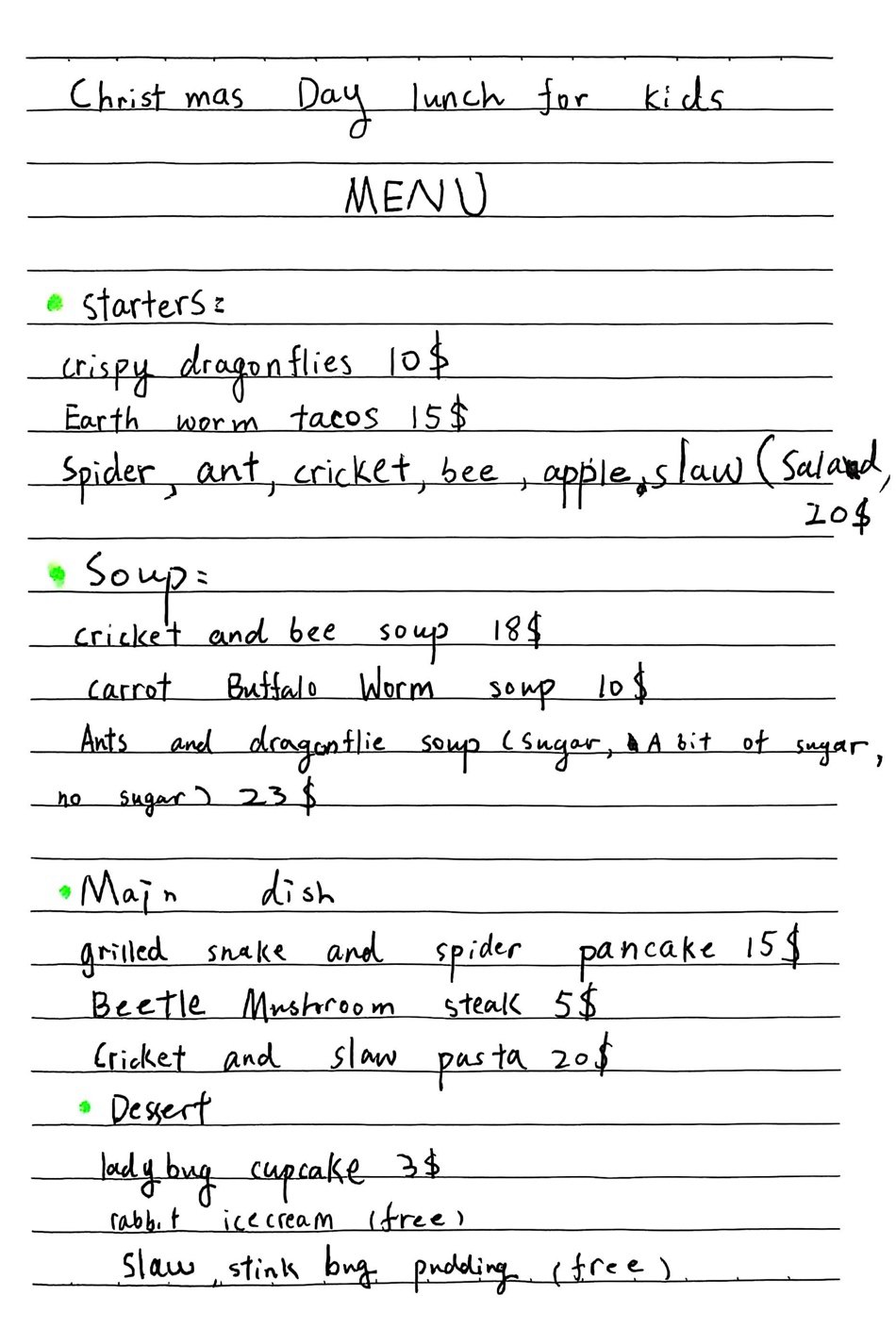
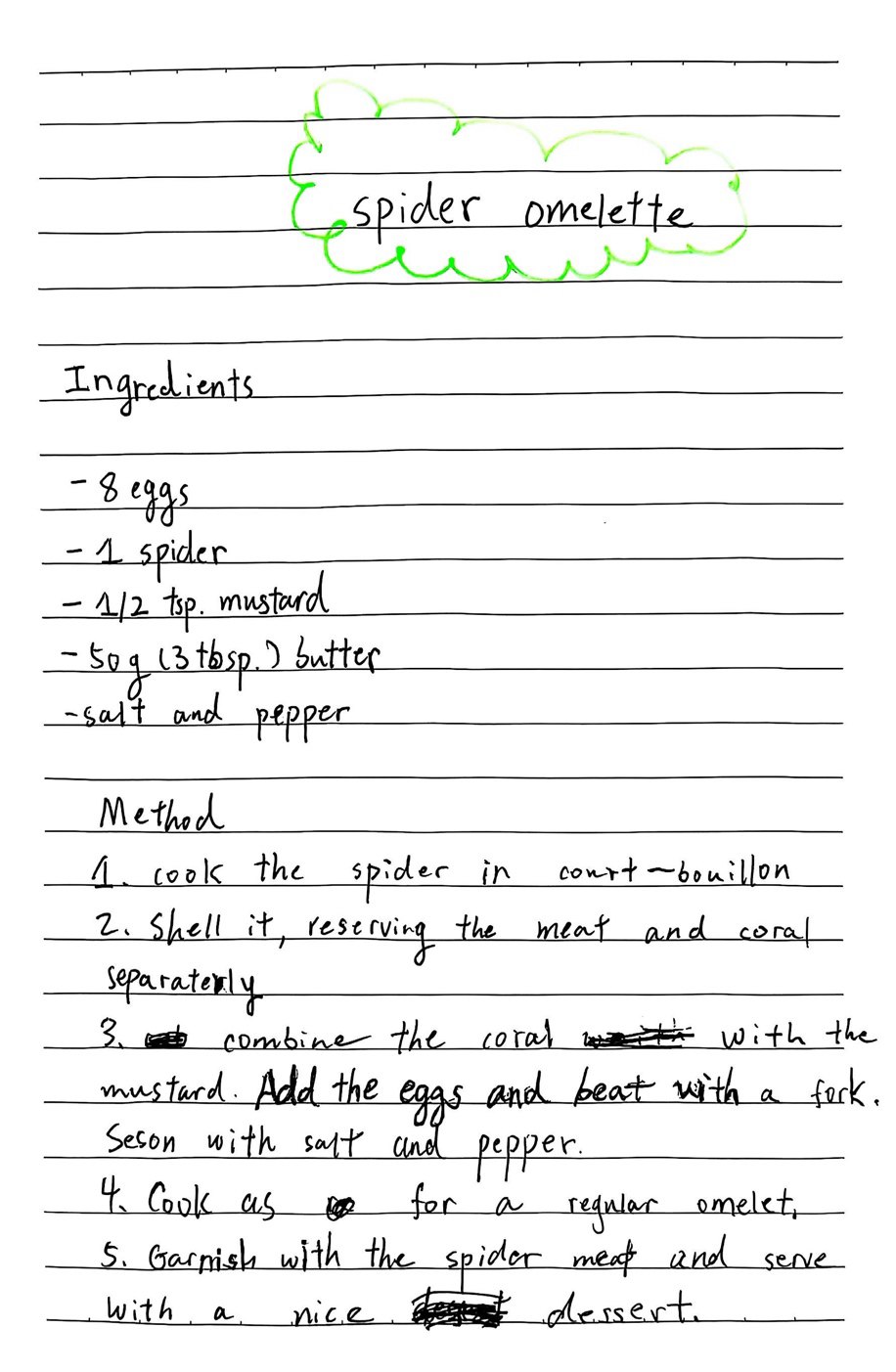
supplementnoun 1 the handout is a supplement to the officialmanual. addition, supplementation, additive, extra, companion, add-on, accessory, adjunct, appendage, appurtenance. 2 the single room supplement is$30. surcharge, addition, increase. 3 a supplement to theessays. appendix, addendum, endmatter, tailpiece, codicil, rider, postscript, addition, extension, coda, sequel. 4 our specialsupplement is packed with ideas for healthy hair. magazinesection, pullout, insert, special-feature section. verb most of the families in the villagesupplemented their incomes by working in the wool-spinningmills. augment, increase, add to, boost, swell, amplify, enlarge, makelarger/bigger/greater; complement, roundoff, complete; widen, broaden, expand; British English top up.
Welcome to the first edition of The Supplement, an occasional publication that will probably be issued five or six times a year.
As described above, The Supplement is a kind of magazine section and/or addition and/or top up to students’ lessons. In this respect, it’s a literal supplement – not so much a showcase as a kind of ad hoc reflection of some of the writing that happens as a consequence of the lessons.
Some but by no means all of the writing done during or as a response to those lessons will be reproduced in this ‘magazine section’.
The selection of that writing will be quite arbitrary, i.e., it won’t be systematic or structured, though it will be as inclusive as possible. It’s simply designed to give a sense of the things that have been done in lessons and to give a glimpse of how some of the students have responded some of the time.
Most pieces will appear in their entirety; a number will be edited and/or compressed; occasionally, just a paragraph or a couple of sentences will be reproduced.
At times, there may be an explanation of the context of the writing though at other times there will not.
Every so often some clarifying information may be given about the student. Usually this will involve not much more than a name and his or her grade level at school when they wrote the reproduced piece. Occasionally, there may be more than this.
There will be a mix of creative and essay-style writing, probably – though not always – with an emphasis on the latter.
It’s that time of day againIt’s morning again, early.I go outsideAnd draw a bright red rocket in the skyComplete with a fiery, whirring engineAnd fierce-looking wings,With my mother’s lipstick.
As my mum comes outsideShe looks up at the sky.In a fit full of fury and disbeliefTakes out her contact lensesPuts new ones in,Looks up againAnd smiles in relief.
It’s noon again, early.I wake upTrying my bestTo rub my eyes clear of sleep.I standWith my bow and arrowAnd shoot nine suns out of the sky,Leaving one, just enough.
My dad walks downstairs,Having heard some kind of noise.He looks at the sky,Yawns,Also trying his bestTo rub his eyes clear of sleep.
He looks up at the sky again,Sees nothing out of the ordinary,Smiles at me, and heads back upstairs.
To draw a bright red rocket in the skyReaching out to the clouds and cramming them into my mouthWalking around the world in two giant strides
Looking into the sky and holding a conversation with the man on the moon I’ll put a girdle round the earth in forty minutes Giving all the leaves on the trees their own individual names Stepping back in time and talking to my great grandmother about my grandmother Playing with another version of myself in a parallel world
An introduction to ‘the uncanny’ and possible representations of it in 3 texts
Sigmund Freud the famous psychoanalyst coined the term ‘the uncanny’ to describe the feeling of unease and the biological sense of discomfort that one feels when seeing a human-like object that is at the same time disconcertingly non-human. It’s also a sensation one gets when experiencing the difference between the homely and the unhomely, which Freud called the ‘heimlich’ and the ‘unheimlich’. For Freud, the so-called valley of the uncanny released repressed feelings of dread and anxiety that were triggered by the sense of discomfort.
An example of this might be Gatsby’s house in ‘The Great Gatsby’, which he built as a potential home for Daisy. Gatsby holds parties there though he never actually appears at them, which is a sign of his discomfort. He is interested in neither the house nor the parties, which are there only to impress Daisy. Gatsby’s house is therefore not what it appears to be; it is not a home for Gatsby and it is certainly not ‘homely’. He doesn’t enjoy the place and he doesn’t feel comfortable there, which links it to a feeling of being uncanny or unheimlich.
There is also the case of General Sternwood’s house in ‘The Big Sleep’. In contrast to Gatsby’s house, Sternwood feels comfortable in a place that is absolutely uncomfortable for others. His home is a hot, domestic jungle that is only comfortable for him. Compared to Gatsby, the uncanniness is experienced by everyone else except him while Gatsby is the only one who feels ‘uncanny’ in his house. The uncanniness in Sternwood’s house comes from the fact that it is not designed for humans to live in; it is a ‘greenhouse’ that is built commonly for plants and the farm industry, but yet General Sternwood feels ‘at home’ there. The irregularity gives other people the sense of uncanniness when going into his home where they wonder at the strangeness. So, what happens in both cases is that the line between the homely and the unhomely is constantly blurred.
Another discordant, conflicted home is Tallis House in ‘Atonement’. Briony’s room looks homely – it is domesticated, untidy, comfortable, and homely, with peeling paint, lose stacks of papers covered with random ornaments, and unmatching wallpaper – but other parts of the house are more formal and seem like public spaces. Early in the novel, she walks from one space to the next, and her sense of unease at the difference between them is expressed in the stiff way she walks.
Moreover, the fountain in the garden is also uncomfortably discordant. It should be a public monument that boasts of prestige and wealth, but yet in Tallis House it also becomes a private and intimate place. At one point, Cecilia dives into the water to pick up part of a broken vase and emerges semi-naked, in an entirely unpublic way. When we see Robbie’s reflected hand in the water immediately afterwards, we are reminded of the fountain’s double function as being able to reflect reality and illusion. This is the essence of the uncanny, i.e., the simultaneous effect of something being both one thing and another at the same time. In the case of Robbie’s hand, it is both a real and familiar physical object and an illusory reflection of that hand – it is both his hand and not his hand.
The same troubling doubleness applies to the beach at Dunkirk. A beach, normally a place of holiday and relaxation, is represented here as a place of war and of homeless soldiers waiting to return home. However, the soldiers don’t react to the beach as a place of war and despair; instead, they try to change it into a site of entertainment and leisure, as if they are actually on holiday. For example, the soldiers are playing football, sunbathing, riding the ferris wheel, drinking, playing cards, and much more besides. In effect, they are attempting to transform an unhomely place into a homely one. The sense of uncanniness comes from the spontaneous feeling that they are in two places at once; they are both in a war yet also on a holiday. The seemingly impossible connection between these two states implies the strangeness that makes us uncomfortable. The shooting of the horses tells us how to feel abo ut the scene that is unfolding before us.
All in all, the uncanny effect is revealed in different ways in each story but the truth of Freud’s theory remains the same. Buried deep inside us is always a sense of being uncomfortable when something is not working or a place is not ‘homely’.
A creative response to the end of ‘Snow White’ as told by the Brothers Grimm
As she entered the large, crowded room, the Queen immediately looked around to find Snow White. There she was. On the far side of the room, smiling and wearing a splendid white bridal dress. It was almost exactly the same style of dress that she’d worn when staying with the little men – but made of more expensive cloth and cut in such a way that it fitted her exactly. The dress was whiter than white, so white that it matched Snow White’s skin and brought out her beauty.
This was more than the Queen could bear. Her face, out of jealousy, looked distorted. Her eyes filled with anger. They glowed hot with the fire of jealousy. The Prince saw the Queen and walked over to her with Snow White, who barely looked at the woman who had tried to kill her. The Queen congratulated them with a sarcastic laugh. In her head, she was planning on how to kill the beautiful girl standing in front of her.
The Supplement 1, p. 7
“For being such a great mother to Snow White, we would like to give you a present,” the Prince began. His voice sounded very formal and he spoke without emotion. “Come with me please.”
The Queen could hardly refuse. The prince led the way, with Snow White and the Queen behind him moving further away from the crowd. She had no choice but to follow as two guards had suddenly appeared, ushering her in front of them, without actually handling her, making sure she didn’t stray. The Queen, who was not a stupid woman, suspected something bad was about to happen. She glanced anxiously around her but the other guests were oblivious. They were laughing and drinking, just happy to be at the wedding of such a glamorous couple.
The Prince led them through a long corridor and several other smaller rooms until they eventually came to a very fancy but odd-looking ballroom. By the time they arrived, the chatter and noise from the main state room could not be heard. The Queen’s anxiety now turned to foreboding. She felt a cold tingle up her spine.
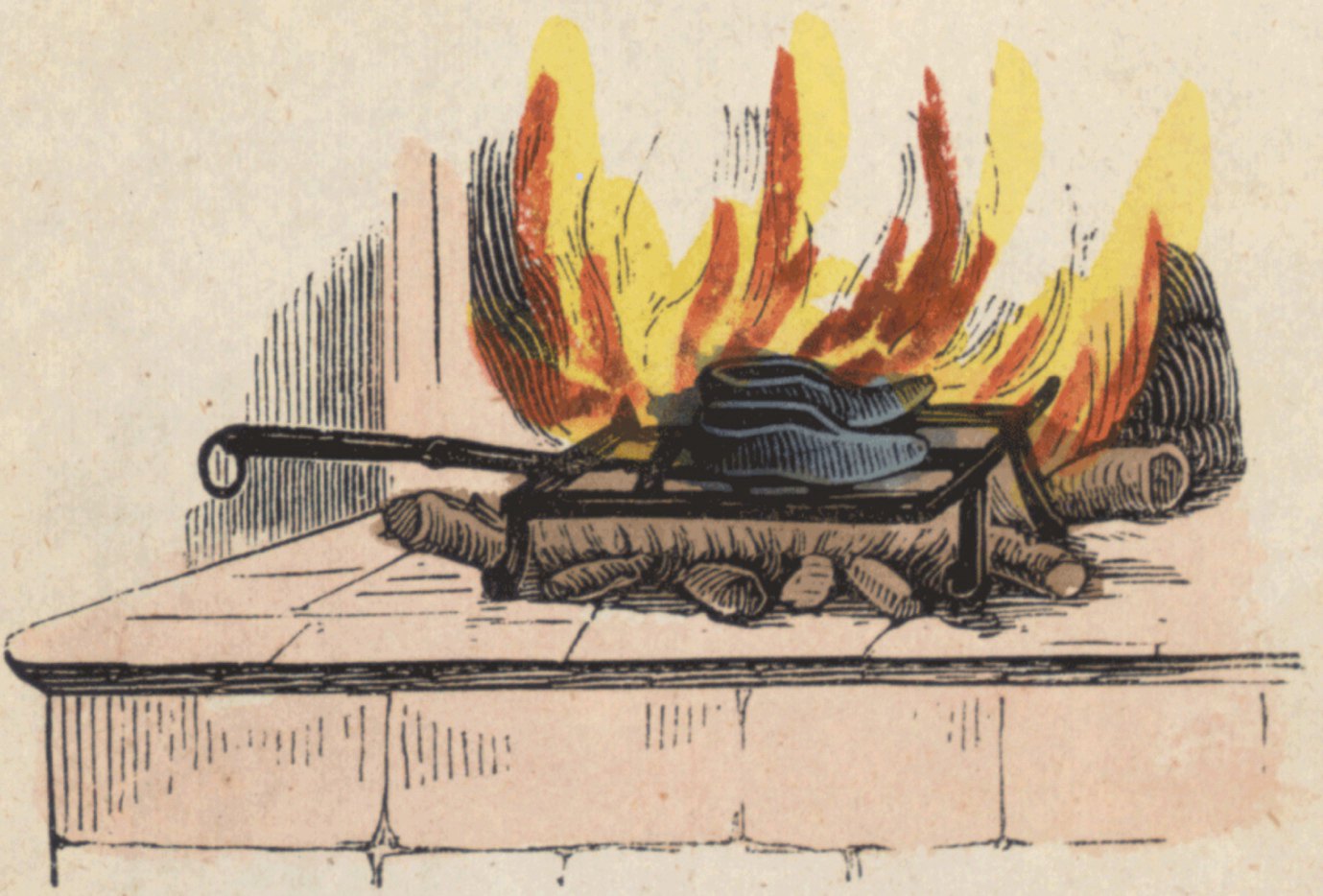
There was nothing in the new room except for two chairs, which were oddly placed in the middle, and a fire place with a pair of what looked like iron shoes being heated on top. They were actually placed in the fire itself, as if they were being cooked. In front of the chairs, there was an empty area, slightly raised, that looked like a stage. As the small group walked into the ballroom, the doors closed behind them. They creaked and then banged shut with a terrifying, dull noise.
The Prince and Snow White sat down on the two chairs. The Queen stared at Snow White. The more she looked at the girl who was as white as snow, with hair as black as ebony and cheeks as red as blood, and who was wearing such a beautiful white gown, and apparently living such a happy life, the more she wanted to kill her.
For a moment, so consumed with rage and jealously was she, that she forgot what was happening.
The Queen stood still with rage and fear, and could not stir. The envy inside her, building now to fever pitch, paralysed her.
Then, the Prince gave a signal with his head, an almost imperceptible nod. The two powerful guards walked over to the Queen and lifted her up. Straightaway, she understood that something terrible had been planned.
The iron shoes that had been roasting upon the fire were now put in front of her. One of the guards had picked them up with a pair of metal tongs. They glowed an orange red. The Queen’s face twisted with fear. Her eyes narrowed in terror and her mouth crumpled as she realised what might be about to happen. She shouted, “Don’t you dare put those on me!” And then, when it became clear what was about to happen, “Put me down!”
So used was she to getting her own way and for her orders being followed without question, that for a moment, when she realised the guards were taking no notice of her, she was more angry than afraid.
As she struggled, the two guards continued to ignore her. One of them lifted her clean off her feet while the other took those feet and forced them into the shoes, locking them in tightly so that she could not take them off.
The Queen started to shout with anger and pain. Before she felt pain, she smelt her flesh beginning to burn. For a moment, it reminded her of frying fish. But then the pain started. She had to get her feet out of the shoes but, of course, it was impossible. In desperation, she started to dance. Her feet began to swell. Blood vessels burst, blisters grew, skin melted and began to peel. Within minutes, her feet were deformed. In a frenzy of anger, pain and frustration, she continued to dance, unable to stop, her terrible feet making it impossible to stop moving.
Meanwhile, the Prince and Snow White were beginning to enjoy the Queen’s clumsy performance, watching the contortions and agonised twitching with grim pleasure until, at last, she collapsed to the floor, dead.
Afterwards, Snow White and the Prince lived happily ever after, never mentioning the Queen again.
Setting Kafka’s ‘The Metamorphosis’ in a cultural context
A response to Franz Kafka’s ‘The Metamorphosis’: setting it in a cultural context
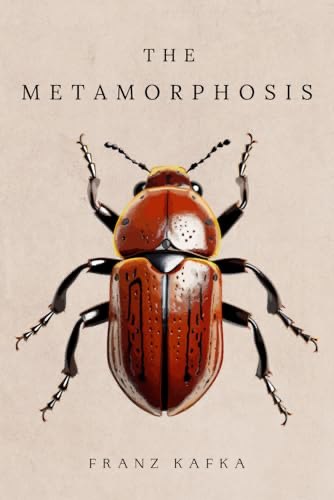
Franz Kafka’s iconic story ‘The Metamorphosis’ relates the transformation of Gregor Samsa into a human-sized bug, and the series of events that occur afterwards. On the surface, it just seems like a hypothetical situation which people often wonder about, i.e., that they are in some way unworthy, but in reality, it covers many broader themes and reflects on European culture and society during the time period. ‘The Metamorphosis’ could have only been written by someone who went through many hardships in life and had an idiosyncratic way of thinking, as Franz Kafka did.
The Supplement 1, p. 11
During the time period when the story was written, the landscape of Europe had dramatically shifted. World War One and its devastating effects had not only led to the loss of millions of lives and economic devastation, but also the ways people thought and expressed themselves. Art work and films had transitioned from realistic portrayals of humans and landscape to abstract and bizarre interpretations of them, reflecting the psychological stress and trauma people were going through. In ‘The Metamorphosis’, Samsa’s out of the blue metamorphosis into an insect or bug is similarly expressionistic in that his transformation reflects an unconscious sense of uselessness and self-loathing.
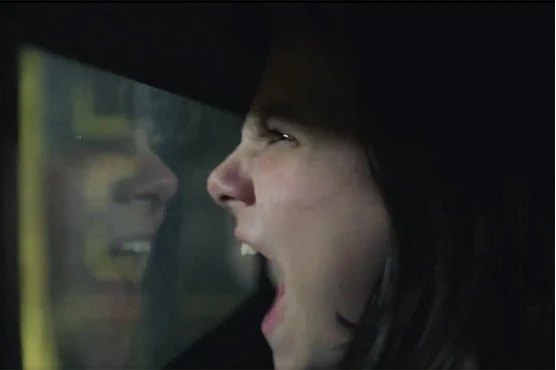
Expressionist artists such as Edvard Munch and Otto Dix produced paintings that reflected inner psychological turmoil and pain. Paintings such as Munch’s ‘The Scream’ are only to an extent realistic though its main subject is a howl of trauma and alienatio n, which is supplemented by lurid and non-natural colour. Similarly, German Expressionist films such as ‘Nosferatu’ and ‘The Cabinet of Dr Caligari’ played with light, colour and perspective to indicate inner pain as much as external action. In his own way , Kafka belonged to this movement and his portrayal of Gregor Samsa is very Expressionist.
While European artists and filmmakers accurately reflected prominent issues of the time, the Americans had a more optimistic theme in filmmaking. Even during the Great Depression, a time of great suffering and economic hardship, the films made in the 1920s and 1930s served as a form of escapism, distracting people from real-life problems. Often, the films were highly unrealistic, e.g., ‘King Kong’ (which included a scene of a giant ape fighting a T Rex) and ‘Bringing up Baby’ (in which someone keeps a leopard in a closet), often foregrounding American optimism and hope. The films were rather outward looking and evidently dynamic instead of being introspective, as ‘The Metamorphosis’ is.
Kafka’s own life fuelled his expressionist angst. For example, he had a difficult relationship with his father and in a long letter to him, was anxious that his father looked down on him and saw him as little more than an insect, which could be crushed underfoot. Kafka’s ill health, his lack of success as a writer, his Jewishness, his awkward relationships with women, and his sense of bodily vulnerability all contributed to the transformation of Gregor Samsa. Regarding his body, Kafka was a vegan who practised yoga and went hiking. In other words, he was uncommonly sensitive to his physique and intensely aware of his body’s shortcoming. He also died young after contracting an illness, something that haunted him for several years before he actually died. All this is emphatically portrayed in Gregor’s predicament.
Drawing on Freudian-inspired middle-European awareness of the unconscious, Gregor immediately notices his transformation and does not question its actual reasons. Rather, he accepts his fate and tries to find a way to get back to his day-to-day life of providing for his family. Thus, his body represents his unconscious and is a reflection of his state of mind, which instinctively feels insect-like. Like Gregor, Franz Kafka had always been self -consciously ashamed of his body; he does a lot of maintenance to ensure his physical health, i.e., a vegan diet and constant exercise, yet he can’t overcome his physical change, and eventually dies after a long battle with a lung disease. Kafka had always viewed himself as a kind of bug, something worthless and something physically disgusting to look at. In the story, Gregor had always been looked at as a tool for making money, and when he is unable to do so, he is abandoned, left to die, and seemingly forgotten.
At the same time, Gregor’s transformation had unconsciously liberated him both physically and mentally. This sense of liberation is expressed in several ways, notably with his new found physical prowess, climbing and exploring his room, feeling weightless, crawling around the walls and ceiling of his room without hurting himself, and defying gravity. It may be stretching a point to say that Gregor is at ease with his unconscious-inspired transformation but there is still a keen sense of lightness and relief or release. This recognition of the power of the unconscious to influence behaviour reflects contemporary European preoccupations with psychoanalytical practices and an inward exploration of the self.
Kafka’s use of realistic language, which he blends with the Expressionist impulses of the story, adds to the questioning of what actuality looks like and to the probing, uneasy investigative nature of the story. The language is restrained, descriptive and sober. His legs are ‘helpless’ and ‘pathetic’. Gregor’s actions and his family’s responses are narrated in a cold, matter-of-fact way. In trying to make sense of a situation that has no logic or sense, Kafka questions the very nature of reality – what is it we are seeing, he asks? What does it look like? The blending of realistic language and Expressionist visions suggests that there is no stable way to view the world, only multiple perspectives. Even the exact nature of Gregor’s transformation is unclear: is he an insect, a bug, a beetle, a cockroach, vermin, or what? His family eventually decide that ‘it’ is no longer Gregor and abandon him, even though the reader still has signs that Gregor up to that time still exists as ‘Gregor’. It is a troubling, perplexing view that removes any sense of a certain world and echoes the introspective, troubled, self-analysing mood of ‘The Metamorphosis’.
Thus, in a particularly European kind of way, ‘The Metamorphosis’ is like an Expressionist painting that was relevant to middle Europe in the years 1915-1935. Although it is true that the entire story also reflects Kafka’s personal contemplations on life and his unique perspectives, undoubtedly the story in addition reflects something of Europe during the time and place it was written. The description of society, the analytical way of thinking, and the cultural and historical contexts of the story are of a distinctly European type.
Di Chirico’s painting ‘The Melancholy of Departure’
After reading ‘The Invention of Hugo Cabret’: a short discussion of Giorgio de Chirico’s painting ‘The Melancholy of Departure’
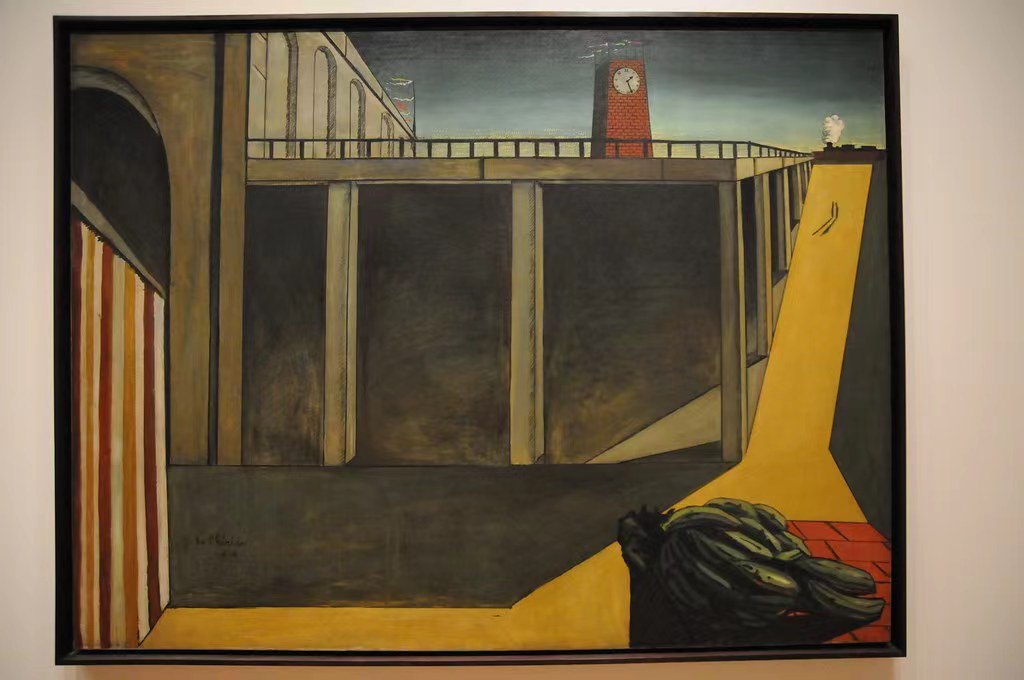
The painting shows a railway station of some sort. Only 2 people are walking towards the train that has arrived, which is odd as stations are normally very busy places.
This sense of strangeness is emphasized by the prominent bananas in the right-hand corner. They appear to be rotten, which adds to the idea of things not being ‘right’.
The architecture is not intended to represent a particular place but to show how the architecture is evolving. It is modern, even futuristic. The buildings are both new and old at the same time – old fashioned in design but new in their concrete construction.
The Supplement 1, p. 15
There is also a clock above the platform, showing how the architecture is timeless. It shows the time as nearly 1.30 (a.m. or p.m.?) though the shadows being cast in the painting are much more typical of later afternoon. So, even the time is not quite right.
The darkness below the buildings shows how many things we build conceal other things, creating darkness and voids in those areas. As a society, we dream of the things to come, of the future, which is represented by the 2 people walking towards the train and supposedly going on a journey. Thus, we start to move forward, towards our goal, not patching up the holes and empty spaces we have left behind.
Patching up the holes would, in a sense, add light to the darkness we have created through the shadowy architecture, so we would be on a more solid foundation to build upon. The 2 characters are suspended, small, insignificant, neither moving or standing still.
The painting challenges the way we see things, contradicting one point of view with another one. Even though the perspectives are inconsistent they are mutually true. ‘The Invention of Hugo Cabret’ works in the same way, challenging us to see things in different ways, encouraging us to believe in illusion, always allowing for different and multiple points of view.
Memory in biological term, is a process of retaining and storing experiences, where people later on could recall the information. While memory has various aspects that is particularly interesting.
To begin with, memory is something that could be reversible. People believe in what we remember, yet we are never sure what we believe in is real, or in other words, it had really happened. In the play “The Father”, the father did not necessarily forget ev erything, he misplaced it with other memories. The apartment was the caring center and Anne, and her husband possibly could be the careers. The father saw those things because he wanted to, he refuses to admit the truth that he has been abandoned in the caring center by himself.
Furthermore, another example could be in television series “The Affair”. The episode gave us two scenes of the same story from two different person’s perspectives. The two stories are remembered differently. From the man’s point of view, he was the one that saved his own daughter, and the waitress was being portrayed as the perfect woman who wasn’t anxious the whole time, but calmly picked up the marble. However, from the waitress’s point of view, she was the one that gave the last shot of making the marble out of the daughter’s throat, and then went vomiting inside the bathroom.
Which leads us on to the second aspect, memory is selective, and we tend to remember things what is important for ourselves, or we remember it in the way we want it to be. A possible answer of the man misremembering could be that he falls in love with the waitress, thus he beautifies the image of the waitress in his mind and wants to act like a heroic character in front of someone he admires. While the waitress remembers the scene of herself saving the daughter may be because she wants to compensate the past, where she was not able to save her own child.
Moreover, memory is also related to conciseness. There is a ‘softness’ in perception, where things we remember are greatly related to out past knowledge and experiences. People see what they know, and when they have acknowledged more things, they notice things differently. For instance, in the movie “Still Alice”, the first time you see the story, everything seems normal. Yet, once you gain the knowledge that Alice has Alzheimer’s, her strange actions seem obvious. When she receives the present from her daughter, she has extremely dramatic expressions that seems overreacting. In addition, she even forgets that her son had already broke up. Thus, once people gain more knowledge, they see various additional things that didn’t catch their attention in the first place.
In conclusion, the nature in memory is that people won’t remember everything in life that they encountered. People sometimes might think it as a bad thing, since remembering things could be very useful in our daily lives. Whereas there is also a downside of it. If we imagine that people could remember every single detail of their past experience, it will certainly cause a lot of problems. As we see in the movie “Black Mirror”, the man gets very stressed out and overwhelmed with the past, but is not able to focus on the present and the future. Therefore, the way memory works for human has a reason, and it could be for our benefit.
A critical response to the opening scene of the James Bond film ‘Skyfall’
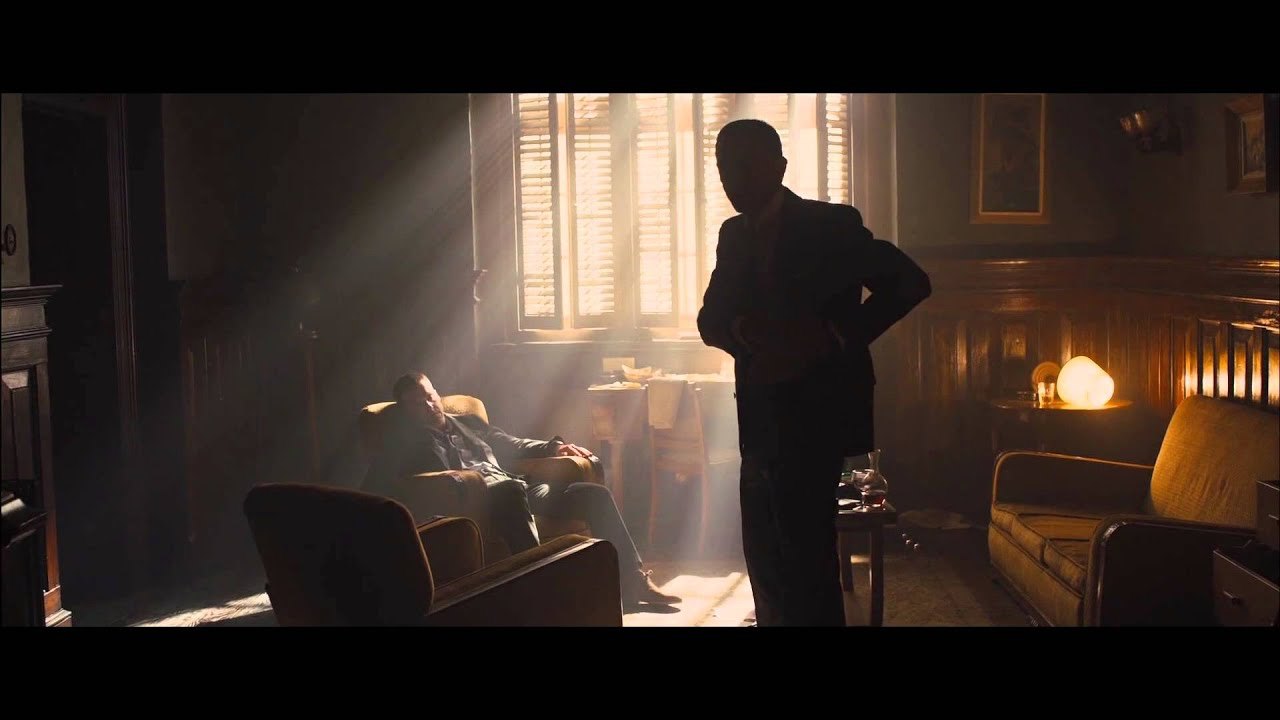
The opening scene of the James Bond film ‘Skyfall’
The first few scenes of the movie ‘Skyfall’ play around with different perspectives, making the audience feel that they are brought into the movie and making the audience think about the plot of the movie and what will happen next without noticing. The first shot of the film is James Bond walking into the camera and the screen turns to a higher quality every second; this is like an introduction to our main character. After he takes out his gun, the camera turns around as if we are in his perspective. We see things in the same order as he does, which makes us feel a sense of excitement and frustration. The next shot is from somewhere near the dead body’s point of view, then right after that we again flip back to Bond’s perspective. The cut in the film of Ronson’s point of view looking at Bond when he is healing him makes us feel like we are in Ronson’s role, and the jumps in between Ronson and Bond’s point of view also make us as the audience feel the fear and the pain in Ronson. Also, the scene when Bond starts to leave is shown by the computer’s point of view. This gives us an idea about the importance of the hard drive that is gone in the computer. In this film, it perfectly tells the audience the difference between films and books and how they have their advantage and disadvantages. In films, for
A creative response to the opening scene of the James Bond film ‘Skyfall’
example, the shots could show a lot of information about the following plot it may tell you about the important items in the film and also it might be foreshadowing. On the other hand, in books, they make people think more and imagine more about what is happening in the world of the book, which films cannot do. Films can only give you information that you see but not really imagine, such as the different things that exist in the plot of the story. This is how and why it is very important to play around with different perspectives and different points of view in films, and this is one of the biggest differences between films and books.
Jason, Grade 7
A blurry figure appeared in the middle of the scene, only showing his face a little. He looked strange, even alien. Friend or foe? Good or bad? He started to walk along the corridor, getting closer with each step. Then, finally, he came into focus. It was Bond. James Bond. His face was familiar, focused and determined. He was on some kind of mission. He opened the door and slowly came through it, gun at the ready. The room was dark and smelt bad. Like rotting meat or something gone off. He raised his gun hand, glanced to his left and saw two people lying on the floor. He thought: What’s happened here? They were face down and lying in pools of blood. Their own blood. Clearly, they were dead. Suddenly alert and cautious, Bond scanned the room, his eyes sweeping across it in an efficient and aware manner.
Then he saw Ronson. His colleague. His friend. He was lying awkwardly on a battered armchair. There was a broken computer in front of him. Bond was shocked. “Ronson’s down,” he said into his transmitter. He felt torn between tending to Ronson and investigating the broken computer. Duty first, he thought darkly. After looking around and seeing no sign of the hard drive, he tossed the useless computer away, quickly turned to his friend, and opened Ronson’s shirt. There, he soon found that Ronson was bleeding from the heart. Blood seemed to be everywhere. Bond tried to stabilize him with his own handkerchief, dabbing tenderly at the open wound. Ronson thought: Finally, my friend is going to save me. But M, the woman in Bond’s ear, his boss, was pushing him to get after the stolen computer hard drive and stop helping his friend, saying, “Leave Ronson! They must have the hard drive. Get after them!”. Bond was caught between Ronson and the hard drive. After another demand in the earpiece, he could only get up, mutter a silent “Sorry” to Ronson, pick up his gun, and leave him, as though nothing had happened. Ronson used the last bit of his strength to look at the man and use his Blood-stained mouth to mouth he words: Come back! But Bond was already walking away, his gun in front of him once more, edging down the deserted corridor.
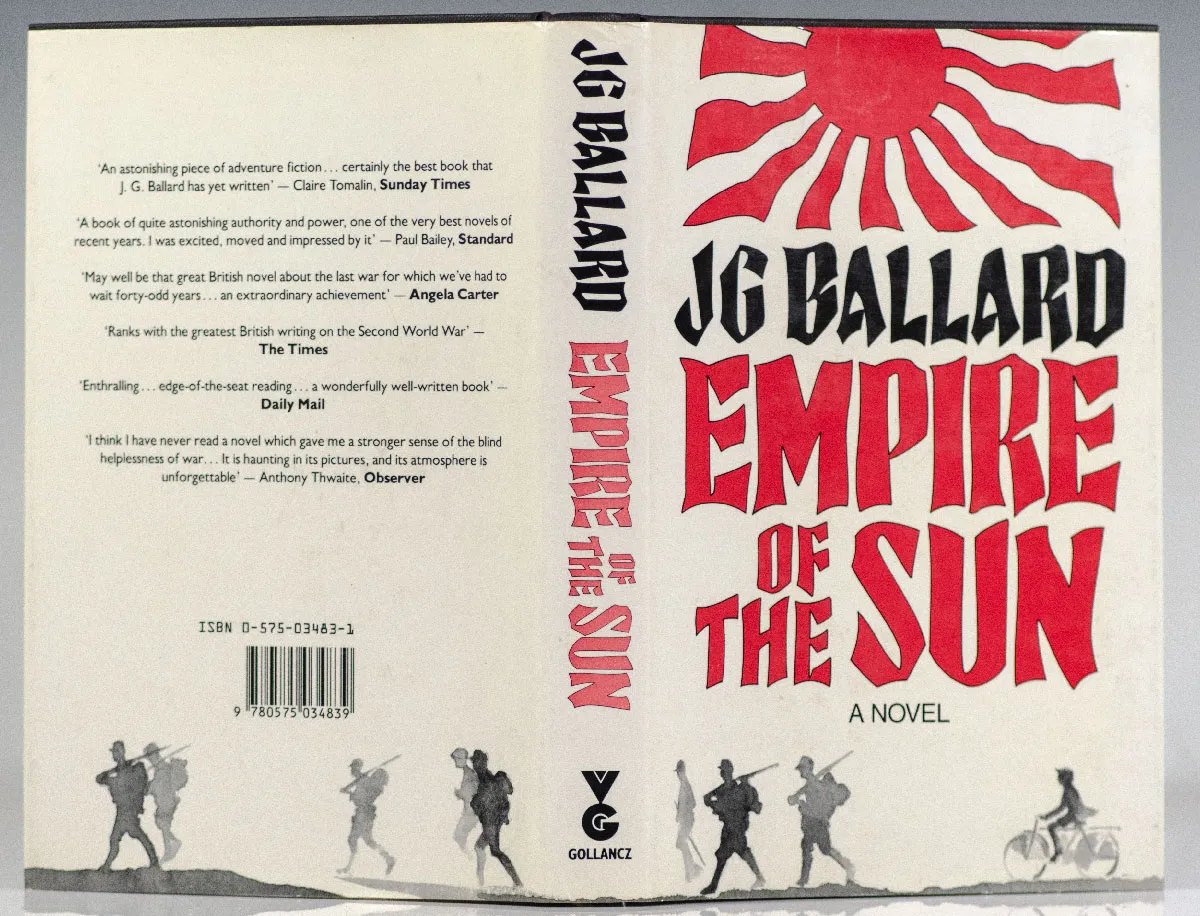
The character of Jim in J.G. Ballard’s ‘Empire of the Sun’
“Empire of the Sun” by J.G. Ballard tells the story of a young British boy named Jim, who experiences the chaos of World War II in Shanghai. When the war breaks out, Jim gets separated from his parents and must navigate a world filled with danger, loss, and confusion. His journey reveals how these strong experiences shape his identity, especially in the final chapter. In the last chapter, Jim’s view of the world shows how deeply the war has affected him. He often mentions films and cinema, suggesting he uses them to cope with the horrors around him. He describes his home as ‘unreal,’ emphasizing how disconnected he feels from his family and former life. He feels stuck in a place filled with memories of death, symbolized by the ‘floating coffin’ that represents his sense of hopelessness.
The Supplement 1, p. 22
Foreigners in the final chapter act strangely, leaving into their own little worlds while ignoring the suffering of others. This belief reveals his understanding of the complex relationships between different cultures in times of war. Throughout the book, references to cinema symbolize Jim’s view of life as an unreliable illusion. For example, he recalls watching movies about pilots, which blurs the line between reality and fiction. This made him really attracted to the idea of death. He often finds comfort in thinking about it, even stating, “I wished I were dead.” The bright light from the atomic bomb fascinates Jim, as he initially sees it as a connection between life and the afterlife. This desire reflects not madness but rather a child’s attempt to make sense of the chaos around him. Jim’s feelings about death evolve throughout the story Jim’s identity also becomes complicated as he feels disconnected from his English roots. He admires the Japanese, who occupy Shanghai, and American soldiers, but finds himself confused by other English people. Throughout the novel, Jim’s world seems turned upside down, and he struggles to maintain a sense of belonging. This upside-down world is shown through Jim’s interactions with different characters, including soldiers and other prisoners. His experiences reveal a reality where traditional values break down, and he loses the sense of safety provided by his family and home. Although, Jim shows remarkable adaptability and survival skills throughout the novel. He learns to search for food and to steal from the dead people. His ability to communicate with Japanese soldiers demonstrates how he always tries to find ways to survive in an utterly horrible environment. However, this adaptability takes a change in Jim’s mind. As he learns to survive. The harsh truth of his circumstances forces him to grow up too quickly, leaving him struggling to maintain a clear sense of identity in the chaos of the war. While his survival skills are impressive, these also has broken down the idea of having a normal childhood. In conclusion, Jim’s experiences during the war significantly affect his mental state and sense of identity. Through his interactions with film, his feelings about death, and the challenges of cultural disconnection, we see how deeply a young boy can be influenced by the events of war. His journey demonstrates not only the struggles faced by a child during wartime but also the ability of survival and resilience in the idea of all these crazy challenges. George, Grade 5
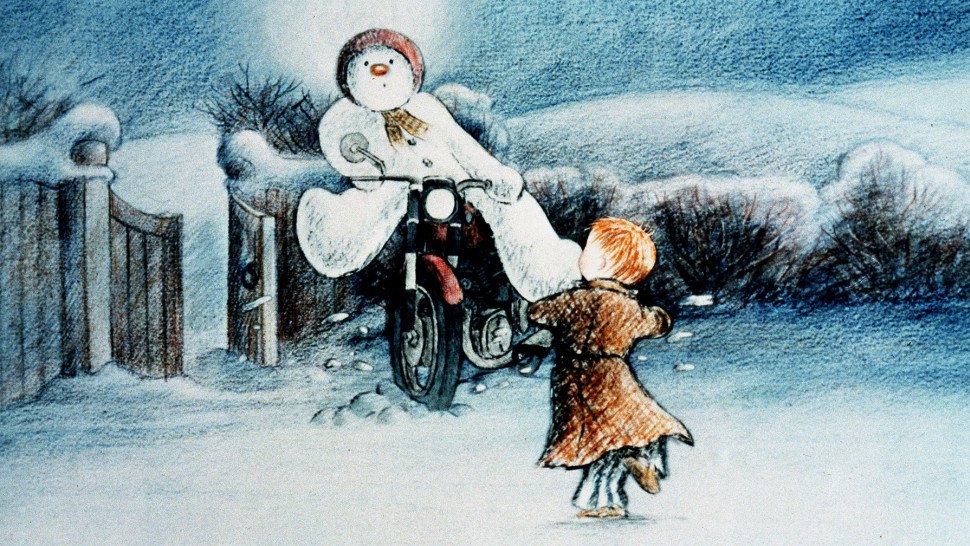
‘The Snowman’ is an animated short film. The setting of the story was a little house very far from the cities where a little boy and his family lived. One day, after the boy had woken up, he discovered that outside was covered in snow. After a whole day of work, the boy made a huge snowman. But later that day, when he was going to sleep and the clock was exactly 12 o’clock, the dream began. Some kind of magic had turned the snowman ‘alive’ and together they played in the boy’s house, from the hall to the kitchen to his parent’s room to his room. But, when the snowman saw a picture of Antarctica, he became homesick and after a ride on the boy’s father’s motorcycle, they took off into the sky. At last, after a long time of boring music songs, they finally arrived at Antarctica and met a ot of other snowmen, and Santa Claus. They had a huge party together and finally the snowman flew off and took the boy back to his house. But there was a sad ending the next day, when the boy woke up, and he found out the snowman had melted. Although the boy was still wearing the scarf that Santa gave him, it is still certain that what happened with the snowman was a dream. In the short film, there was a lot of evidence that it was a dream and not a fantasy. For example, when the boy was about to go to sleep, his father just pointed at the clock, which is a very matter -of-fact thing to do when you are calling someone to bed, especially compared to the way our parents do it. Also later, the snowman and the boy were riding a motorcycle, which mostly represented ‘wildness’. That showed the boy preferred a wild and crazy life compared to the boring, everyday events of his own life. That also leads us to something in the movie ‘Inception’, where the man said that in dreams you can make the impossible ‘possible’. In the short film ‘The Snowman’, the boy made the snowman into his parents in a crazy way. In ‘Inception’, Ariadne made the world of her dreams flip over, which is also impossible, but she is probably a wild girl who had thought of flipping the world every day in her life. Therefore, in ‘The Snowman’ dream and reality are connected by the boy’s need for adventure and fun. In the boy’s mind, he kept thinking of adventure and fun, so in the dream his subconscious and unconscious form the picture of the snowman, Santa and basically all the things in the short film that we watched. In this story, the things are all fake so we know that it was a dream. But in ‘The Daydreamer’ (by Ian McEwan), the story ‘The Bully’ was so real that it actually could be real – so he (the boy, Peter) had lost the grip that held him from complete dreaming and he starts to wonder if life is real or fake – just like that man said in ‘Inception’: don’t form anything in dreams from real life and try not to let real life become too strong in your dreams as it will make them dangerous. You will not be able to tell one from the other. Aiden, Grade 4
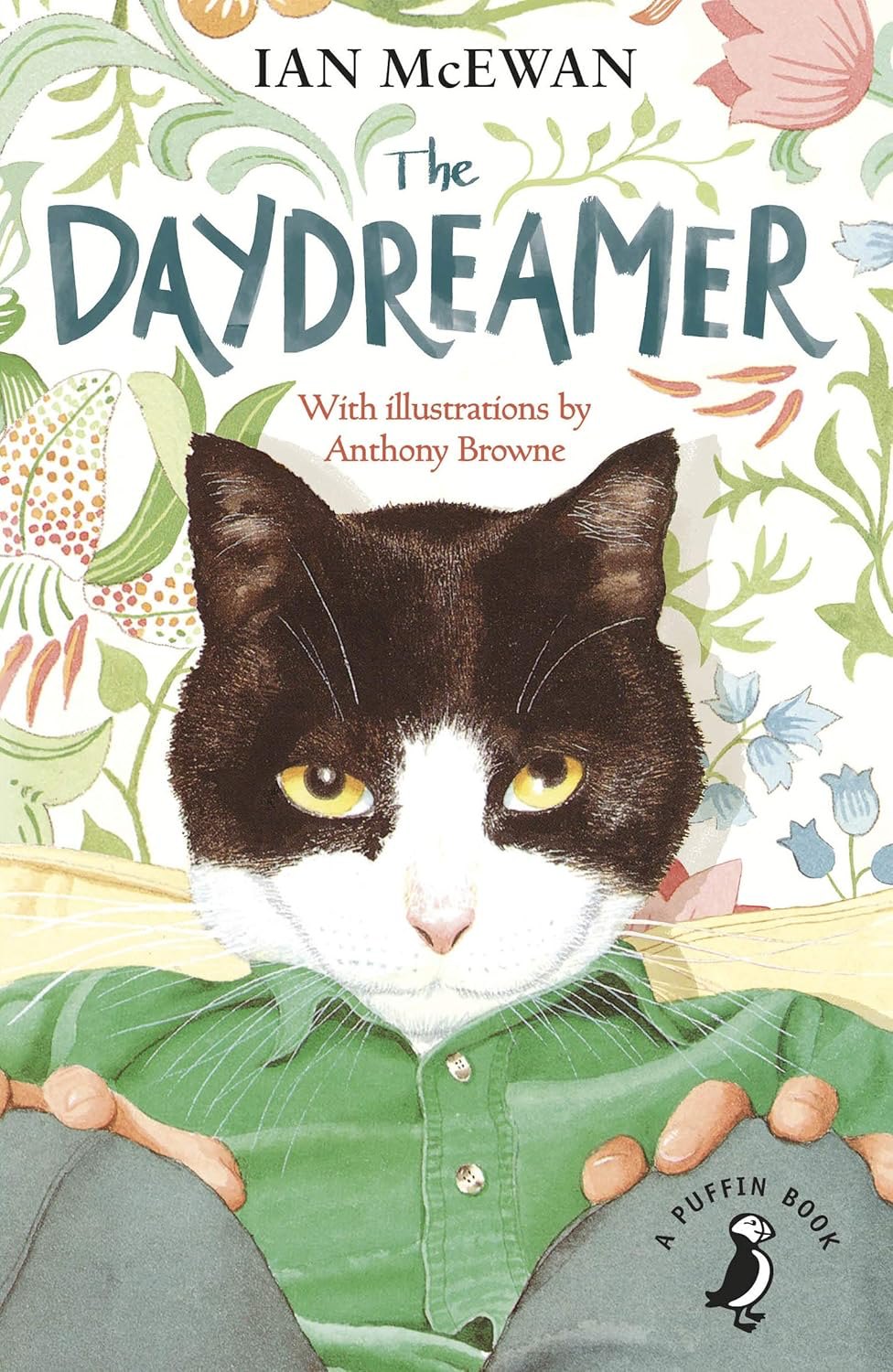
Peter Fortune is a daydreamer. In the first three stories of ‘The Daydreamer’ by Ian McEwan, the dreams he has are strongly connected to his life. In ‘The Dolls’, for example, he dreams the dolls come to life and at one point he changes places with the ‘bad doll’. This is because he has mixed feelings about moved from the room he shared with his sister. In ‘The Cat’, Peter changes places with William the cat for a day. And, finally, in ‘Vanishing Cream’, he is fed up with his parents and his sister and daydreams that he makes them all vanish by putting cream on them. All these stories are about daydreams. The difference between dreams and daydreams is that Peter has an amount of control over what is happening. So, in ‘Vanishing Cream’, he realises that getting rid of his parents is not as good as it sounds. That is when the dream ends. In ‘The Cat’, the dream ends when Peter realises that William is dead. Therefore, there is a connection in all Peter’s dreams between his life and what he dreams. Although daydreaming allows him to imagine things which would not exist in in real life, Peter is still very much part of the dreamworld and his real life is never too far away. Derrick, Grade 4
So, this is what happened when we bought our dog. He was a border Collie and his name was Twinkle. For one year he was perfectly behaved, apart from the odd accident. Then, one hot summer’s day, my dad started shouting at Twinkle about something the dog had done. I can’t remember what it was but he’d been building up to it for a while. Twinkle also felt this way because he often barked at my dad. He never barked at anyone or anything else but he clearly felt aggressive towards my dad. It may have been because my dad sometimes shouted at him or it may have been because my dad sometimes shouted at my mum and my sister and me. I like to think this was the reason because I like Twinkle and I want to believe he was protecting us. Anyway, Twinkle bit my dad. There was quite a lot of blood and a large hole in my dad’s Calvin Klein pants. We thought this was funny but my dad was furious. He looked up on the internet that he needed to get a tetanus injection within two hours of being bitten. My mum took him to the hospital because he’d never been there before and didn’t know how to register. The nurse gave him seven injections, which was one for every ten kilograms of his weight. I know there were seven injections because my dad took photographs. He took photographs of everything that happened after Twinkle bit him: the blood, the damaged pants, the injections, the nurse giving him the injections, and the bandages on his leg. A few days later, after he got home, dad had another reason to be annoyed with Twinkle. Something had happened – I don’t know what – but it caused dad to march out to Twinkle’s kennel, which was outside in the yard. He thumped the kennel hard with a ruler he’d taken out with him and started to shout at the dog. Twinkle growled and for a moment it seemed like he might bite dad again. But before anything like that could happen, the neighbours complained, shouting from their windows that dad was making too much noise. They also reported him to the police, who came round later that day and told dad to keep quiet when he was talking to Twinkle. For the rest of the week, dad sat in his chair smoking small cigars, which he kept in a wooden cabinet called a fumidor. Whenever dad smoked more than one cigar you knew he was thinking about something. Twinkle wasn’t allowed in the house during this time but you could tell dad was thinking about the dog and what to do next. He called us together and said, ‘Twinkle will have to go for training.’ ‘Why?’ I said, ‘Training for what?’ ‘Training him not to bite me,’ he replied. I didn’t want Twinkle to bite my dad. And I didn’t want Twinkle to have training. What if he couldn’t be trained? I didn’t want his final destination to be a training centre for dogs. Adam, Grade 6
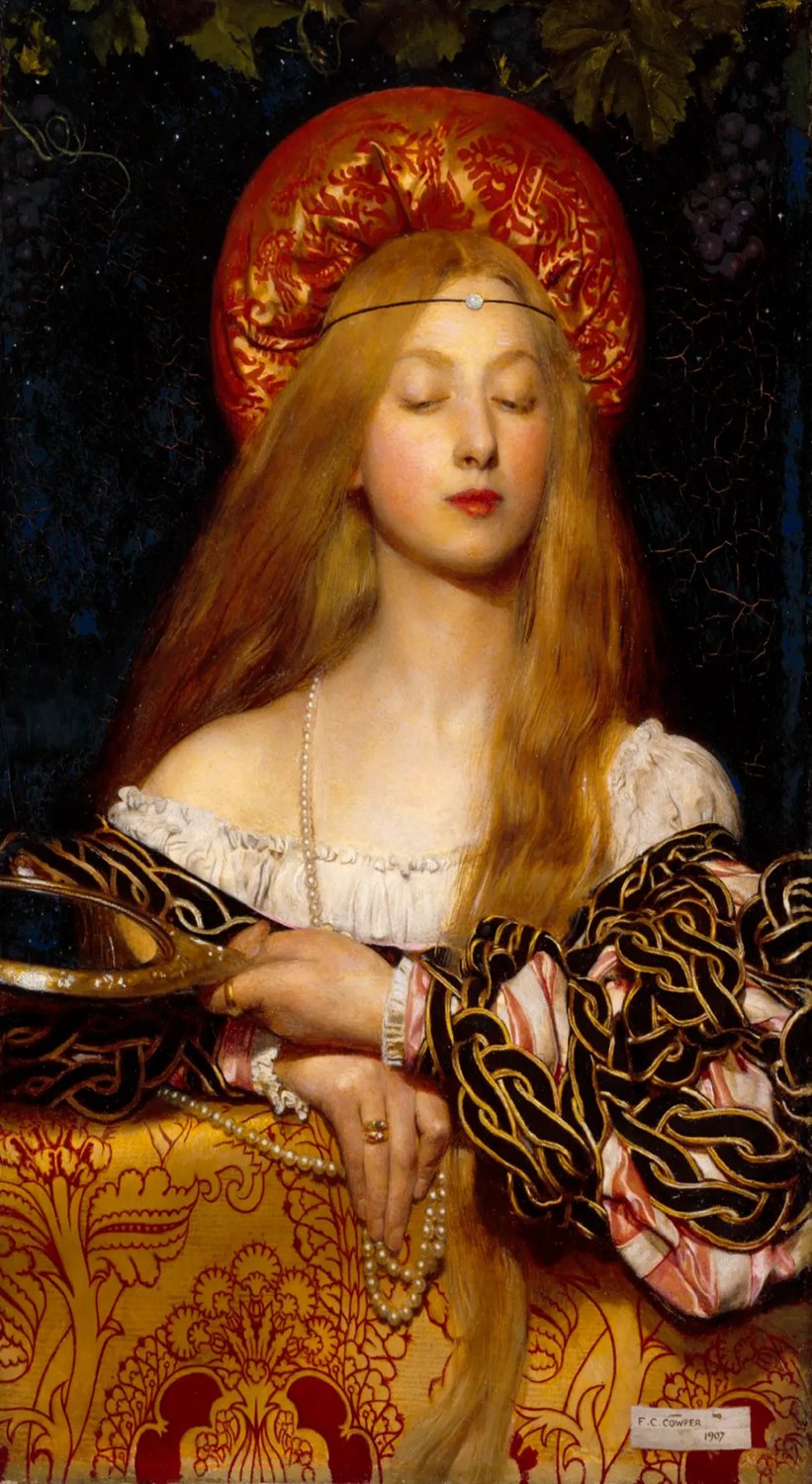
Queen Vanity and King Hubris: a creative response to Greek myths
The Supplement 1, p. 31
There was once a young girl called Vanity. She lived with her parents in a small village in a tiny house that was furnished very simply. For fifteen years, she was very happy. Life was very easy. She lived in a beautiful place and spent her time looking after her parents and helping other people in the village. One day, Vanity’s father sent said to her, ‘Vanity, you are a lovely girl and you seem so happy, but maybe you should try to see a bit more of the world before you get too old.” “But father,” said Vanity, “I don’t want to leave the village. I feel so content here.” However, her father insisted that his daughter leave the village for a short time and see more of the world. So, the next week, and with a heavy heart, Vanity left her home and started walking through the forest that surrounded the village. After three weeks of walking through wind and rain, Vanity arrived at a large city. She had never seen so many buildings or so many people before. Very soon, she was walking next to the king’s palace. She couldn’t stop staring at the building because it seemed so magnificent. Every brick was made from gold and gleamed in the sunshine. In addition, there were jewels and diamonds in all the doors. While she was looking at the palace, hypnotised by its beauty, King Hubris saw her from one of the windows. Just as she could not take her eyes off the palace, so King Hubris could not take his eyes off Vanity. There was something about which held his attention. It was not her beauty that entranced him, although she was very pretty, but her simplicity and charm that caught his attention. She was unlike anyone he had seen before. Very quickly, King Hubris had offered vanity a place in his household. He liked having her near him because she was so different to the rest of his life. In some ways, she made him feel better about himself just by being so simple-hearted. However, after two months, King Hubris had almost forgotten about Vanity and had stopped noticing her charm. Meanwhile, Vanity herself was beginning to notice that the king had many bad habits. She saw that he could be cruel, heartless and arrogant. In particular, she didn’t like the way he treated his subjects, clearly believing he was better than them. Hubris also treated people badly. One day, a farmer passed by the palace and spilled some hay beside the magnificent building. Hubris was very angry because it made the palace look untidy. So, he ordered his soldiers to chop off the farmer’s head. Vanity saw this and was very upset. She thought it was very cruel and unfair. Vanity felt that she now trapped in this heartless king’s palace. She was really afraid of Hubris. She felt sad and, at home, she cried hard. She cried and cried and cried for a long time. It seemed to be hopeless. Zeus, a leader among the gods, heard Vanity’s grief. He didn’t know what had happened so he went to visit her and discover what was going on. Suddenly, during the night, in Vanity’s house, Zeus appeared. “I am the head of the gods, Zeus. Can you tell me what’s going on? I can hear your grief,” he said, “and it breaks my heart.” “OK,” said Vanity, “I will tell you. The king of this large city is called Hubris. He always treats his subjects badly and kills people easily. I’m afraid of him.” “Hubris is really bad,” replied Zeus, and he thought for a few moments. “Hmmm. I have an idea. You must poison the king. I will make a special air-conditioner. This air-conditioner can blow out poison air, so when Hubris smells the air that comes out of it, he will die. If you help me get rid of Hubris, I will make you queen of this city.” “I don’t want to be a queen!” said Vanity, who was a decent and kind person. “You have to be! You will help to make the city and palace a better place!” Vanity was still uneasy, however, and needed time to think. During the night, she was confused about what to do. This meant she could not fall asleep. The next day, Zeus again asked her to help. This time, she replied, “Umm – OK.” She still felt uneasy but for the sake of the common good, she decided to help. Zeus nodded and then smiled. “Wait for my instructions,” he said. Two days passed, and then Vanity woke up to find a new air-conditioner next to her bed. There was a note pinned to it: GIVE THIS TO KING HUBRIS. TELL HIM IT’S A GIFT. So, later that day, Vanity took the air-conditioner to Hubris’s palace. “Hello, King Hubris. I’m Vanity. Remember me?” said Vanity, holding the air-conditioner. “I want to give you a new air-conditioner. It can blow out cold and hot air. It can make your bedroom a better place.” “Vanity?” said King Hubris. “Oh, yes. I recognise you.” The king looked at the air-conditioner and felt something was wrong with it but he liked to be flattered and given presents. After a short time, Hubris said to Vanity, “OK”, before taking the gift and not even saying thank you. Soon, he turned the air-conditioner on and immediately started coughing. Coughing really hard and eventually coughing out his lungs and most of his organs. Before long, he was dead. Slowly, news spread of his death and the people rejoiced, which made Vanity gloomy. A bit later, Zeus appeared to Vanity again. “You poisoned Hubris. Well done! Now, I can make you the queen. You will have all the power you want,” he said. Vanity agreed but only because she thought that with power, she could make the city a better place.
The next day, Zeus brought Vanity to the palace and said to all the people, “I am Zeus, King of the Gods, and Vanity is now your queen.” Immediately, everyone cried out in joy, “Long live Vanity! Hail Queen Vanity!” Vanity was delighted and thought it was the will of heaven. She went into the palace and sat upon the throne, which was made of pure gold. She treated people well and tried to help them, and for the first year everything went well. But gradually Vanity became used to her power and the privilege it gave to her. She began to think she was better than everyone else and became arrogant. She even started to treat her subjects badly. One night, Queen Vanity was on her bed and ready to sleep. She had started to tell servants to perform simple tasks that she used to do herself. “Quick! Servant! Close the curtains for me! And be quick!” she shouted to an unhappy servant. So, the servant did as he was told. “Quick! Servant! Put the quilt on me! And be quick!” she shouted. So, the servant once again did as he was told. Vanity got worse and worse – just like Hubris. Then, a little later, Vanity’s parents came to visit and said, “Daughter. Can you care for us a little bit. We are both old and ill now.” “No!” shouted Vanity. “I don’t want to leave my throne and, anyway, you’re no longer part of my life. I have nothing to do with you now. Go away!” And with that, her parents turned away sadly. People saw what happened and began to hate Vanity. Soon, she wore nothing but valuable, expensive and beautiful clothes, not letting anyone else dress as well as her and making laws to ensure others only wore ugly outfits. Despite all this, Vanity still possessed a little bit of goodness and realised what was happening to her. She even wondered if she ought to throw herself off the roof of the palace.
Vanity called to Zeus, who appeared as if by magic. “I am so bad! I sometimes want to kill myself,” she said. “If that happens, can you take care of my parents and never give anyone the kind of power you gave me? Please! Promise me, Zeus.” Zeus considered for a few moments and then said, “I promise.” He saw that Vanity was indeed as bad as she said and didn’t interfere when a few days later she threw herself from the palace roof. It was a kind of sacrifice as she didn’t want to get any worse than she was. Out of pity, Zeus made her body disappear so that no one could see it and mock her. Only her name was left behind and, to remember the fact that being too proud and arrogant is a bad thing, the word ‘Vanity’ came to mean arrogance and pride. So, that was how she remembered. And never again were there kings or queens in that city. Feiyu, Grade 5
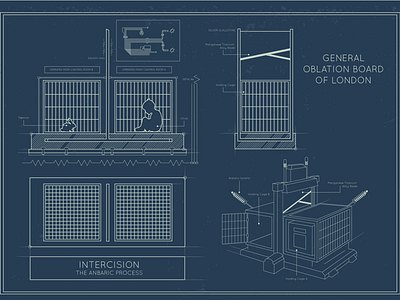
Losing My Daemon:a creative response to Philip Pulman’s ‘The Northern Lights’ (aka ‘The Golden Compass)I was in a cage and Pan was next to me – but in another, different cage. We could hear eachother but not actually see into each other’s cage.“What’s happening?” I said.“I don’t know,” Pan replied, “but I don’t like it.”Of course, I knew exactly how he was feeling because we felt the same thing. We always feltthe same thing because we were actually one living creature.
The Supplement 1, p. 37
Between the two cages, I could see what looked like a very large axe. Or rather, the blade of an axe. It was huge. Not like the kind you use for chopping wood but many times larger. And shiny, too, like it was made from polished steel or some other metal. There were tubes and cables attached to it, which gave it a clumsy, sinister appearance. “Why are there so many wires coming out of that chopper?” I asked. But this time there was no reply. Pan had gone quiet. I could feel his fear and felt his trembling. Without even looking, I knew exactly what he looked like in the next cage – what he was doing and how he was behaving. In my mind’s eye, I saw him crying silently with sadness and anger. He was in the form of a monkey and was trying to open the cage. Then, suddenly, there was a whirring noise followed by the sound of hissing air and, finally, a mechanical thud. The axe blade started to move slowly down towards the ground. “Pan!” I shouted. But it was too loud for him to hear and I also knew that he anyway not responding. Part of me, the part of me that is Pan, felt numb and cold. It wasn’t just the axe coming down between the cages – between us – but something else as well. As the blade descended, it brought with it what seemed like an electric current, a forcefield, coming between Pan and me. It moved slowly down but at every inch I felt more and more lonely. I felt as is if that deadly pain would be with me for the rest of my life. I felt like a television set without electricity, a fish without water, a pen without ink, a book without pages, a tree without leaves. A bird without wings.
‘Back to the Future’: the first test of the time machine
The Supplement 1, p. 40
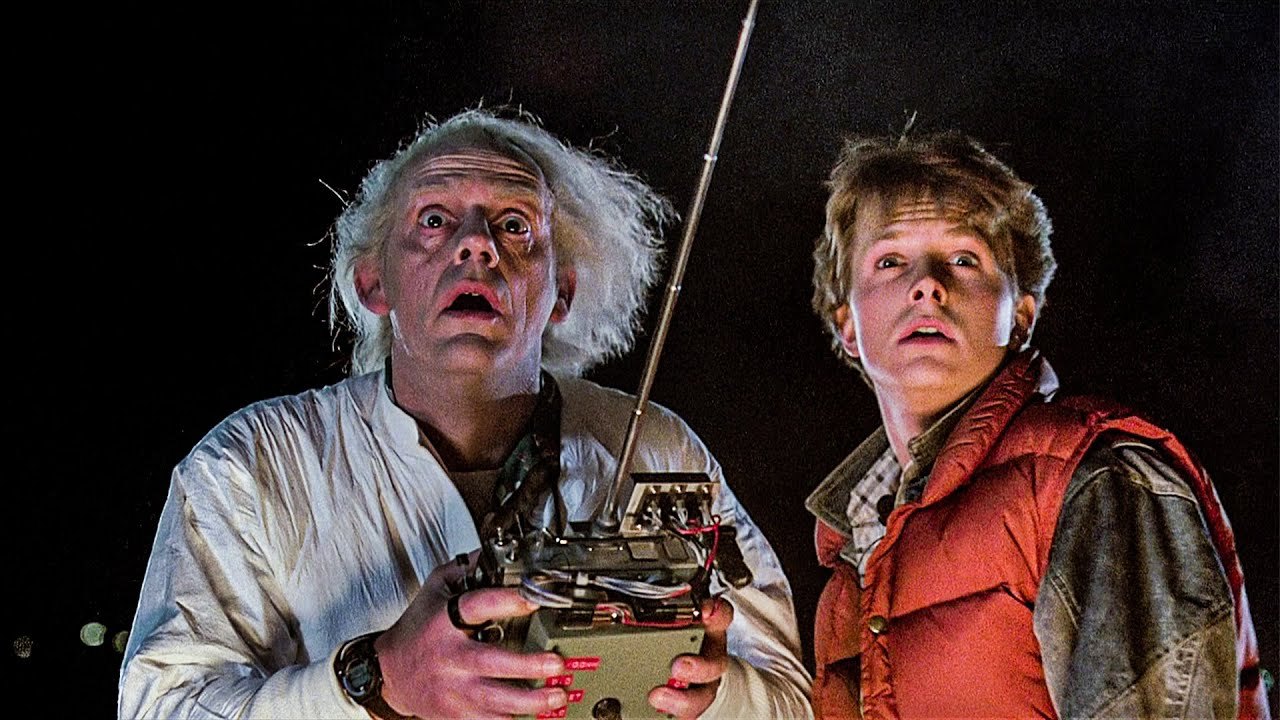
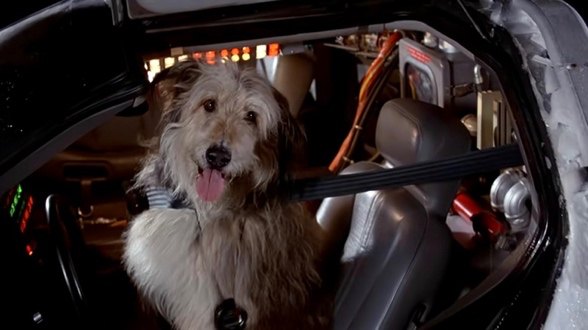
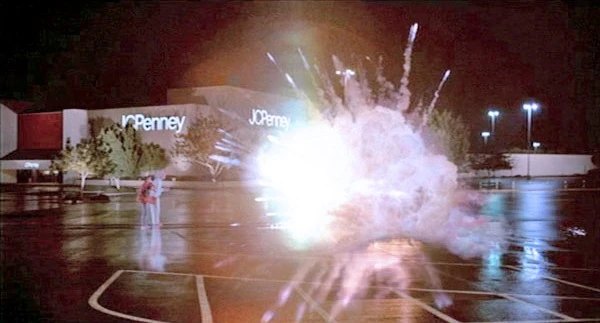
As Marty skateboarded down the hill and into the car park of the shopping mall, he couldn’t help wondering what Dr Brown wanted. After all, it was almost one o’clock in the morning. The place was deserted. What could he possibly want? Marty liked Dr Brown all right but…his friend was strange and famously unreliable. He saw Einstein, Dr Brown’s dog, sitting all alone in the car park. No sign of his friend. Marty thought the old man must be around somewhere because he never went anywhere without Einstein – but where? The dog saw Marty and let out a whimper, which was part greeting and part fear. Marty couldn’t help thinking that the dog sounded anxious – but about what? Suddenly, Marty’s attention turned to a strange noise coming from the back of a nearby truck. With unbelieving, amazed eyes, he watched as a DeLorean sports car reversed awkwardly down a ramp from the back of the truck. But it was no ordinary DeLorean. This one seemed to come from another age. As it fully emerged, Marty’s astonishment grew, simply at the sounds the car was making. These were extraordinary. There was hissing and faint screeching and beeping and whistling and something else that sounded very like wind blowing through trees. Somewhere beneath these noises, Marty could also hear the low grumble of a car’s engine. It was as if the car had been twinned with some kind of industrial machine. No ordinary car, this DeLorean seemed like a fusion between factory and spacecraft. As the car came to a halt beside Marty, it gave up a final whooshing noise, like some great beast sighing with satisfaction at its own power. However, the impressive machine was immediately made to seem less grand as Dr Brown climbed awkwardly out of the DeLorean. The first thing he did was to hit his head inelegantly on the top of the open door, the impact making an embarrassing clanking noise, which he chose to ignore. Smiling uncomfortably, Dr Brown ran excitedly over to where Marty was standing, introducing the machine and telling him to stand by. The confused Marty watched as his friend lifted Einstein into the car, his face not able to hide signs of panic, steam already evaporating from its old engine. Using an old-fashioned remote control, Dr Brown sent the DeLorean to the far side of the car park, tyres squealing and smoke rising into the night air, like some kind of live volcano. Marty half-expected the car to explode. Meanwhile, his friend was busy building up the car’s speed, though for the moment it remained stationary, wheels spinning and the engine snarling angrily. Then, Dr Brown flicked a switch and released the car. Marty realised with horror that it was heading directly for him and his friend. When it was only a metre or so away from them, there was a flash of brilliant light, a loud ‘Bling!’ noise, and…the real and very solid car suddenly vanished, leaving only its license plate spinning on the ground.
After a brief pause, Dr Brown could contain his excitement no longer. He repeatedly checked his watch, exclaiming loudly that he had invented the world’s first time machine. Seeing Marty’s confusion, he explained that the car would be back within a minute. He looked at his watch again and pushed Marty to one side as the car suddenly reappeared, screeching to a halt a few feet from where they had originally been standing. Now it was covered in ice and was completely still but through the fogged windows, Dr Brown could see his beloved Einstein, alive and well.
The ventriloquist Maxwell Frere and his dummy Hugo Fitch
The Supplement 1, p. 43
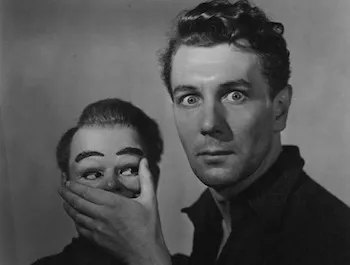
Maxwell Frere is a ventriloquist and his dummy is called Hugo. In the film, we see a number of different ways in which Maxwell uses Hugo to express thoughts and feelings which are inside him but which he can’t say in real life. This is very like the way that everyone behaves. We all have feelings about people and things which we don’t express in real life. This is because we might be shy or afraid or embarrassed about saying them. However, it’s like having Hugo gives Maxwell permission to say the ‘bad’ things in his head. In other words, Hugo says what Maxwell really thinks and feels deep down. Here are a few examples of Hugo talking on behalf of Maxwell. Hugo says to Sylvester, another ventriloquist, ‘We can work together’, meaning they could be a team on stage. Actually, it’s Maxwell who says it, of course, because he is fearful that Sylvester might be a better ventriloquist than him – but he puts his fears into Hugo’s mouth. Next, at the hotel, Hugo is rude to a woman and tells her to leave him alone. But, again, it’s really Maxwell talking, though he can’t say it straight out because he is shy and polite. At the end of the film, Sylvester goes to the prison to see Maxwell and to talk to him. But Maxwell acts dumb and doesn’t say anything for a while, just sitting there. When he eventually talks, it is in Hugo’s voice because Hugo is in his head. He has destroyed the dummy but the part of Maxwell that is Hugo still lives inside him. Maxwell, in Hugo’s voice, again says he wants to work with Sylvester, in the same way that Hugo said he wanted to be with him. Hugo and Maxwell are the same person. Although they are very different stories, there is a connection between Maxwell, and Peter and the dolls. In both stories, a character uses a doll or a dummy to express what is in their mind. The dolls and the dummy represent the things in our heads which we can’t say or don’t want to say. Evan, Grade 4